What to Do When NEET Mock-Test Scores Stop Improving
A stalled NEET mock-test score does not always mean your preparation has stopped working. It usually means your current method has reached its limit, and you now need sharper analysis, better revision cycles, and more disciplined test-taking techniques. This guide explains how to identify the real reason behind a plateau and use practical NEET mock-test improvement strategies to move forward with confidence.
Why do NEET mock-test scores stop improving?
NEET mock-test scores often stop improving when students keep taking tests without changing what they do between tests. A mock test is not only a scorecard; it is a diagnostic tool. If you do not study the diagnosis carefully, the next test simply repeats the same strengths, weaknesses, panic patterns, and careless errors.
A plateau can appear even when you are studying for long hours. You may be covering chapters, revising notes, and solving questions, but the score remains almost the same because the bottleneck is more specific. It could be weak concept recall, poor question selection, slow calculation, negative marking, exam anxiety, or a habit of guessing too early.
The first step is to stop treating the score as the only result. Your marks are the outcome, but your attempt pattern is the evidence. Look at where time was lost, which chapters created confusion, which errors were repeated, and whether your accuracy dropped in the last hour. That is where real NEET preparation becomes more strategic.
Read the score beyond the number
A mock-test plateau becomes easier to fix when you break the paper into meaningful parts. Instead of asking only “How much did I score?”, ask what the paper reveals about your current preparation system. Two students may get the same score for completely different reasons, so they need different solutions.
Start by reviewing every mock test within the same day, while your memory of the paper is still fresh. Mark each incorrect or skipped question with a reason. Avoid vague labels like “silly mistake” because they hide the actual cause. A careless bubbling error, a misread keyword, a forgotten formula, and a conceptual gap are four different problems.
Use these categories during analysis:
-
Concept gap: You did not understand the topic well enough to apply it.
-
Memory gap: You had studied it earlier but could not recall it during the test.
-
Application gap: You knew the theory but could not connect it to the question.
-
Speed issue: You could solve it, but it took too long.
-
Accuracy issue: You rushed, guessed, or missed a condition.
-
Exam temperament issue: Anxiety or fatigue affected your decisions.
Once you classify errors honestly, patterns become visible. If Biology mistakes are mostly memory-based, spaced revision is needed. If Physics mistakes come from application, more mixed problem practice is required. If Chemistry errors happen because of speed, you may need formula drills, reaction revision, or better question sequencing.
Build an error notebook that actually changes your next test
An error notebook should not become a museum of wrong answers. It should be a working tool that helps you avoid repeating the same mistake. Keep it short, active, and easy to revise before the next mock.
For each important error, write the question source, chapter, mistake type, correct logic, and the trigger that confused you. The trigger is especially important. For example, you may know a Physics formula but apply it wrongly when the question includes “minimum,” “maximum,” “initially,” or “at equilibrium.” These small words often decide whether you solve correctly.
Review this notebook in three layers:
-
Same day: Understand the correct method and rewrite the logic in your own words.
-
After two or three days: Solve a similar question without looking at the solution.
-
Before the next mock: Scan the most repeated errors and set one or two test goals.
Good test goals are specific. “Improve Chemistry” is too broad. “Avoid blind guesses in inorganic Chemistry” or “read assertion-reason questions twice before answering” is useful. Over time, this turns mock analysis into measurable improvement rather than emotional reaction.
Strengthen high-weight basics before chasing difficult questions
When scores stop improving, many students assume they need harder questions. Sometimes they do, but often the bigger gain comes from making basic and moderate questions nearly error-free. NEET rewards accuracy, consistency, and broad coverage. Missing familiar questions hurts more than skipping an unusually difficult one.
Revisit NCERT-based concepts, common diagrams, definitions, examples, formulas, and standard question patterns. In Biology, strengthen line-by-line understanding and repeated factual areas. In Chemistry, separate physical, organic, and inorganic weaknesses because each needs a different revision style. In Physics, focus on core concepts, units, graphs, and standard models before moving to lengthy numerical sets.
A practical revision cycle can look like this:
-
Pick one weak chapter from mock-test analysis.
-
Revise the core theory quickly, not passively.
-
Solve 30 to 50 targeted questions from that chapter.
-
Mark only the questions that exposed confusion.
-
Revisit those marked questions after a short gap.
-
Add only repeat-worthy lessons to your error notebook.
This cycle is simple, but it prevents random studying. It also supports long-term NEET preparation because every study session is connected to evidence from your tests.
How should you change your test-taking techniques?
You should change your test-taking techniques by creating a fixed attempt strategy, managing risk, and protecting accuracy under time pressure. A better strategy will not replace subject knowledge, but it can help you convert knowledge into marks more reliably. Many score plateaus continue because students know more than their paper performance shows.
Begin with question selection. Do not spend too long fighting a question in the first round. If a question looks unfamiliar or calculation-heavy, mark it and move ahead. Easy and moderate questions should be secured before difficult ones consume your time and confidence.
Use a two-round or three-round approach:
-
First round: Attempt questions you can solve with confidence and reasonable speed.
-
Second round: Return to questions that need more thinking but are still within reach.
-
Final round: Review marked answers, check bubbling, and decide carefully on remaining questions.
Your guessing policy matters. NEET has negative marking, so guessing without elimination can damage your score. If you can eliminate options logically, the risk may be more reasonable. If you are choosing only because one option “feels familiar,” leave it unless your teacher has advised a specific strategy based on your accuracy pattern.
Also train your exam stamina. Scores may drop in the final section because mental energy falls, not because knowledge disappears. During full-length mocks, sit exactly as you would in the exam: no pauses, no phone, no casual breaks, and no checking answers midway. This builds the discipline your final paper will demand.
Balance full tests with chapter-wise repair
Taking more full-length mocks is useful only when you are also repairing the weaknesses they reveal. If you take three tests a week but do shallow analysis, your score may remain stuck. If you take fewer tests but review deeply, improvement may become steadier.
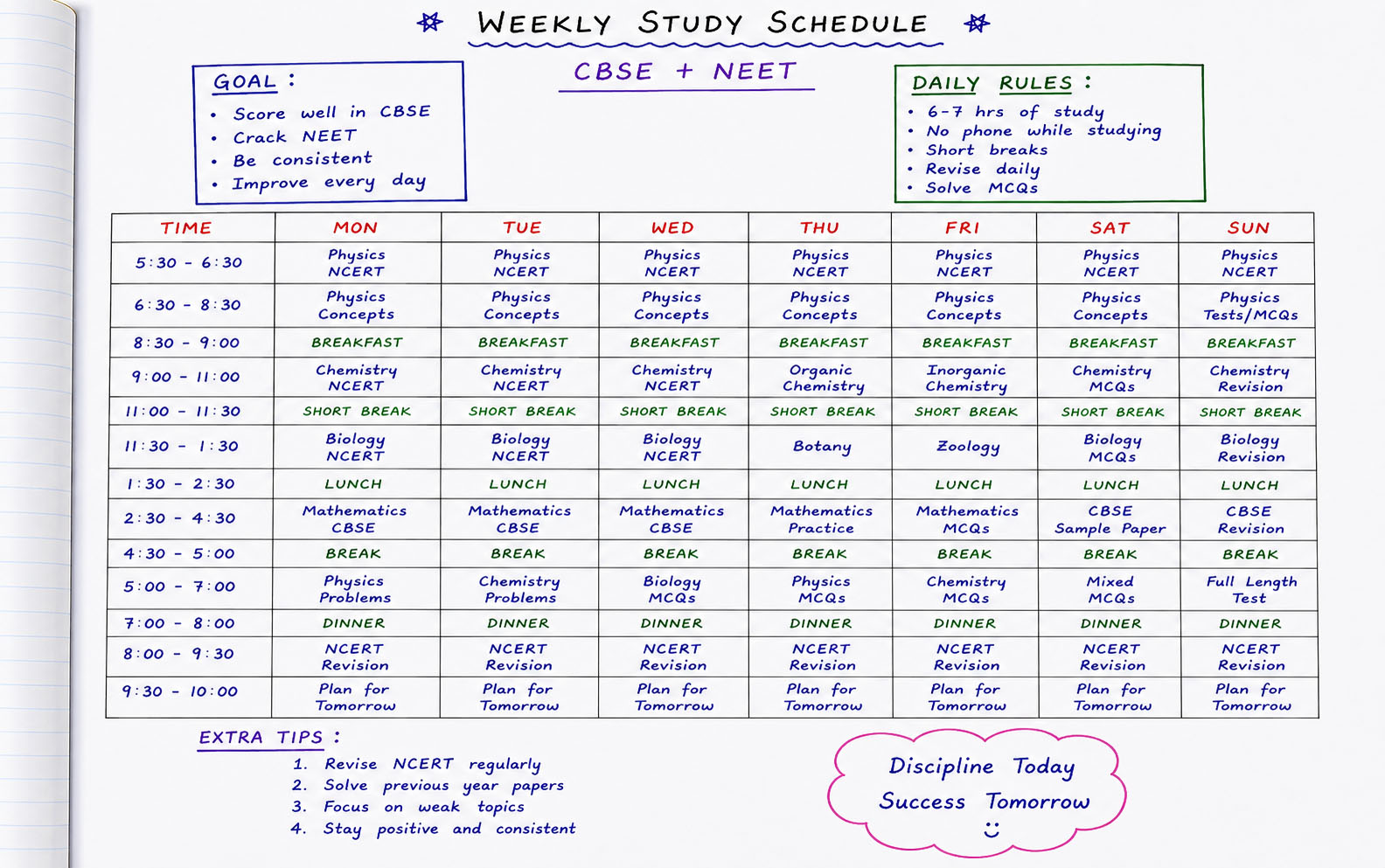
A balanced weekly structure can include one full-length mock, one detailed analysis session, and several targeted repair blocks. Students closer to the exam may need more full tests, while students earlier in the journey may benefit from chapter-wise and part-syllabus tests. The right balance depends on syllabus completion, accuracy, and confidence.
This is where a guided NEET test series can help. A well-planned neet test series gives you repeated exam practice, varied question exposure, and a rhythm for analysis. If you are preparing with Smart Achievers or exploring neet coaching in Ghaziabad, look for support that helps you understand your mistakes, not just compare ranks or marks.
Protect confidence without ignoring reality
A plateau can feel discouraging, especially when classmates seem to be improving faster. But mock-test scores are not always linear. Some phases are for learning new content, some are for consolidating, and some are for converting knowledge into exam performance.
Do not change everything after one bad test. Look at trends across several mocks. If one paper was unusually difficult or your health, sleep, or stress level was poor, note it but do not panic. At the same time, do not dismiss repeated mistakes as bad luck. Repetition is a signal.
Use a simple reflection after each mock:
-
What improved compared with the last test?
-
Which mistake repeated despite revision?
-
Which chapter cost the most marks?
-
Where did I waste time?
-
What is the one correction I will apply in the next paper?
This keeps your mindset balanced. You are neither ignoring weaknesses nor allowing one score to define your ability.
A focused 10-day reset plan
When scores have been stuck for several tests, a short reset can help. The goal is not to cover everything again. The goal is to interrupt the pattern that is keeping your score at the same level.
Days 1 and 2: Analyse your last three mocks. List repeated chapters, repeated mistake types, and repeated time-management problems. Choose no more than five priority areas.
Days 3 to 6: Repair weak areas with targeted revision and question practice. Keep sessions focused. For example, one block may cover electrostatics numericals, another may cover plant physiology facts, and another may cover organic reaction logic.
Day 7: Take a part-syllabus or mixed practice test based on the repaired topics. Check whether the same mistakes reduced. If not, the concept may need teacher support.
Day 8: Revise your error notebook, formulas, NCERT highlights, and marked questions. Do not overload the day with new material.
Day 9: Take a full-length mock using a fixed attempt strategy. Focus on accuracy, question selection, and calm decision-making.
Day 10: Review the mock deeply and compare it with your earlier pattern. Even if the score changes only slightly, check whether the quality of mistakes has improved. Fewer careless errors, better time use, and stronger accuracy are early signs that the plateau is breaking.
When to ask for help
You should ask for help when the same error type keeps appearing after honest revision, or when you cannot identify why your score is stuck. A teacher, mentor, or structured coaching environment can often spot patterns that students miss. Sometimes the issue is not hard work but misplaced effort.
Seek guidance if you regularly face any of these problems:
-
You understand solutions but cannot solve similar questions later.
-
You complete the syllabus but forget facts during tests.
-
Your accuracy drops when the paper feels difficult.
-
You spend too much time on a few questions.
-
Your Biology, Chemistry, and Physics scores fluctuate without a clear reason.
-
You feel anxious before every mock and cannot follow your plan.
For students looking at smart achievers, neet coaching in Ghaziabad, or any other academic support, the most useful question is not only “How many tests are provided?” Ask how tests are discussed, how doubts are cleared, how weak topics are tracked, and how students are guided after low scores. Improvement depends on feedback quality as much as test quantity.
Turn every mock into a controlled experiment
The best NEET mock-test improvement strategies are not dramatic. They are consistent, specific, and evidence-based. Treat every test as a controlled experiment: set a goal, take the paper seriously, analyse the result, repair the weakness, and test again.
If your scores have stopped improving, do not assume you have reached your limit. You may simply need a better system. With clear error analysis, smarter revision, stronger test-taking techniques, and the right guidance when needed, a plateau can become the phase that teaches you how to score better under real exam conditions.


 STUDY MATERIALS
 COURSES
 MORE
MORE
 SUCCESS STORY
 ADMISSION
 STORE
STORE