Should a Student Take a Drop Year for JEE
A drop year for JEE can be a smart decision when a student has the ability, discipline, and emotional readiness to use one full year with focus. It can also become stressful and unproductive if it is chosen only because of pressure, regret, or comparison with friends. This guide explains when a jee drop year makes sense, when it may not, and how to turn the year into a structured preparation phase rather than a gamble.
Is a drop year for JEE the right choice?
A drop year is the right choice when the student has a clear reason for the gap, a realistic improvement target, and a daily system for preparation. It is not simply “one more year”; it is a high-intensity academic commitment that needs planning, consistency, testing, analysis, and mental resilience. If the previous attempt was affected by weak concepts, poor revision, lack of mock test practice, health issues, or an incomplete syllabus, a drop year can help rebuild the preparation properly.
The decision should begin with honesty. A student who scored below expectations despite regular effort may need better guidance, a more effective jee study plan, or a focused JEE Dropper Course. A student who barely studied in Class 11 and 12 may still improve, but only if they are ready to change their routine completely.
The most important question is not, “Can I improve?” Most students can. The better question is, “Am I willing to prepare differently from last time?” If the same habits continue, the result will usually remain similar.
What a JEE drop year really demands
A jee drop year removes school attendance and board exam pressure, but it also removes a fixed external structure. This is both the biggest advantage and the biggest risk. Students get more time for JEE Main and JEE Advanced preparation, yet they must manage that time with discipline.
A serious drop year demands three things: conceptual clarity, problem-solving stamina, and exam temperament. Conceptual clarity helps students understand Physics, Chemistry, and Mathematics instead of memorizing shortcuts blindly. Problem-solving stamina allows them to sit through long practice sessions without losing focus. Exam temperament helps them handle time pressure, negative marking, difficult questions, and unexpected paper patterns.
A dropper does not need to study every hour of the day. In fact, unrealistic schedules often collapse quickly. What matters more is a sustainable routine that includes learning, practice, revision, testing, error correction, and rest.
Signs that taking a drop year may be a good decision
Some situations strongly suggest that a drop year could be useful. The student still needs commitment, but the decision has a practical foundation.
Consider a drop year if:
-
Your concepts are partially clear but not exam-ready. You understand chapters in class but struggle to solve mixed or advanced-level problems.
-
Your syllabus was incomplete in the previous attempt. Many students lose marks not because they are weak overall, but because important chapters were never revised properly.
-
Your mock test scores improved late. If progress started close to the exam, one more structured year may help convert that growth into a better rank.
-
You made avoidable exam mistakes. Poor time management, panic, silly errors, and bad question selection can improve with practice.
-
You are internally motivated. A drop year works best when the student wants it, not when it is forced by parents, relatives, or social comparison.
-
You are ready to follow a routine. Motivation may fluctuate, but discipline must stay.
These signs do not guarantee success, but they show that the student has identifiable gaps. A year is useful only when those gaps can be addressed with a clear plan.
Situations where a drop year may not be wise
A drop year is not the best option for every student. Sometimes joining a good college through the current result, preparing for other entrance exams, or choosing a different academic path may be healthier and more practical.
Be cautious about taking a drop year if:
-
You are choosing it only due to embarrassment. A drop should not be a reaction to what relatives, classmates, or neighbors think.
-
You dislike the subjects deeply. JEE preparation requires long engagement with Physics, Chemistry, and Mathematics. If there is no interest at all, the year may become draining.
-
You do not want to change your habits. If procrastination, irregular sleep, excessive phone use, or skipped tests remain unchanged, extra time will not help much.
-
Your mental health is already under severe pressure. Preparation is important, but not more important than well-being. Students should seek support from family, mentors, or professionals when stress becomes unmanageable.
-
You have a strong alternative path. If another program or college aligns with your goals, it may not be necessary to pause everything for JEE again.
The goal is not to prove toughness. The goal is to make an informed academic decision that supports long-term growth.
How should a student evaluate the previous JEE attempt?
A student should review the previous attempt by separating emotional disappointment from measurable performance. Instead of saying, “I failed,” they should ask where marks were lost, which subjects were unstable, and which habits affected the final score. This creates a practical starting point for the next jee study plan.
Begin with a subject-wise review. In Physics, check whether mistakes came from weak theory, formula confusion, calculation errors, or inability to apply concepts. In Chemistry, separate Physical, Organic, and Inorganic weaknesses because each requires a different study method. In Mathematics, identify whether the issue was speed, accuracy, chapter coverage, or fear of lengthy questions.
Then review test behavior. Many students know enough content but lose marks through poor paper strategy. They spend too long on one question, ignore easy marks, attempt doubtful questions, or panic after a difficult section. These patterns can be improved, but only if they are tracked.
A useful review includes:
-
Score analysis: Compare your performance in each subject and topic.
-
Chapter analysis: List strong, moderate, and weak chapters.
-
Error analysis: Separate conceptual errors, silly mistakes, calculation errors, and time-pressure mistakes.
-
Routine analysis: Check how many hours were actually productive, not just spent near books.
-
Test analysis: Review mock tests, previous year papers, and the final exam experience.
This review should be written down. A vague feeling of “I need to work harder” is not enough. A dropper needs specific problems to solve.
Building a realistic jee study plan for the drop year
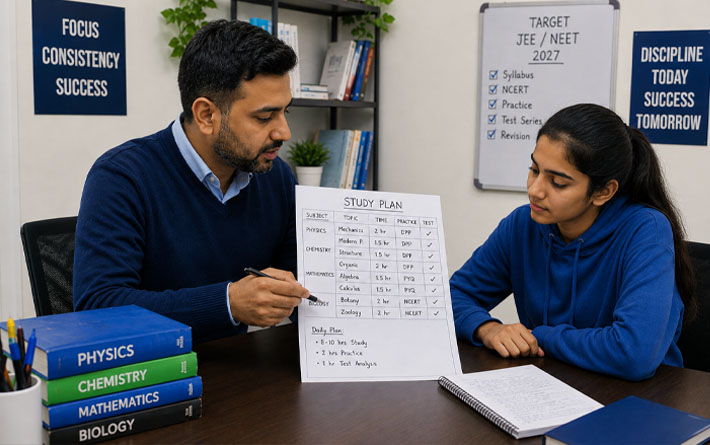
A good jee study plan for droppers should cover the full syllabus, but it should not treat all chapters equally. Strong chapters need revision and test practice. Weak chapters need concept rebuilding. High-weightage and frequently tested areas need repeated exposure through problems and previous year questions.
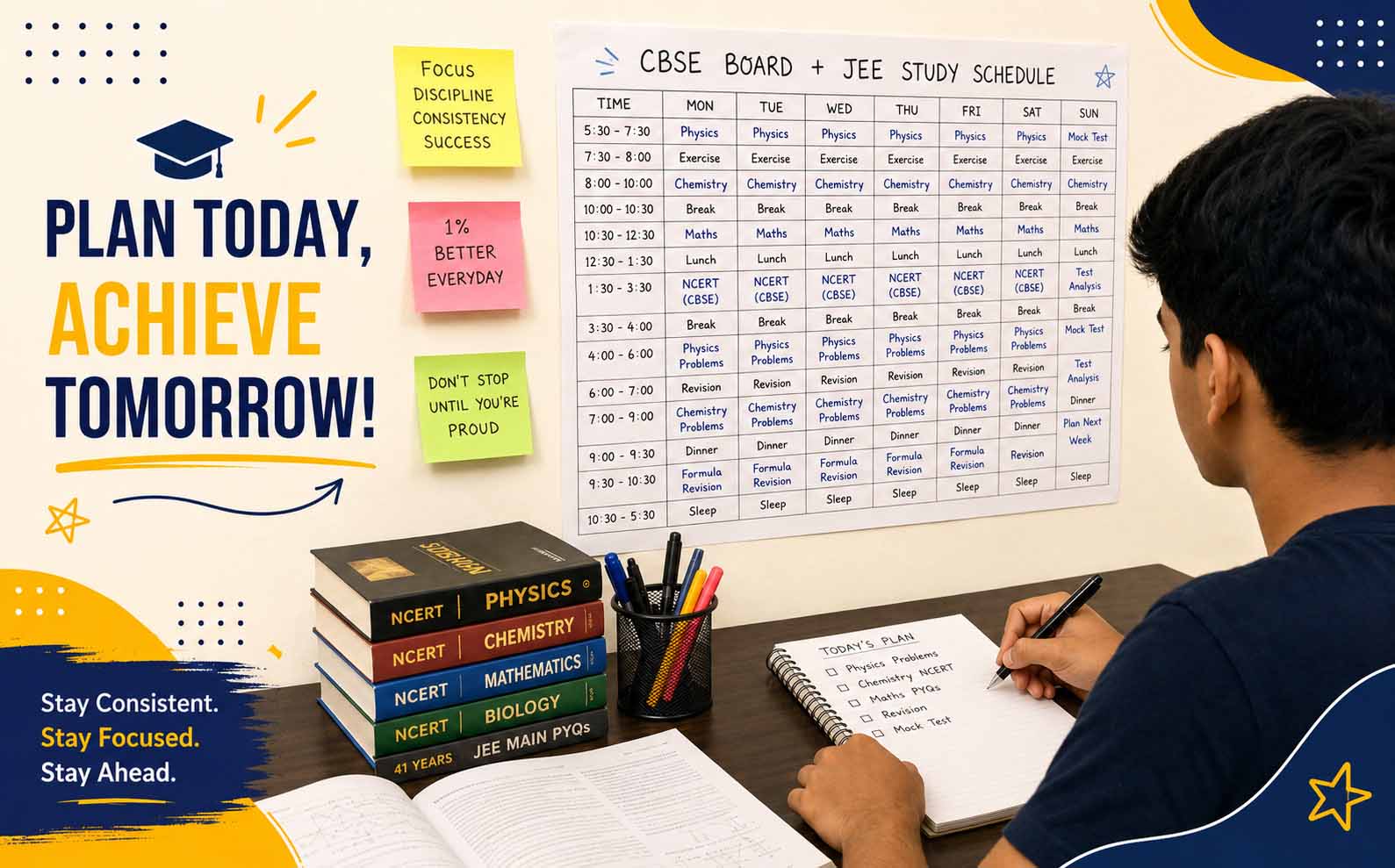
The year can be divided into phases. The first phase should focus on completing or rebuilding concepts. The second phase should increase mixed practice and topic tests. The final phase should emphasize full-length mocks, revision, speed, accuracy, and exam strategy.
A practical weekly rhythm may include:
-
Concept learning: Study theory and solved examples for selected chapters.
-
Daily problem practice: Solve questions from basic to advanced levels.
-
Revision slots: Revisit formulas, reactions, concepts, and common mistakes.
-
Topic tests: Test recently completed chapters under time limits.
-
Mixed practice: Combine older and newer chapters to improve recall.
-
Mock test analysis: Spend enough time reviewing mistakes, not just taking tests.
-
Buffer time: Keep time for backlog, illness, family events, or difficult topics.
Students should avoid the trap of endless planning. A plan is useful only when it leads to action. It should be reviewed weekly and adjusted based on test performance.
Daily structure that supports consistency
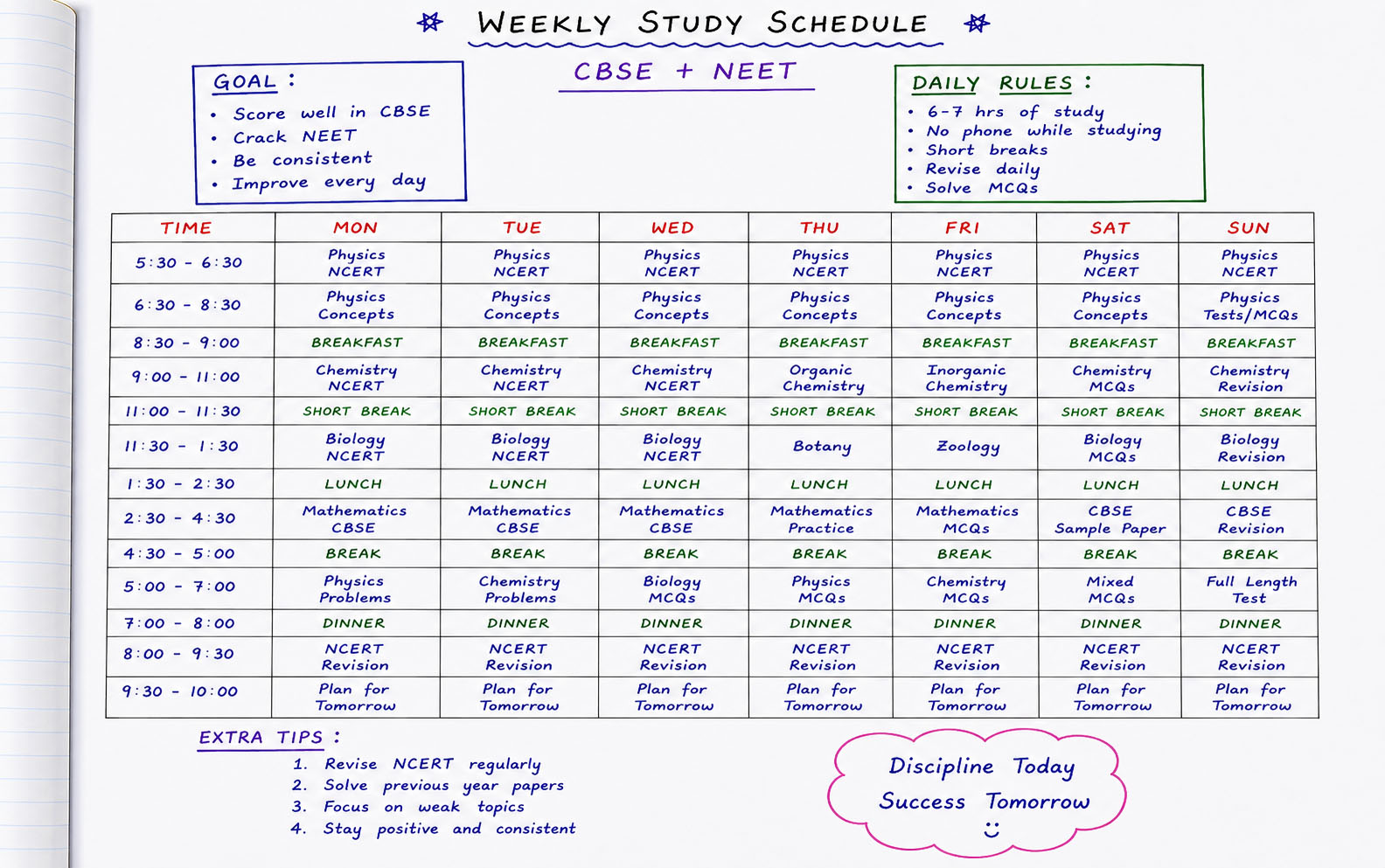
A dropper’s day should include focused study blocks rather than vague long hours. For example, a student may divide the day into Physics, Chemistry, Mathematics, revision, and practice sessions. Short breaks are important because tired study often creates the illusion of hard work without real retention.
The daily target should be specific: “complete electrostatics theory and 60 problems” is better than “study Physics.” “Revise chemical bonding notes and solve previous year questions” is better than “do Chemistry.” Specific targets reduce confusion and make progress visible.
Students should also protect sleep. JEE preparation rewards alertness, memory, and problem-solving clarity. A sleep-deprived routine may look serious for a few days, but it usually damages accuracy and concentration.
Choosing coaching, self-study, or online support
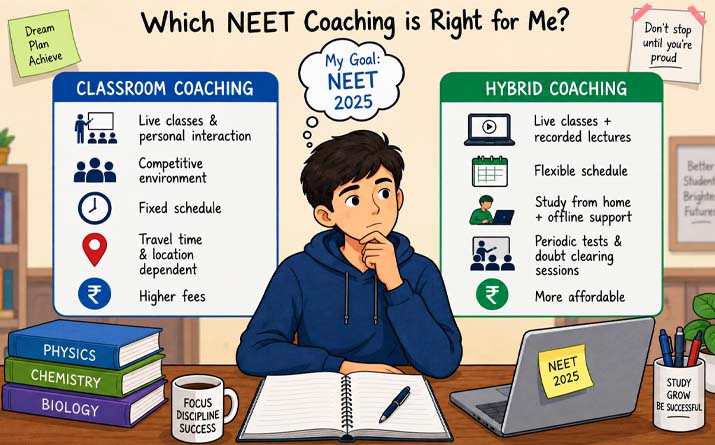
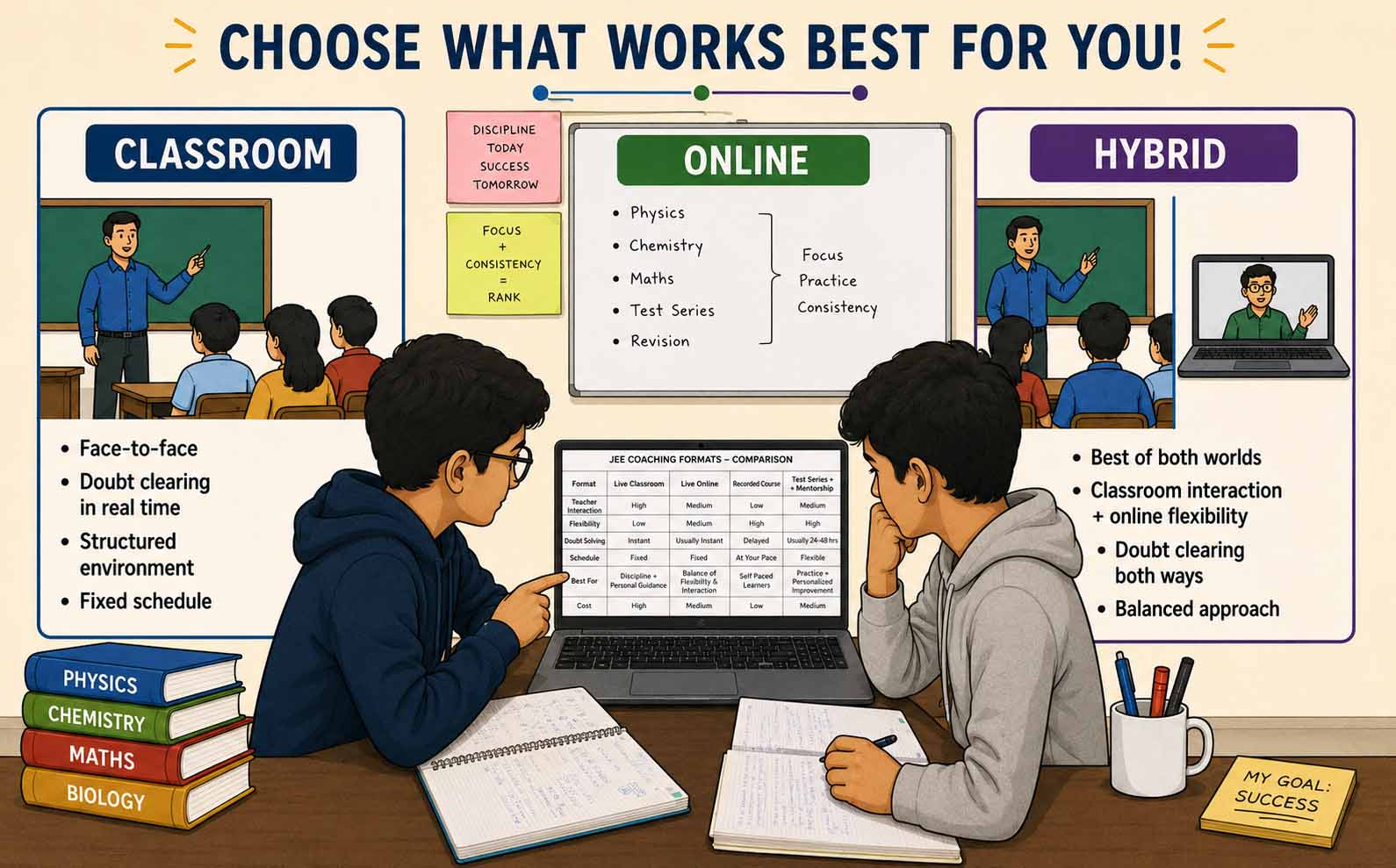
Some students can manage a drop year through self-study, but many benefit from structured guidance. A JEE Dropper Course can help by providing a fixed syllabus path, regular tests, doubt support, and accountability. JEE Online Coaching can also be useful for students who want flexibility, recorded lectures, online tests, or access from home.
The right option depends on the student’s learning style. If a student needs classroom discipline and direct peer competition, offline coaching may help. If travel time is high or the student learns well through digital platforms, online coaching may be more efficient. If the student is already conceptually strong and only needs practice, a test series with self-study may be enough.
When comparing options such as Smart Achievers or any other coaching provider, students should look beyond advertisements. The useful questions are simple: Does the course cover the syllabus clearly? Are tests regular and relevant? Is doubt-solving accessible? Are weak students supported, or only top performers highlighted? Does the schedule leave time for self-practice?
A coaching program can guide the journey, but it cannot replace personal effort. The student must still revise, solve problems, analyze mistakes, and stay consistent.
JEE preparation tips for droppers
The best jee preparation tips for droppers are not complicated. They are habits that compound over months. A student who follows them consistently can improve steadily, even if the starting point is average.
Use these principles throughout the year:
-
Revise before you forget. Do not wait until the final month. Schedule weekly and monthly revision.
-
Prioritize previous year questions. They help students understand exam style, difficulty range, and recurring concepts.
-
Analyze every test deeply. Marks matter, but mistakes teach more. Review wrong answers, guessed answers, and questions left unattempted.
-
Maintain an error notebook. Write down formulas you forgot, concepts you misunderstood, and traps you repeatedly fall into.
-
Balance all three subjects. A strong score usually requires stability across Physics, Chemistry, and Mathematics.
-
Do not ignore easy chapters. Simple and moderate questions can make a major difference in rank if attempted accurately.
-
Limit resources. Too many books, playlists, and materials can create confusion. Finish selected resources properly.
-
Practice under timed conditions. JEE is not only about solving questions; it is about solving them accurately within limited time.
The most powerful habit is test analysis. Many students take mock tests but do not learn from them. A three-hour test may require another three to four hours of review to extract its full value.
Managing pressure during a drop year
A drop year can feel isolating because friends may move to college while the student stays in preparation mode. This emotional difference is real and should not be ignored. Students need a support system, a healthy routine, and realistic expectations.
Parents should avoid turning every conversation into a score review. Encouragement, calm accountability, and practical help are more useful than constant comparison. Students should also avoid measuring their worth through one test score. A mock test is feedback, not a final judgment.
Healthy pressure can push a student to work. Excessive pressure can lead to burnout, avoidance, and fear of tests. The aim is to create an environment where effort is consistent and mistakes are treated as information.
Helpful pressure-management habits include:
-
Weekly reflection: Review progress once a week instead of worrying every hour.
-
Limited comparison: Compete with your previous performance, not every topper online.
-
Physical movement: Even a short walk or exercise routine can improve mood and focus.
-
Digital boundaries: Reduce social media scrolling, especially after mock tests.
-
Mentor conversations: Speak to a teacher or counselor when confusion grows.
A strong mind does not mean never feeling stressed. It means knowing how to return to the plan after a difficult day.
Common mistakes droppers should avoid
Droppers often begin with high energy but lose direction because of preventable mistakes. Recognizing these early can protect the year.
One common mistake is restarting the syllabus too slowly. While fundamentals are important, spending months on basic theory without enough problem practice can create backlog. Another mistake is overconfidence in familiar chapters. Students may feel they “know” a chapter but fail when questions combine multiple concepts.
Some droppers also delay mock tests because they fear low scores. This is risky. Mock tests are not meant to flatter students; they are meant to reveal gaps before the actual exam. The earlier a student becomes comfortable with testing, the better.
Avoid these traps:
-
Collecting too many resources and completing none.
-
Watching lectures passively without solving enough questions.
-
Ignoring Chemistry revision because it feels memory-based.
-
Studying only favorite subjects and postponing weak ones.
-
Taking tests without reviewing them.
-
Changing strategy every few days after seeing someone else’s routine.
-
Sacrificing sleep for short-term study hours.
A drop year rewards boring consistency more than dramatic motivation. Small improvements repeated daily are more reliable than sudden bursts of effort.
How can parents support a JEE dropper?
Parents can support a JEE dropper by providing structure, emotional stability, and trust without creating constant fear. The student needs accountability, but they also need space to recover from bad tests and difficult weeks. A calm home environment can make the preparation year more productive.
Parents should discuss expectations clearly at the beginning. Instead of asking only about rank, they can ask about completed chapters, test analysis, revision quality, and doubt-solving. These are controllable actions. Results matter, but daily process determines results.
It also helps to agree on boundaries. For example, parents and students can decide when to discuss performance, how often to review progress, and when to take rest. This prevents preparation from becoming a 24-hour emotional argument.
Support does not mean removing every discomfort. It means helping the student stay steady through the discomfort.
Final decision checklist
Before choosing a drop year, the student and family should make the decision with clarity. A written checklist can prevent emotional or rushed choices.
Ask these questions:
-
Do I know exactly why my previous attempt did not meet expectations?
-
Have I identified my weak chapters and test-taking problems?
-
Am I ready to follow a structured jee study plan for several months?
-
Do I need a JEE Dropper Course, JEE Online Coaching, a test series, or disciplined self-study?
-
Can I handle seeing friends move ahead without losing focus?
-
Do I have family or mentor support during stressful phases?
-
Am I choosing this because I genuinely want another attempt, not only because of pressure?
-
Do I have a backup plan if the result is still not as expected?
If most answers are clear and positive, a drop year may be a reasonable choice. If many answers are uncertain, it may be better to pause, speak with mentors, compare academic options, and then decide.
Making the year count
A drop year for JEE is neither a shortcut nor a failure. It is a second preparation cycle that can work when it is planned with discipline and honesty. The year should be used to repair weak concepts, develop exam temperament, practice consistently, and build confidence through measurable progress.
Whether a student studies independently, joins Smart Achievers, chooses another JEE Dropper Course, or uses JEE Online Coaching, the foundation remains the same: clear goals, steady effort, regular testing, and thoughtful revision. The best decision is the one that matches the student’s readiness, not someone else’s opinion.
If you choose the drop year, commit to it fully. If you choose another path, choose it without guilt. Success after Class 12 is not defined by one exam alone, but by the clarity, discipline, and resilience with which you build your next step.


 STUDY MATERIALS
 COURSES
 MORE
MORE
 SUCCESS STORY
 ADMISSION
 STORE
STORE