Classroom vs Online vs Hybrid NEET Coaching
Choosing the right NEET coaching format can shape your study routine, confidence, revision quality, and overall preparation experience. Classroom, online, and hybrid coaching can all work, but each suits a different type of learner, family schedule, budget, and level of self-discipline. This NEET coaching comparison explains how the three options differ, what to check before enrolling, and how students in Ghaziabad can think about fee value without relying only on the lowest advertised price.
Which NEET coaching format is best for you?
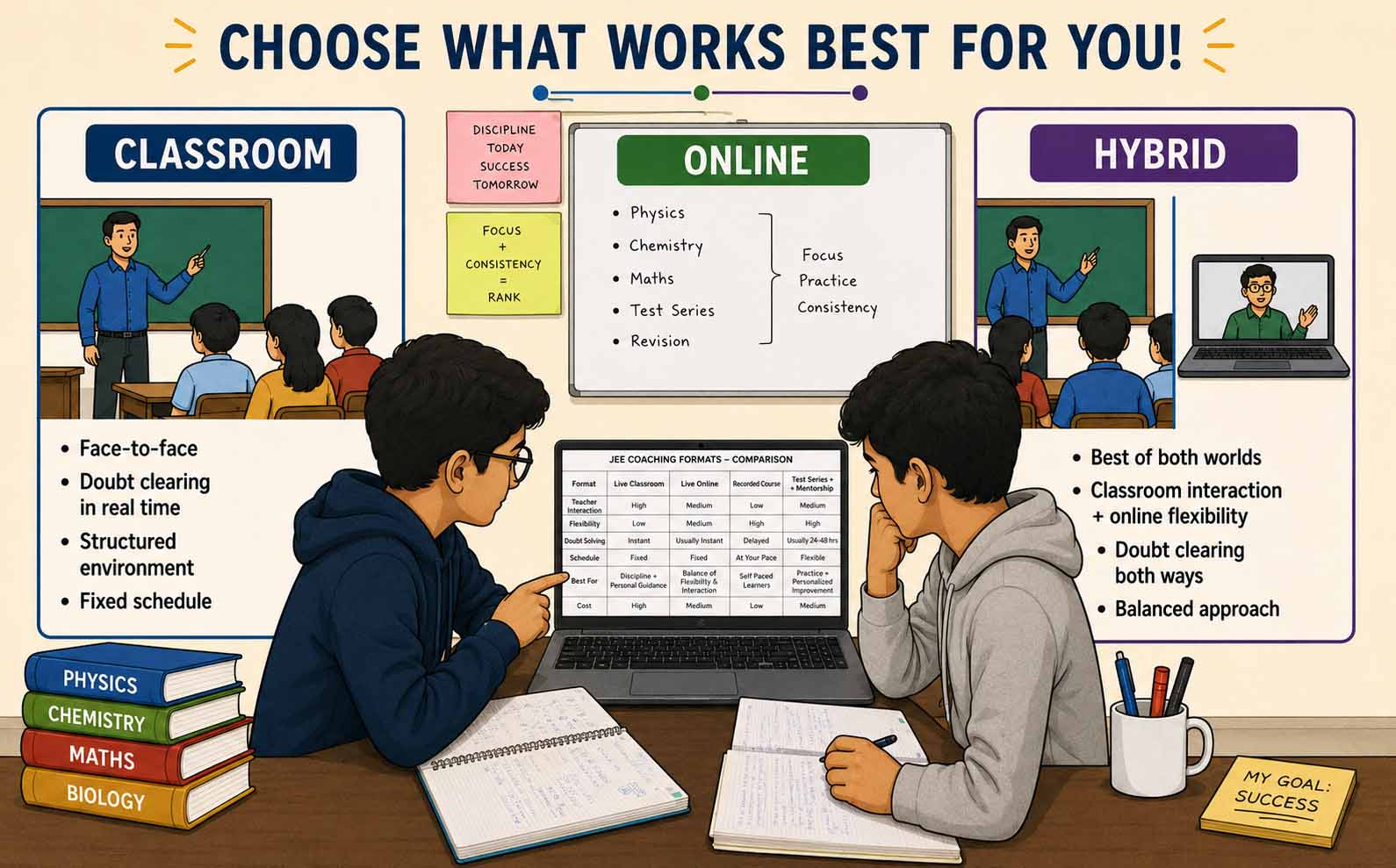
The best format is the one that gives you consistent teaching, doubt support, test practice, and accountability in a way you can realistically follow for months. Classroom coaching is usually better for students who need fixed discipline and face-to-face motivation. Online coaching is better for students who are self-driven, live far from major coaching centres, or need flexible timing. Hybrid coaching is a middle path for students who want personal interaction but also value recorded lessons, online tests, and schedule flexibility.
A quick decision guide:
-
Choose classroom coaching if you concentrate better in a physical class, need teacher supervision, and prefer a fixed daily routine.
-
Choose online coaching if travel time is a problem, you can study independently, and you want access to lessons from home.
-
Choose hybrid coaching if you want classroom structure with digital support for revision, missed classes, and test analysis.
-
Avoid choosing only by popularity. The right coaching mode should match your learning habits, not just your friends’ choices.
The core difference between classroom, online, and hybrid coaching
The main difference is not simply where the class happens. It is how teaching, testing, doubt clearing, revision, and accountability are delivered. A strong NEET coaching guide should look beyond format names and examine what the student actually receives each week.
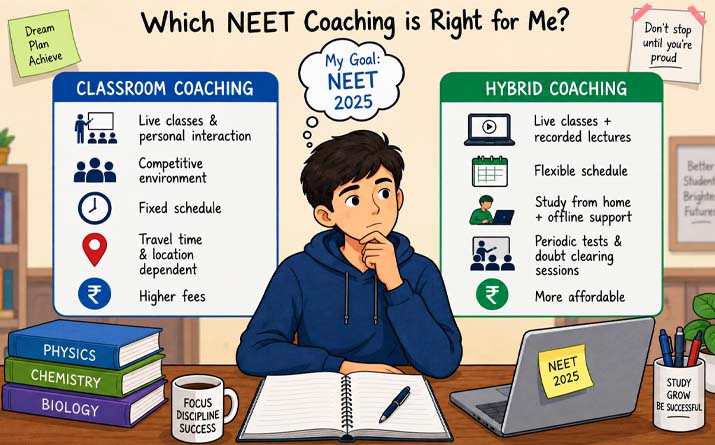
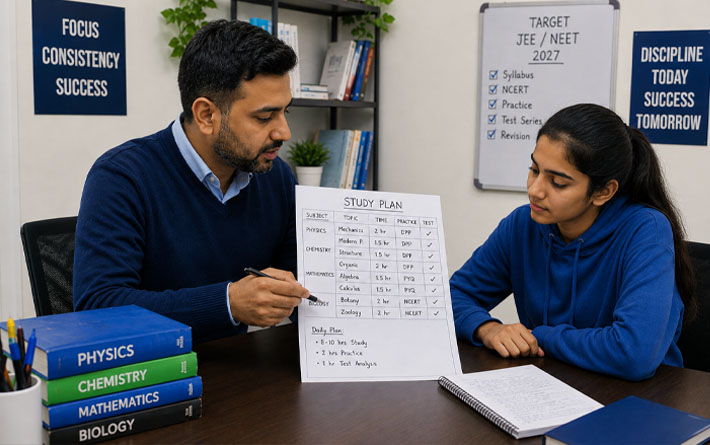
Classroom NEET coaching works through scheduled in-person sessions at a centre. Students attend lectures, interact directly with faculty, write tests at the centre, and study around a fixed timetable. This format can create a serious academic environment, especially for students who find it difficult to maintain discipline alone.
Online NEET coaching delivers classes through live sessions, recorded videos, learning apps, digital notes, and online tests. It removes travel and gives students more control over when and how they revise. However, it also demands strong self-control because distractions at home can weaken consistency.
Hybrid NEET coaching combines in-person and online elements. A student may attend classroom sessions on selected days and use digital lessons, recorded content, online tests, or app-based practice for the rest. This format can be useful when regular travel is difficult but complete online learning feels too isolated.
Classroom NEET coaching gives structure and direct supervision
Classroom coaching remains attractive because it creates a disciplined study atmosphere. Students follow a set schedule, sit with peers preparing for the same exam, and meet teachers directly after class. For many aspirants, this environment reduces procrastination and makes NEET preparation feel more serious.
The practical benefits include:
-
Routine: Fixed class timings help students build a regular study rhythm.
-
Face-to-face doubt clearing: Students can ask questions immediately and read teacher explanations more easily.
-
Peer motivation: Seeing other students prepare seriously can push a learner to stay consistent.
-
Controlled testing environment: Offline tests can feel closer to exam pressure than casual home practice.
-
Teacher observation: Faculty may notice when a student is losing focus, struggling with basics, or falling behind.
Classroom coaching can also have limitations. Travel takes time, especially for students outside major towns or those dealing with school schedules. Missed classes may be harder to recover unless the institute provides recordings or repeat sessions. Large batches can also reduce personal attention, so parents should ask about batch size, doubt-clearing systems, and academic follow-up before admission.
This option generally works best for students who need discipline more than flexibility. If a student studies well only when there is external pressure, classroom coaching can provide that structure. But if travel leaves the student tired every day, the benefit of in-person teaching may get reduced.
Online NEET coaching offers flexibility and wider access
Online NEET coaching has become a serious option for students who want convenience, repeatable lessons, and access from home. It can be especially helpful for students in smaller towns, students with long commutes, or repeaters who already understand the exam pattern and need focused revision.
Its main strengths are:
-
Flexible access: Recorded lessons allow students to revisit difficult topics in Physics, Chemistry, or Biology.
-
No travel time: The time saved can be used for revision, question practice, or rest.
-
Digital testing: Many platforms provide online mock tests, topic-wise practice, and performance reports.
-
Learning pace control: Students can pause, replay, or speed up lessons depending on their comfort.
-
Location independence: A student in any district can attend classes without relocating.
The challenge is accountability. Online coaching can fail if the student watches lessons passively but avoids problem-solving and regular tests. Home distractions, inconsistent internet, and lack of direct monitoring can also affect preparation. Parents should not assume that access to many videos automatically means effective learning.
Online coaching is best suited for disciplined students who can follow a weekly plan without daily physical supervision. It also works well when the family can create a quiet study space and track attendance, assignments, and test scores. If the student often postpones tasks, a purely online format may need extra mentoring or parental monitoring.
Hybrid NEET coaching balances flexibility with personal support
Hybrid NEET coaching is designed for students who want both structured guidance and digital convenience. It can include classroom lectures with online tests, live online doubt sessions after offline classes, recorded videos for revision, or periodic centre visits combined with home study.
Its advantages include:
-
Backup for missed classes: Recorded content can help students recover lessons they could not attend.
-
Better revision support: Students can revise classroom topics through digital modules.
-
Reduced travel pressure: Some learning can happen from home while important sessions remain in person.
-
Multiple doubt channels: Students may get both face-to-face and online doubt support.
-
Stronger test tracking: Digital reports can complement offline mock tests and teacher feedback.
Hybrid coaching can be powerful when the system is well organised. But the word “hybrid” alone does not guarantee quality. Some programmes simply add recorded videos to a classroom course without proper integration. Others may offer online tools that students rarely use because they are not linked to the class plan.
Before choosing hybrid coaching, ask how offline and online components connect. Are online tests based on the same classroom syllabus? Are recorded lessons updated and easy to access? Are doubts answered by the main faculty or a separate support team? A good hybrid model should feel coordinated, not like two separate courses stitched together.
Which option is easier to manage with school, travel, and revision?
Online coaching is usually easiest to manage for students with heavy school schedules or long travel time, while classroom coaching gives the strongest external routine. Hybrid coaching sits between the two because it can reduce commuting without removing personal contact. The right answer depends on whether the student’s bigger problem is lack of time, lack of discipline, or lack of direct academic support.
Compare the formats by daily management:
-
Best when the centre is nearby and class timings fit school hours.
-
Can become tiring if the commute is long or classes end late.
-
Encourages discipline because attendance is visible and routine is fixed.
-
Revision must be planned separately unless the institute provides structured follow-up.
-
Best when travel time would reduce study hours.
-
Allows students to revise immediately after school or during personalised study slots.
-
Requires a strong home routine, device discipline, and limited distractions.
-
Can become unstructured if the student keeps postponing recorded lessons.
-
Best when students want periodic in-person guidance without daily travel.
-
Helpful for revising missed or difficult topics through recordings.
-
Needs clarity on which sessions are compulsory and which are optional.
-
Works well only if the student uses both offline and online resources consistently.
For students in Ghaziabad, travel time can be a major factor depending on the distance to the nearest coaching hub. A centre with strong teaching may still be a poor choice if commuting drains energy needed for self-study. NEET preparation requires regular practice, not just attendance.
Academic support, testing, and doubt clearing decide real value
A meaningful neet coaching comparison should focus on academic support, not just class delivery. NEET preparation needs concept clarity, repeated practice, error analysis, and revision. Any coaching format can succeed if these parts are strong.
Use the same checklist for all three formats:
-
Faculty access
-
In classroom coaching, check whether students can meet teachers after class.
-
In online coaching, check whether doubts are answered live, through chat, or in scheduled sessions.
-
In hybrid coaching, check whether support is available both at the centre and online.
-
Test frequency
-
Classroom courses should provide regular topic tests and full-length mock exams.
-
Online courses should include timed tests that reflect the pressure of the real exam.
-
Hybrid courses should combine offline seriousness with digital analysis.
-
Performance analysis
-
Students need more than marks. They need to know which chapters, question types, and mistakes are hurting their score.
-
Good analysis should help the student decide what to revise next.
-
Study material
-
Revision system
-
Strong coaching programmes plan revision cycles instead of leaving students to revise randomly.
-
Repeated Biology reading, Chemistry formula practice, and Physics problem-solving need different revision methods.
The strongest option is not always the one with the most features. It is the one where teaching, practice, feedback, and revision work together in a way the student actually follows.
Which format gives better value for money in Ghaziabad?
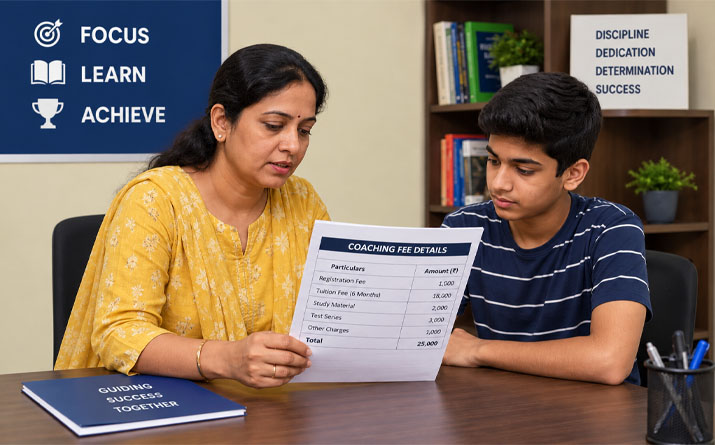
The best value is the format that improves consistency, reduces wasted time, and provides usable academic support for the fee paid. For a comparison of fees for neet in different coaching in Ghaziabad, families should compare what is included rather than looking only at the headline course fee. A cheaper course may become less valuable if it lacks tests, doubt support, or revision planning, while a higher fee may be justified only if the student uses the extra support fully.
When comparing fees, look at these cost factors:
-
Course fee may be only one part of the total expense.
-
Add travel, food, hostel or relocation costs if applicable.
-
Check whether printed study material, test series, and repeat classes are included.
-
Ask if extra doubt sessions or special revision batches cost more.
-
Usually removes commuting and relocation expenses.
-
May require a reliable device, internet connection, and a quiet study setup.
-
Check whether live classes, recordings, tests, notes, and doubt support are included in one plan.
-
Be careful with low-cost plans that provide videos but limited teacher interaction.
-
Fee may sit between classroom and premium online models, depending on what is included.
-
Value depends on whether the student receives meaningful offline teaching and strong digital backup.
-
Ask if online resources continue throughout the course or only for selected modules.
-
Check whether missed classroom sessions can be recovered without extra payment.
Families should also consider opportunity cost. If a student spends two hours daily travelling, that time has value. If online learning saves time but the student wastes it due to poor discipline, the saving is not real. Fee comparison should include money, time, energy, and academic follow-up.
Student profiles and the best-fit coaching mode
Different students need different systems. A high-scoring student may need advanced practice and test strategy, while a student with weak basics may need patient explanation and frequent doubt clearing. Matching the coaching mode to the learner is more important than choosing the most advertised option.
For Class 11 starters:
-
Classroom coaching can build discipline early.
-
Online coaching works if the student already has strong study habits.
-
Hybrid coaching can help balance school, foundation learning, and revision.
For Class 12 students:
-
Classroom coaching offers urgency and regular testing.
-
Online coaching helps students revise school and NEET topics at flexible times.
-
Hybrid coaching can support board exam pressure while keeping NEET practice active.
For repeaters:
-
Classroom coaching can restore routine after a disappointing attempt.
-
Online coaching may suit repeaters who know their weak areas and want targeted revision.
-
Hybrid coaching can provide test discipline plus flexible concept repair.
For students with weak basics:
-
Classroom coaching helps if teachers give personal attention.
-
Online coaching helps only when lessons are beginner-friendly and doubts are answered quickly.
-
Hybrid coaching may work well because students can revisit lessons after class.
For self-motivated students:
-
Online coaching can be efficient and time-saving.
-
Hybrid coaching adds extra accountability without removing flexibility.
-
Classroom coaching is useful if the student benefits from competitive peer energy.
Common mistakes to avoid before enrolling
Many families choose NEET coaching under pressure. They may follow neighbours, focus only on fees, or assume one format is automatically superior. A careful decision prevents wasted time later.
Avoid these mistakes:
-
Choosing the nearest centre without checking faculty access, test quality, and doubt support.
-
Choosing online coaching only because it is convenient, even when the student lacks self-discipline.
-
Choosing hybrid coaching without understanding how offline and online parts are connected.
-
Comparing fees without checking study material, test series, recordings, mentoring, and revision support.
-
Ignoring travel fatigue, especially for students managing school and coaching together.
-
Joining a very large batch if the student needs personal attention.
-
Paying for many resources and then following none of them consistently.
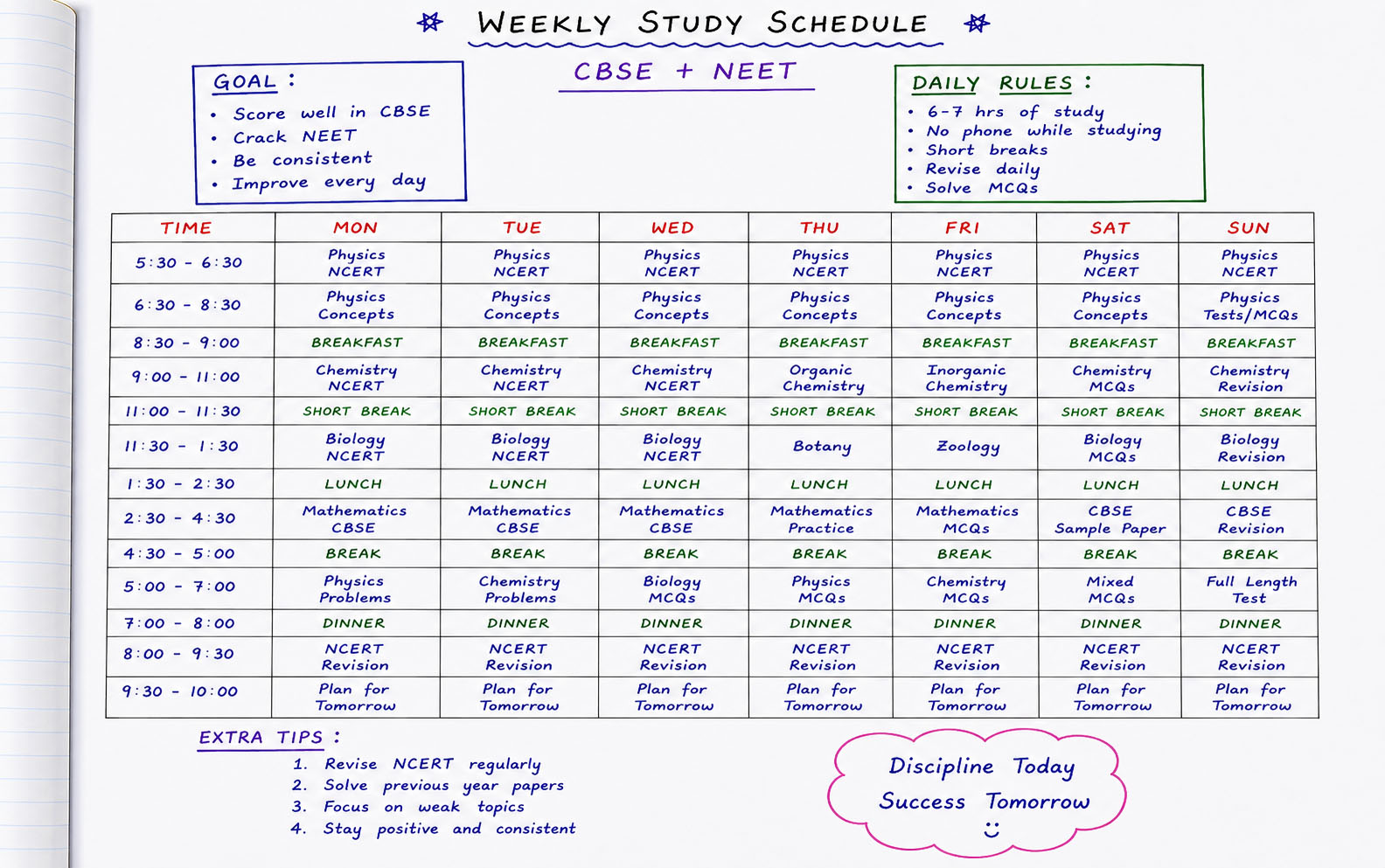
Before admission, attend demo classes if available, review the test system, speak clearly about doubt support, and ask how progress is tracked. A good coaching choice should make the student’s weekly plan clearer, not more confusing.
Final recommendation
Classroom NEET coaching is the strongest choice for students who need structure, direct supervision, and a competitive study environment. Online NEET coaching is the strongest choice for disciplined learners who need flexibility, travel-free access, and repeatable lessons. Hybrid NEET coaching is the strongest choice for students who want a balanced model with classroom contact and digital revision support.
For most families, the final decision should come down to four questions: Can the student stay consistent in this format? Is doubt clearing reliable? Are tests regular and useful? Does the total cost, including time and travel, make sense? When those answers are clear, choosing between classroom, online, and hybrid coaching becomes much easier.


 STUDY MATERIALS
 COURSES
 MORE
MORE
 SUCCESS STORY
 ADMISSION
 STORE
STORE