What an Academic Mentor Should Do in JEE and NEET Preparation
A strong academic mentor helps JEE and NEET aspirants study with direction, discipline, and confidence. Beyond teaching chapters, the mentor tracks progress, identifies learning gaps, builds realistic plans, and keeps students emotionally steady through a demanding preparation journey. For students and parents trying to understand what good support looks like, the key is to look for guidance that is structured, personal, and practical.
What should an academic mentor actually do for JEE and NEET students?
An academic mentor should connect the student’s daily effort with the larger goal of cracking JEE or NEET. That means helping the learner know what to study, how to study it, when to revise it, and how to measure improvement. Good mentoring turns a long, stressful syllabus into a manageable preparation path.
In competitive exam preparation, many students work hard but still feel lost. They may attend classes, solve questions, and take tests, yet not know why their scores are stuck. This is where academic coaching and mentoring should work together: coaching builds subject knowledge, while mentoring ensures that knowledge is used effectively in practice.
Searches like “What an Academic Mentor Should Do in JEE and NEET Preparation” usually come from students or parents who already understand that marks do not improve through lectures alone. The right mentor helps students convert learning into performance.
Mentoring starts with understanding the student
Before giving advice, a mentor needs to understand the student’s current academic level, routine, strengths, weaknesses, confidence, and exam target. A generic plan rarely works because two students preparing for the same exam may need very different support. One may struggle with concepts, another with speed, and another with consistency.
A useful mentor begins by asking questions and reviewing evidence. This can include previous test scores, chapter-wise performance, school workload, coaching schedule, study hours, and revision habits. The aim is not to judge the student but to create a clear starting point.
This first assessment also helps set realistic expectations. If a student is weak in Physics but strong in Biology, the mentor should not simply say “study more Physics.” They should identify whether the issue is theory, formula application, question selection, calculation speed, or fear of the subject. Specific diagnosis leads to better action.
A clear study plan is the foundation
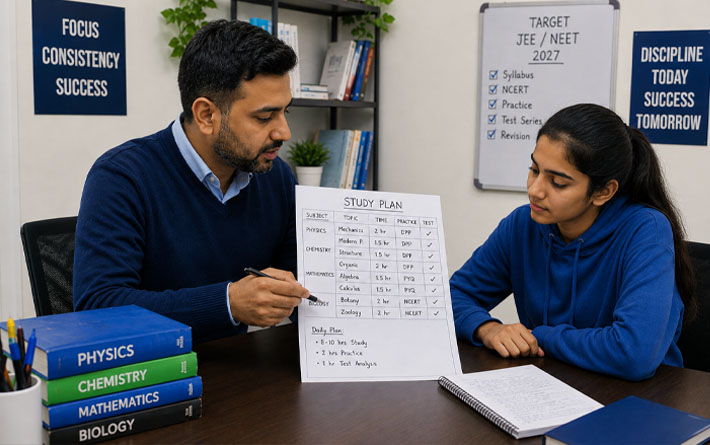
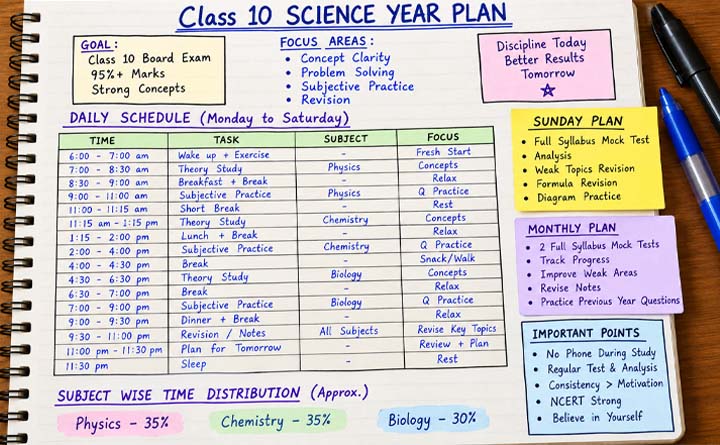
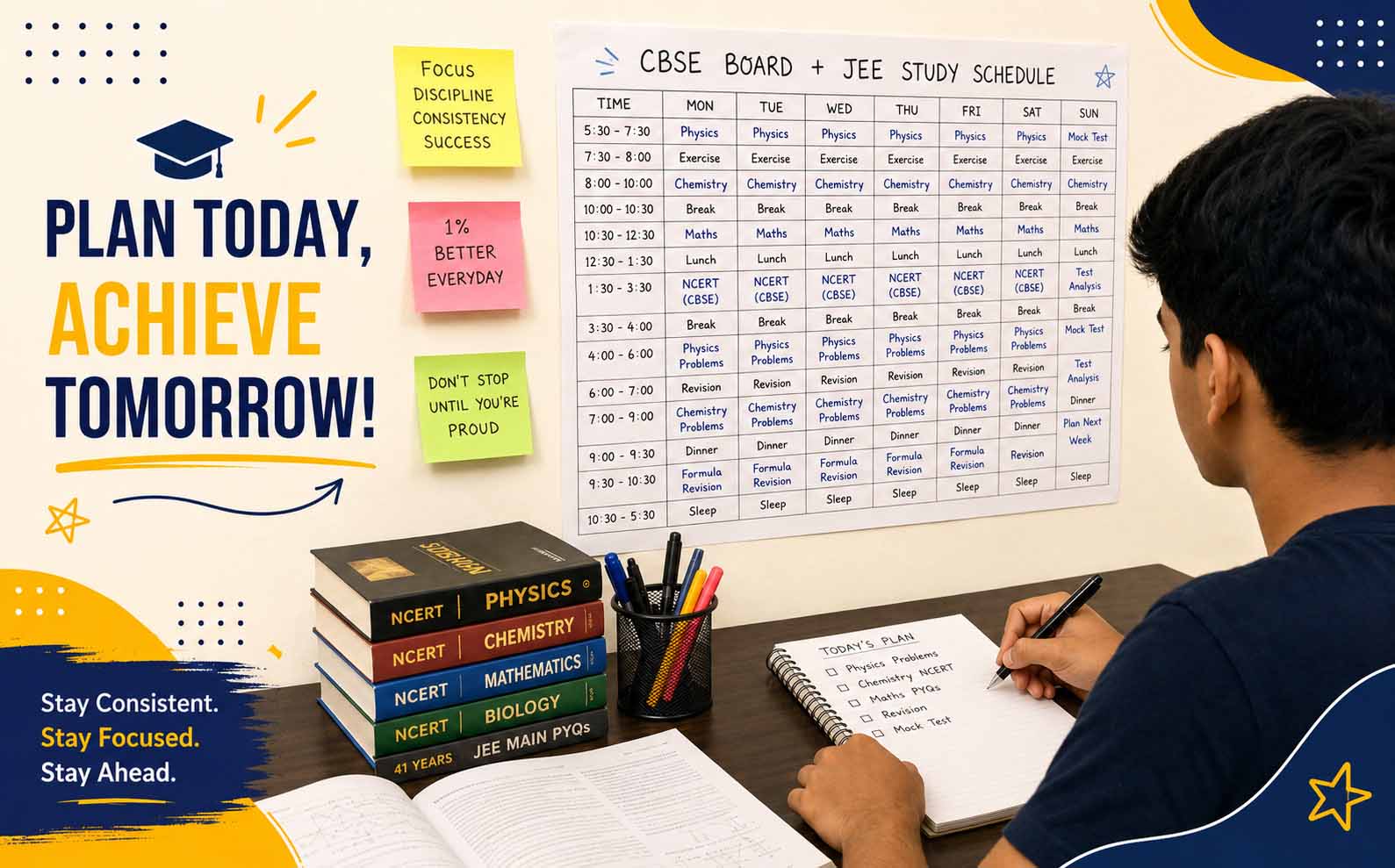
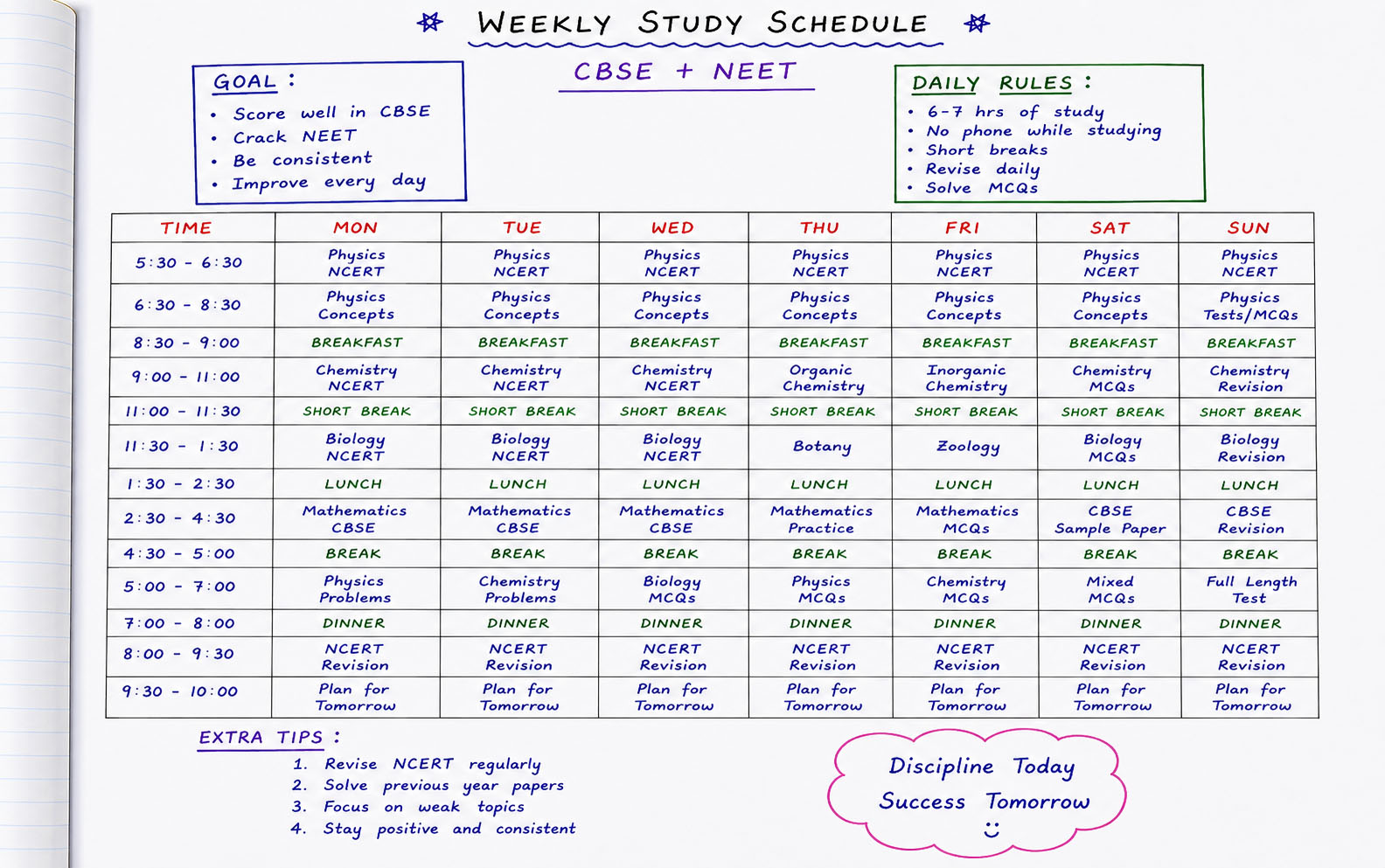
JEE and NEET preparation involves large syllabi, repeated revision, mock tests, and constant practice. Without a plan, students often spend too much time on comfortable chapters and avoid the difficult ones. A mentor’s job is to help build a study plan that balances new learning, revision, problem-solving, and testing.
The plan should be realistic, not decorative. Many students create perfect timetables that collapse within a week because they do not account for school hours, coaching classes, fatigue, travel, or personal pace. A good mentor helps students build a plan they can actually follow.
A practical weekly plan usually includes:
-
Concept learning: Time for understanding theory, class notes, NCERT content where relevant, and core examples.
-
Daily practice: Question-solving sessions that match the chapter and difficulty level.
-
Revision slots: Short, repeated review of formulas, reactions, diagrams, facts, and previously solved mistakes.
-
Test practice: Scheduled chapter tests, part tests, and full-length mocks depending on the stage of preparation.
-
Backlog control: Dedicated time to clear pending topics before they become overwhelming.
-
Rest and recovery: Breaks that prevent burnout and help the student stay consistent.
A mentor should also help the student adjust the plan when reality changes. If a school exam, illness, family event, or low test score disrupts the routine, the answer is not panic. The mentor should help reset priorities and protect the student’s confidence.
The mentor should build strong study habits
Competitive exams reward consistency more than occasional intensity. A student who studies with focus every day usually performs better than one who studies in bursts before a test. An academic mentor for JEE NEET preparation should therefore pay close attention to habits, not just marks.
Strong habits include active recall, regular revision, timed practice, error analysis, and disciplined use of study resources. Students often collect too many books, apps, notes, and question banks. A mentor should help them avoid resource overload and focus on completing selected material properly.
Mentors should also teach students how to study a chapter. For example, reading theory once is rarely enough. A better process is to understand the concept, solve basic questions, review mistakes, attempt mixed problems, revise short notes, and later test the topic under time pressure. This method helps students move from familiarity to exam readiness.
Progress tracking must be honest and regular
A mentor cannot guide effectively without tracking progress. Test marks matter, but they are only one part of the picture. The mentor should look at accuracy, speed, topic-wise mistakes, repeated errors, skipped questions, and the student’s ability to recall concepts under pressure.
Regular tracking also prevents surprises. If a student is falling behind in Organic Chemistry, Mechanics, or Human Physiology, the mentor should notice early and intervene. Waiting until the final months makes recovery much harder.
A good progress review should include:
-
What was planned: Chapters, practice sets, tests, and revision tasks assigned for the week.
-
What was completed: Honest review of actual work done, without exaggeration.
-
What improved: Better accuracy, faster solving, fewer careless mistakes, or stronger concept clarity.
-
What still needs attention: Weak chapters, low confidence areas, poor time management, or incomplete revision.
-
What changes next: Adjusted targets for the coming week based on performance.
This type of review makes preparation measurable. It also teaches students accountability without making them feel attacked.
How should a mentor handle test scores and mistakes?
A mentor should treat test scores as diagnostic tools, not final judgments of a student’s ability. Low marks can reveal weak concepts, poor revision, exam fear, careless reading, or wrong question selection. The mentor’s role is to help the student understand the reason behind the score and decide the next step.
Many aspirants make the mistake of taking a test, checking the score, feeling happy or disappointed, and then moving on. That wastes the value of the test. A mentor should insist on post-test analysis because improvement comes from understanding mistakes.
Mistakes can be grouped into practical categories:
-
Conceptual errors: The student did not understand the topic properly.
-
Application errors: The concept was known, but the student could not apply it to a question.
-
Calculation errors: The approach was right, but arithmetic, units, or signs went wrong.
-
Reading errors: The student missed words such as “not,” “incorrect,” “except,” or “minimum.”
-
Time-management errors: Too much time was spent on difficult questions, leaving easier ones unanswered.
-
Guessing errors: The student attempted questions without enough confidence or logic.
Once errors are categorized, the mentor can assign focused correction work. This is far more useful than simply telling the student to “practice more.”
Emotional support is part of academic success
JEE and NEET preparation can be emotionally demanding. Students may compare themselves with peers, fear disappointing their parents, or feel anxious after a poor mock test. A mentor should not act like a motivational speaker all the time, but they should understand that emotional stability affects academic performance.
Good mentors encourage students without giving false comfort. They acknowledge difficulty, then bring the focus back to controllable actions. A student who feels stuck needs a practical recovery plan more than vague encouragement.
Mentors should also help students manage pressure during different phases of preparation. In the early phase, the challenge may be building discipline. In the middle phase, it may be handling backlog. Near the exam, it may be revision, mock test pressure, and confidence. Each phase needs a different kind of support.
Academic coaching and mentoring should work together
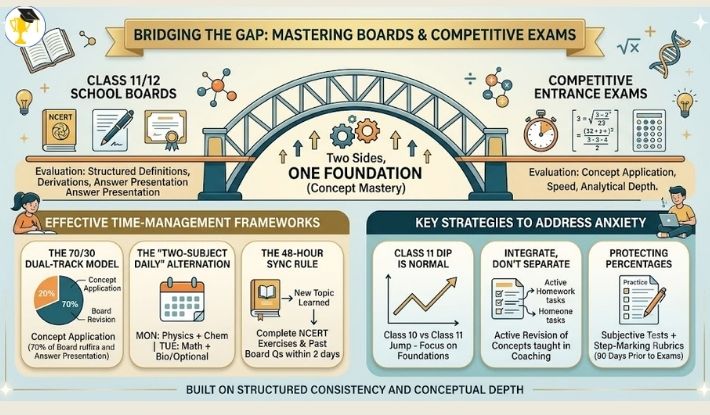
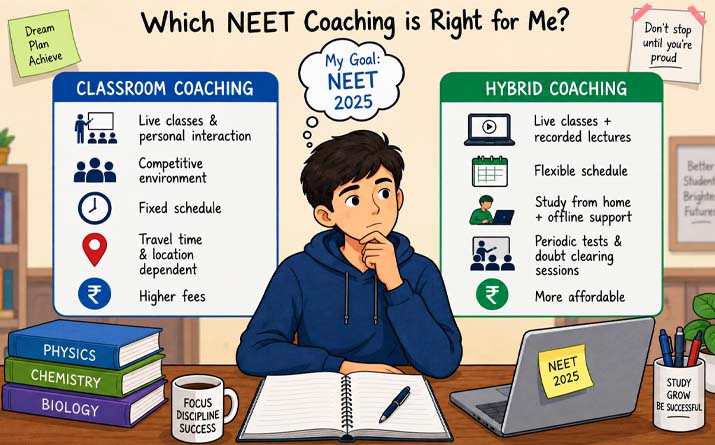
Academic coaching gives students the subject knowledge they need for JEE and NEET. Mentoring helps them use that knowledge efficiently. When both are aligned, students get a stronger support system.
For example, a Physics teacher may explain current electricity clearly in class. But if the student still scores poorly, the mentor may discover that the student is not revising formulas, avoiding numerical practice, or failing to analyze mistakes. The solution may not be another lecture; it may be a better practice and review routine.
This is why effective mentorship programs do not operate separately from academics. They should connect with test performance, class progress, syllabus completion, and student behavior. The mentor becomes the bridge between learning, planning, execution, and improvement.
The mentor should communicate with parents carefully
Parents play an important role in JEE and NEET preparation, but they may not always know how to support the student. Some parents push too hard, while others may not realize when the student is falling behind. A mentor can help by giving clear, balanced updates.
Parent communication should be specific. Instead of saying, “Your child needs to work harder,” a mentor should explain what is happening: incomplete revision, low accuracy in Chemistry, poor mock test analysis, or irregular practice. Specific feedback helps parents respond constructively.
At the same time, mentors should protect the student from unnecessary pressure. Every low score should not become a family crisis. The mentor should help parents understand progress trends, realistic goals, and the importance of steady improvement.
What makes mentorship programs effective?
Mentorship programs become effective when they are consistent, personal, and connected to measurable academic action. A program is not strong just because it schedules occasional motivational sessions. It should provide structured reviews, individual guidance, study planning, doubt direction, test analysis, and follow-up.
A good mentorship system should make students feel seen. The mentor should know whether the student is completing tasks, where they are struggling, and how their performance is changing over time. Without this continuity, mentoring becomes generic advice.
Useful mentorship programs often include:
-
Regular one-on-one check-ins with the student.
-
Personalized study targets based on current performance.
-
Chapter-wise and subject-wise progress tracking.
-
Test analysis and mistake correction plans.
-
Backlog management support.
-
Exam temperament guidance for mock tests and final preparation.
-
Parent updates that are honest but not fear-driven.
The goal is not to control every hour of the student’s life. The goal is to help the student become more disciplined, self-aware, and exam-ready.
Guidance should change as the exam gets closer
The mentor’s role is not the same throughout the preparation journey. Early on, the focus is usually on building concepts, setting routines, and completing the syllabus steadily. In the middle stage, the mentor may need to help with backlogs, mixed practice, and strengthening weak areas.
As the exam approaches, the focus shifts toward revision, full-length tests, speed, accuracy, and confidence. At this stage, students often feel tempted to start new books or chase advanced material randomly. A mentor should help them stay focused on what will produce the most improvement.
Near the exam, the mentor should encourage smart repetition. Short notes, marked questions, formula sheets, NCERT revision for NEET where applicable, and mock test analysis become especially important. The student needs clarity, not chaos.
Signs of a good academic mentor
A good mentor is practical, observant, patient, and honest. They do not simply praise the student or criticize them after every mistake. They identify patterns and guide the student toward better decisions.
Students and parents can look for these signs:
-
The mentor listens before giving advice.
-
Plans are personalized, not copied for every student.
-
Feedback is specific and actionable.
-
Weaknesses are addressed early, not ignored.
-
Test analysis is treated as seriously as test-taking.
-
The mentor balances motivation with accountability.
-
Communication is clear, respectful, and regular.
-
The student gradually becomes more independent and confident.
The best mentors do not make students dependent on them for every decision. Instead, they teach students how to think about preparation, judge their own performance, and correct their approach.
The final takeaway
An academic mentor should help JEE and NEET aspirants prepare with clarity, consistency, and confidence. Their role includes planning, tracking, test analysis, habit-building, emotional support, and communication with parents. When mentoring is done well, students do not just study more; they study better.
For serious aspirants, the right mentor can bring structure to a stressful journey. With thoughtful academic coaching, disciplined practice, and meaningful guidance, preparation becomes less confusing and more purposeful.


 STUDY MATERIALS
 COURSES
 MORE
MORE
 SUCCESS STORY
 ADMISSION
 STORE
STORE