How Coaching Scholarships Work and What Parents Should Check
Coaching scholarships can reduce the cost of structured support for IIT JEE preparation, NEET preparation, medical preparation, or other competitive exam programs. Most institutes award them through a coaching scholarships test, past academic performance, financial need, or a mix of these factors. For parents, the goal is not only to find the biggest discount, but to understand the terms, teaching quality, fee structure, and whether the program genuinely suits the child’s learning needs.
How do coaching scholarships actually work?
Coaching scholarships usually work by offering a partial or sometimes higher fee reduction to students who meet the institute’s eligibility criteria. A student may qualify through an iit coaching scholarships test, a general coaching scholarships test, school marks, previous exam scores, or a need-based application. The scholarship is then applied to tuition fees, but parents should check whether it covers registration charges, study material, test series, digital access, hostel support, transport, or other add-on costs.
In many cases, the scholarship percentage is tied to a score band. A higher score may lead to a larger fee waiver, while a lower qualifying score may lead to a smaller discount. Some institutes also use scholarship tests as admission screening tools, so the result may determine both the batch level and the discount offered.
1. Identify the exam goal before comparing scholarships
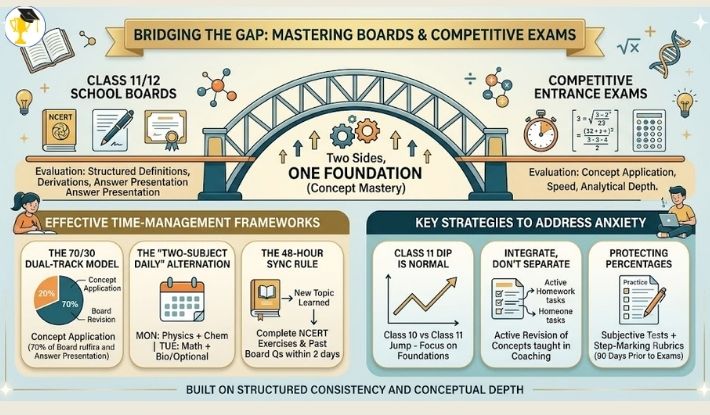
Start by confirming which path your child is preparing for. IIT JEE preparation and jee coaching are usually built around Physics, Chemistry, and Mathematics for engineering entrance exams. NEET coaching and medical preparation focus on Physics, Chemistry, and Biology, with a different question pattern, revision style, and practice load.
This matters because a large scholarship is not useful if the course is not aligned with the exam. A student targeting NEET needs strong Biology support and regular medical entrance-style practice. A student focused on engineering preparation needs problem-solving depth in Mathematics and Physics, not a generic competitive exam batch.
Before filling out any form, write down:
-
The target exam: JEE, NEET, foundation, or another entrance path
-
Current class level and school board demands
-
Preferred mode: classroom, online, hybrid, or recorded support
-
Travel time and weekly schedule
-
Subjects where the student needs the most help
-
Whether the student needs a top batch, regular batch, or doubt-clearing support
This short list helps parents avoid being distracted by a discount that does not match the child’s real academic requirement.
2. Shortlist institutes with relevant scholarship tests
Once the goal is clear, look for coaching scholarships that are specific to the student’s exam track. For IIT JEE preparation, search for an iit coaching scholarships test or JEE-focused entrance-cum-scholarship test. For NEET preparation, look for NEET coaching scholarship options that assess Biology along with Physics and Chemistry.
Do not shortlist only by scholarship percentage. A responsible shortlist should include institutes that explain their syllabus, batch structure, faculty access, test frequency, doubt-solving process, and fee rules clearly. If an institute is vague before admission, it may be harder to resolve issues after payment.
Use these filters while comparing options:
-
Does the test match the student’s current class level?
-
Is the scholarship linked to the right course, such as JEE coaching or NEET coaching?
-
Are the terms available in writing?
-
Is the fee after scholarship clearly mentioned?
-
Are there separate charges for books, tests, app access, or admission?
-
Is the scholarship valid for the full course or only part of it?
If you notice misspelled or unclear promotional phrases such as “engineering preparartion,” treat that as a reminder to read the complete details carefully rather than relying on search ads or banners alone.
3. Read the eligibility rules before registration
Many parents register quickly because scholarship seats appear limited or the test date is close. It is better to pause and read the eligibility rules first. A child may need to be in a specific class, follow a particular syllabus, submit school marks, or choose from selected course programs to use the discount.
Check whether the scholarship is open to new students only or also available to existing students. Some coaching scholarships apply only at the time of fresh admission. Others may be renewed based on performance, attendance, or internal test scores.
Before paying a registration fee, confirm:
-
The student’s class and stream eligibility
-
Required documents, such as school ID or marksheet
-
Test mode, date, time, and duration
-
Whether the registration fee is refundable
-
Whether parents must complete admission within a fixed period after results
-
Whether the scholarship can be transferred to another course, center, or sibling
These details prevent disappointment later, especially if the scholarship looks attractive but applies to a course your child cannot or should not join.
What should parents check in the fee terms?
Parents should check the final payable amount, not just the scholarship percentage. A 50% scholarship sounds simple, but the actual saving depends on which fee components are included. Ask for a written breakup showing tuition, registration, study material, test series, technology fee, GST or taxes if applicable, and any installment charges.
Also ask what happens if the student changes batch, leaves the program, shifts from offline to online, or cannot continue due to personal reasons. Refund and cancellation rules can vary, so assumptions are risky. A good decision is based on the total cost, the payment schedule, and the conditions attached to the discount.
4. Help your child prepare for the scholarship test
A coaching scholarships test is not just a discount opportunity. It also gives a rough picture of the student’s current level, speed, accuracy, and exam readiness. Treat it as a diagnostic exercise, especially for students beginning IIT JEE preparation, NEET preparation, or long-term foundation courses.
Begin with the announced syllabus. If the institute provides sample questions, previous patterns, or topic lists, use them to create a short revision plan. Avoid pushing the student into last-minute cramming. The purpose is to perform well, but also to choose the right course level.
A practical preparation plan may include:
-
Revise core school concepts from the test syllabus.
-
Solve mixed questions under a time limit.
-
Review errors instead of only counting marks.
-
Practice basic calculation speed and accuracy.
-
Sleep properly before the exam.
-
Keep documents and login details ready in advance.
For JEE-focused tests, give extra attention to conceptual clarity and multi-step problem solving. For NEET-focused tests, balance Biology memory-based topics with Physics numericals and Chemistry fundamentals.
5. Evaluate the result beyond the discount
When the scholarship result arrives, do not make the decision only by looking at the waiver. The score, rank, or performance report may reveal whether the student is ready for an advanced batch or would benefit from a more gradual learning path. A high-pressure batch is not always the best choice for every learner.
Ask the institute how the result will affect batch allocation. Some students may be placed in competitive batches based on scores, while others may be advised to join regular or bridge batches. Parents should understand whether batch movement is possible later if performance improves.
Discuss the result with your child calmly. If the score is lower than expected, use it to identify gaps rather than create fear. Competitive exam preparation is a long process, and the right coaching environment should help the student build consistency, not feel defeated at the starting line.

6. Verify teaching support before admission
A scholarship reduces cost, but teaching support determines value. Before final admission, check how classes are conducted and how students get help when they are stuck. Strong jee coaching or neet coaching should include structured lectures, regular practice, doubt support, tests, feedback, and revision planning.
If possible, attend an orientation, demo class, counseling session, or academic discussion. Ask specific questions instead of accepting broad promises. For example, ask how often tests happen, how mistakes are reviewed, and whether parents receive progress updates.
Important support areas to check include:
-
Faculty availability for doubt clearing
-
Batch size and student interaction
-
Test analysis after major assessments
-
Revision schedule before exams
-
Support for missed classes
-
Access to recorded lessons or practice material, if offered
-
Parent communication process
-
Academic mentoring for weak areas
The best scholarship decision balances affordability with learning quality. A smaller scholarship at a better-fit institute may be more useful than a larger discount in a program where the child feels lost.
7. Compare pressure, schedule, and travel load
Competitive exam coaching can be demanding. Parents should look at the full weekly routine before enrolling. A course that looks manageable on paper may become stressful when combined with school, homework, commuting, tests, and self-study.
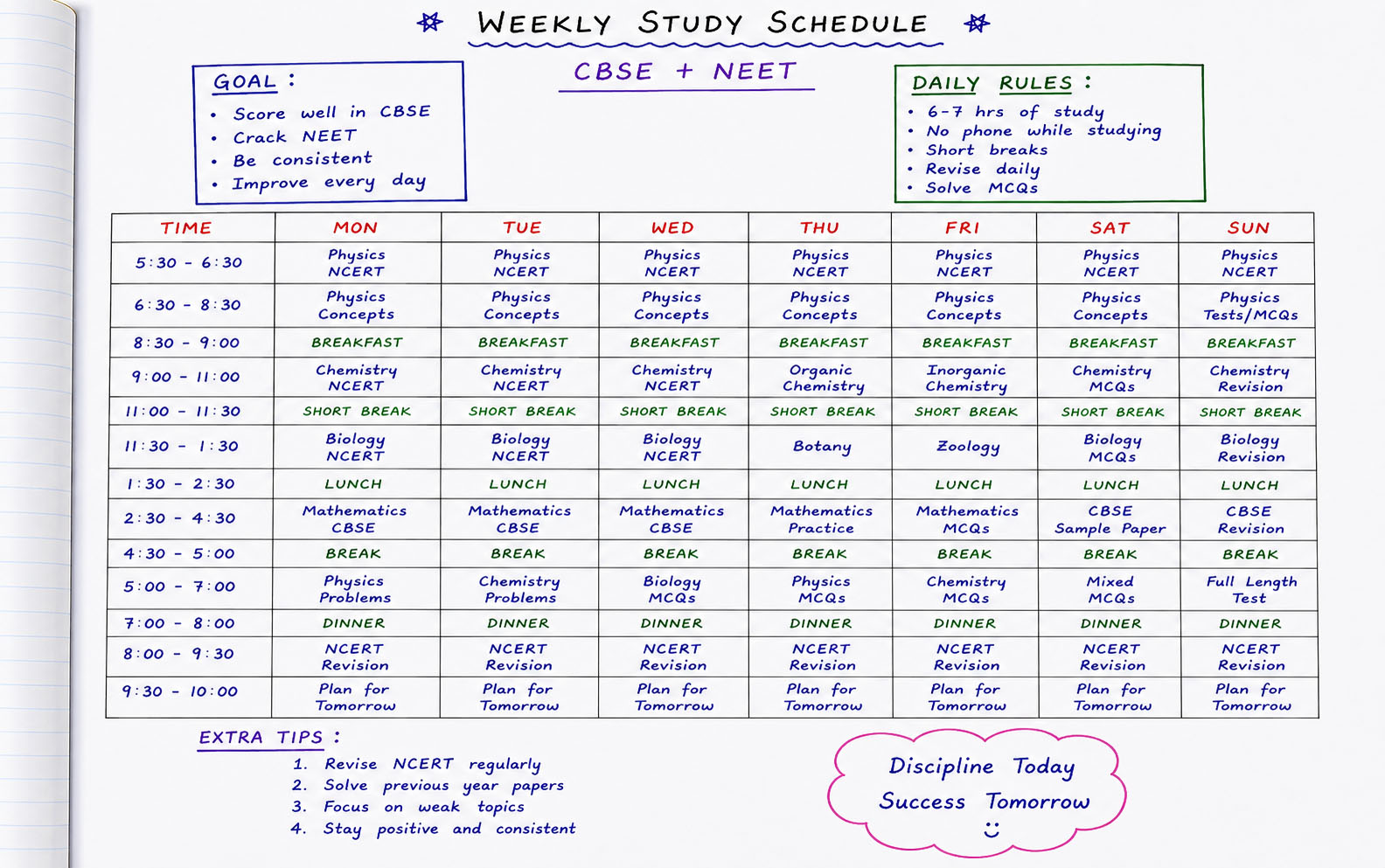
For younger students, foundation programs should not remove all time for rest and school learning. For senior students, especially those in intensive IIT JEE preparation or medical preparation, the schedule must still allow revision and error correction. More classes do not automatically mean better preparation if the student has no time to absorb concepts.
Check the practical load:
-
How many class hours are scheduled each week?
-
How much homework is expected after class?
-
How often are tests held?
-
How far is the center from home?
-
Is the student comfortable asking questions?
-
Will the schedule affect school attendance or sleep?
A scholarship should support progress, not push the student into a routine that is unsustainable.
What should you do before paying the admission fee?
Before paying, collect every important promise in writing and review it as a family. This includes the scholarship percentage, final fee, payment dates, refund policy, course duration, batch details, included materials, and any renewal condition. If a counselor explains something verbally, ask for the same point to be shared by email, brochure, admission form, or official message.
Use a final parent checklist before committing:
-
Confirm the course name and exam focus.
-
Check the final payable amount after scholarship.
-
Read refund, cancellation, and installment rules.
-
Verify what study material and tests are included.
-
Understand batch allocation and batch change rules.
-
Ask how parent updates and student feedback work.
-
Make sure the student is comfortable with the schedule.
-
Keep copies of receipts, forms, and written terms.
This step protects both the parent and the student. It also creates a clear reference point if there is confusion later.
8. Review progress after enrollment
The work does not end once the scholarship is accepted. After enrollment, monitor whether the coaching is helping your child learn steadily. Look at test analysis, homework completion, doubt resolution, and confidence levels, not just rank or marks.
Set a simple review rhythm. Every few weeks, ask what topics feel clear, what feels difficult, and whether doubts are being answered. If the student is falling behind, contact the mentor or academic coordinator early instead of waiting for a major test result.
Parents should also watch for burnout. In IIT JEE preparation, NEET preparation, and other competitive tracks, students need discipline, but they also need sleep, food, breaks, and emotional support. A scholarship is valuable only when the overall learning environment remains healthy and productive.
Make the scholarship serve the student, not the other way around
Coaching scholarships can make quality preparation more accessible, especially for families planning long-term jee coaching, neet coaching, engineering preparation, or medical preparation. The smartest approach is to treat the scholarship as one part of the decision, not the whole decision.
Choose a program where the course matches the exam, the fee terms are transparent, the schedule is realistic, and your child can actually learn. When parents check these details carefully, a coaching scholarship becomes more than a discount; it becomes a practical tool for better planning and more focused preparation.


 STUDY MATERIALS
 COURSES
 MORE
MORE
 SUCCESS STORY
 ADMISSION
 STORE
STORE