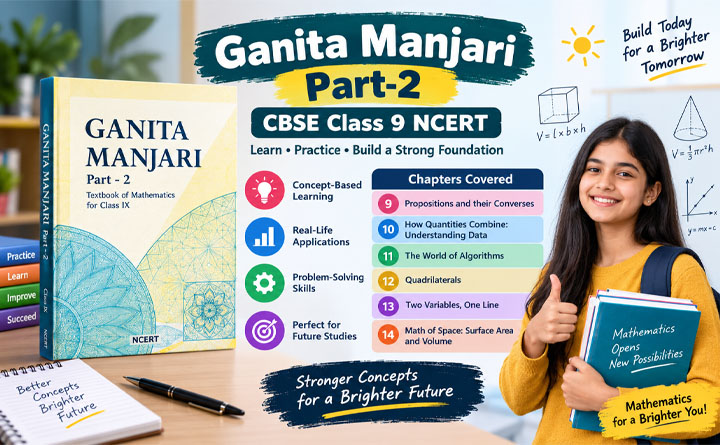


The NCERT Class 9 Maths Ganita Manjari textbook is designed to make mathematics simple, logical, and practical for students. One of the most important early chapters is “Introduction to Linear Polynomials”, which builds a strong foundation in algebra. Understanding this chapter is essential because it prepares students for higher-level topics like equations, graphs, and coordinate geometry.
In this blog, you will find detailed explanations, solved examples, important concepts, and exam-oriented preparation tips for mastering this chapter.
What is a Polynomial?
A polynomial is an algebraic expression made up of variables, constants, and powers combined using addition, subtraction, or multiplication.
Examples:
What are Linear Polynomials?
A linear polynomial is a polynomial of degree 1. This means the highest power of the variable is 1.
ax+bax + bax+b
Where:
Examples:
Key Concepts in This Chapter
1. Degree of a Polynomial
The degree is the highest power of the variable.
2. Value of a Polynomial
To find the value, substitute a number for the variable.
Example:
Find value of 2x+32x + 32x+3 when x=2x = 2x=2
Solution:
2(2)+3=72(2) + 3 = 72(2)+3=7
3. Zero of a Polynomial
A zero of a polynomial is the value of x that makes the polynomial equal to zero.
Find zero of 2x+42x + 42x+4
Solution:
2x+4=02x + 4 = 02x+4=0
2x=−42x = -42x=−4
x=−2x = -2x=−2
NCERT Class 9 Chapter Solutions (Sample Questions)
Question 1: Find value of polynomial
Find value of 4x−14x - 14x−1 when x=3x = 3x=3
Solution: 4(3)−1=114(3) - 1 = 114(3)−1=11
Question 2: Find zero of polynomial
Find zero of x−5x - 5x−5
Solution:
x−5=0x - 5 = 0x−5=0
x=5x = 5x=5
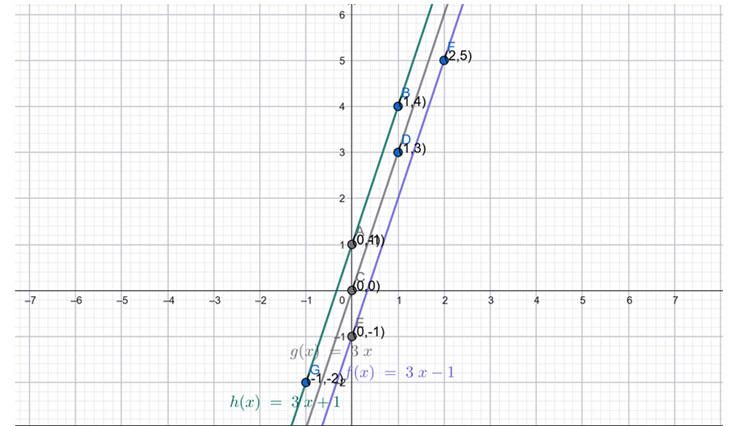
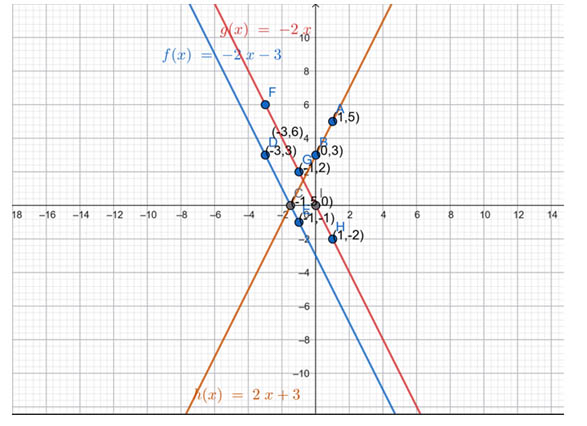
Question 3: Draw the graphs of the following sets of lines. In each case, reflect on the role of ‘a’ and ‘b’.
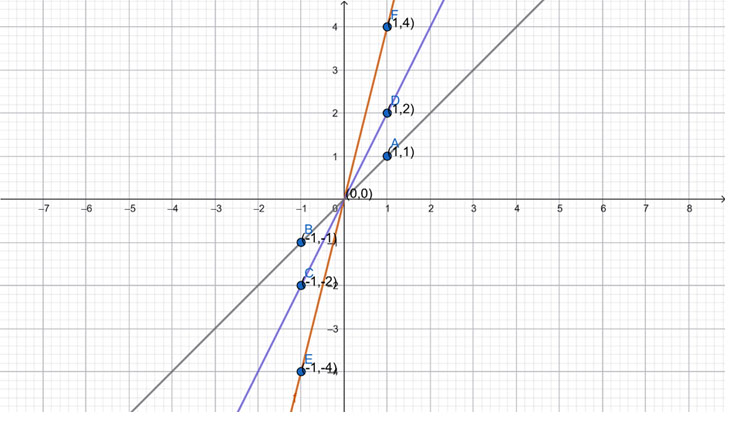
(i) y = 4x, y = 2x, y = x
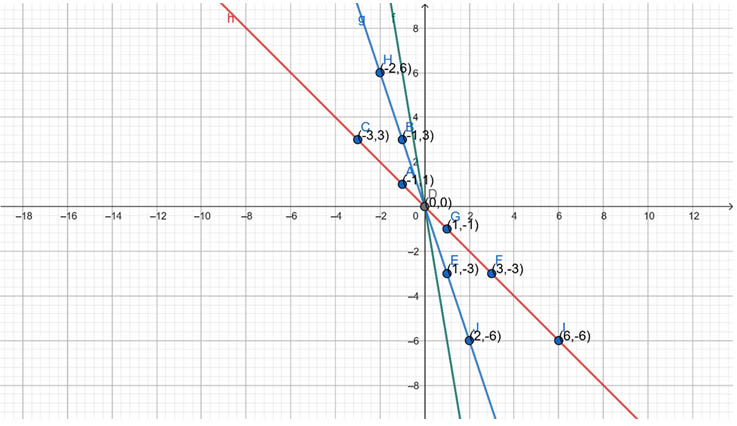
(ii) y = – 6x, y = – 3x, y = – x
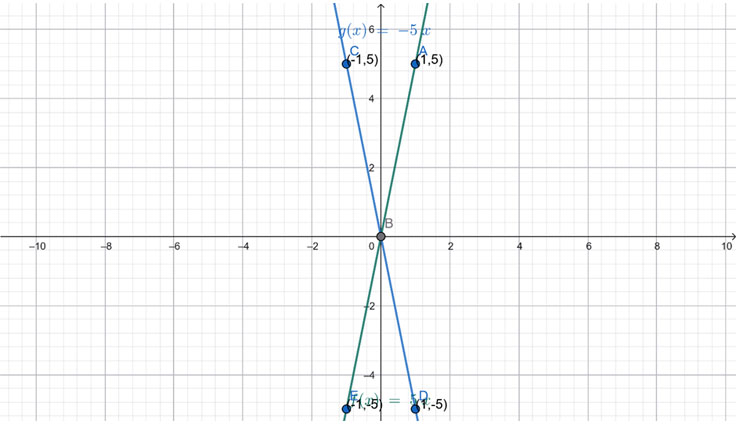
(iii) y = 5x, y = –5x
(iv) y = 3x – 1, y = 3x, y = 3x + 1
(v) y = –2x – 3, y = –2x, y = 2x + 3
Solution:
(i) y = 4x, y = 2x, y = x

Observation:
1. All lines pass through because b = 0.
2. Larger a → steeper line.
(ii) y = – 6x, y = – 3x, y = – x

Observation:
1. All lines pass through the origin.
2. Negative a → lines slope downward.
3. Larger magnitude of a → steeper downward slope.
(iii) y = 5x, y = –5x

(iv) y = 3x – 1, y = 3x, y = 3x + 1

Observation:
1. Both lines pass through the origin.
2. Same steepness, opposite direction (mirror images).
(v) y = –2x – 3, y = –2x, y = 2x + 3

Observation:
1. First two lines are parallel (same slope 2).
2. Third line has a different slope → different direction.
3. b controls vertical position.
Why This Chapter is Important?
This chapter is the foundation of algebra and helps students in:
Exam Preparation Tips
Practice Daily
Solve at least 10 polynomial questions daily.
Focus on Concepts
Understand degree, zeros, and graphs clearly.
Solve NCERT Exercises
Do all textbook examples and back exercises.
Revise Formulas
Remember standard form and methods.
Common Mistakes to Avoid
Real-Life Applications
Linear polynomials are used in:
Benefits of Using These Solutions
Conclusion
NCERT Class 9 Maths Ganita Manjari Chapter 2 Solutions – Introduction to Linear Polynomials is a crucial chapter for building a strong algebra base. By practicing regularly and understanding key concepts like degree, zeros, and graphs, students can easily score high marks.
Make sure to revise regularly and solve all NCERT questions for the best results.
Smartachivers
May 17,2026
Smartachivers
May 17,2026
Smartachivers
May 17,2026
Smartachivers
May 17,2026
Smartachivers
May 17,2026
Smartachivers
May 17,2026
Smartachivers
May 17,2026
Smartachivers
May 16,2026
Smartachivers
May 19,2026
Smartachivers
May 19,2026
Smartachivers
May 19,2026
Smartachivers
May 19,2026
Smartachivers
May 19,2026
Smartachivers
May 19,2026
Smartachivers
May 19,2026
Smartachivers
May 19,2026
Smartachivers
May 19,2026
Smartachivers
Apr 10,2026
Smartachivers
Apr 08,2026
Smartachivers
Apr 07,2026