

CBSE to Enforce Three-Language System for Classes 9 and 10 Starting July 1

CBSE to Enforce Three-Language System for Classes 9 and 10 Starting July 1

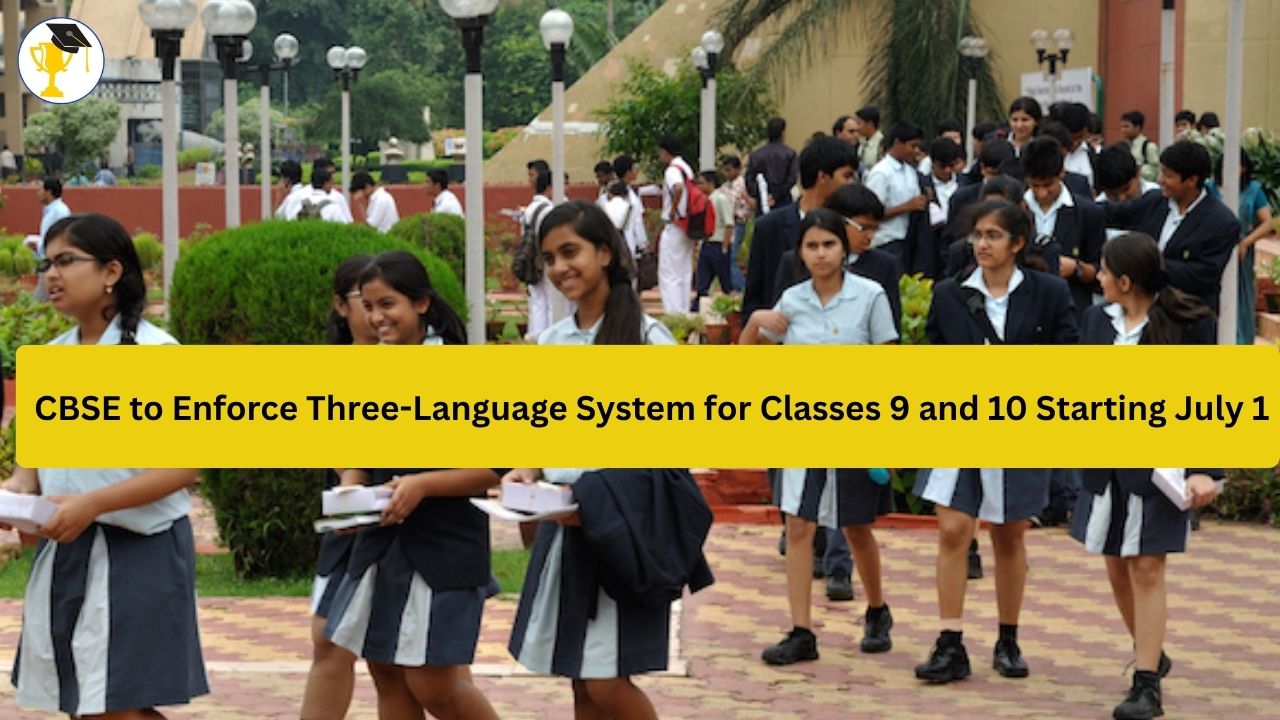
In one of the most comprehensive academic restructurings in recent history, the Central Board of Secondary Education (CBSE) has announced a massive curriculum overhaul for secondary school students. Effective July 1, 2026, the board is formally introducing a compulsory three-language rule for Class 9.

This monumental shift is accompanied by another groundbreaking update: the complete dismantling of the existing 'Basic and Standard' Mathematics framework, replacing it with a brand-new, two-level evaluation system for both Mathematics and Science starting in the 2026–27 academic session.

These updates directly align secondary schooling with the core pillars of the National Education Policy (NEP) 2020 and the National Curriculum Framework for School Education (NCF-SE) 2023, aiming to promote multilingualism and deeper analytical thinking.

1. The New Three-Language Mandate: R1, R2, and R3 Levels Explained

Beginning July 1, 2026, students entering Class 9 will no longer have the option to study just two languages. Instead, pursuing three distinct languages will become entirely compulsory.

To make this transition smooth, CBSE has structured language education into three operational Tiers: R1, R2, and R3.

[ R1: Main Language ] ---> [ R2: Different Language ] ---> [ R3: Third Language ]
    (Student's Choice)         (Must be unique from R1)       (Compulsory Component)

Key Rules of the Language Policy:

  • The Native Language Clause: Out of the three selected languages (R1, R2, and R3), at least two must be native Indian languages. This rule ensures that students retain strong linguistic roots within the diverse heritage of India.

  • No Level Duplication: The languages selected for R1 and R2 must be completely different. A student cannot attempt the same language across multiple proficiency levels simultaneously.

  • No Class 10 Board Exam for R3: In a massive relief for students worried about increased academic pressure, there will be no board examination for the third language (R3) in Class 10. The third language is strictly for internal or academic enrichment at the secondary level.

  • Phased Rollout Strategy: While the rule hits Class 9 on July 1, the R3 component is mandatory from Class 6 starting this 2026–27 session, with a long-term goal to be fully integrated and operational up to Class 10 by the 2030–31 academic year.

What Languages Can Students Choose From?

The CBSE curriculum provides an expansive palette of options. The available courses comprise India's two primary official languages (Hindi and English), alongside 42 other languages. This expansive list includes all scheduled languages officially recognized in the 8th Schedule of the Indian Constitution, alongside regional dialects and international foreign languages.

2. Say Goodbye to "Basic Maths": The New Two-Tier System for Maths & Science

For years, CBSE Class 10 students have navigated their board exams by choosing between 'Basic Mathematics' (for those looking to drop Maths in Class 11) and 'Standard Mathematics' (for STEM aspirants).

Starting in the 2026–27 academic session, this Basic vs. Standard system is being permanently retired. In its place comes a far more rigorous and flexible two-tier hierarchy that extends to both Mathematics and Science.

How the Standard + Advanced System Works:

Under the upcoming 2026–27 academic framework, every single student will sit for a unified core paper, but those aiming for elite engineering, medical, or pure science streams can opt for an additional layer of evaluation:

  1. The Standard Core (Common for All): Every registered student will study a standard curriculum and write a common 80-mark, 3-hour exam for both Mathematics and Science.

  2. The Advanced Component (Optional): Students looking to test their limits or pursue higher STEM education can opt to write a separate 25-mark paper. This secondary test is explicitly engineered to challenge Higher-Order Thinking Skills (HOTS) and conceptual depth.

Timeline Alert: This new standard-plus-advanced twin evaluation blueprint for Mathematics and Science will commence at the classroom level in the 2026–27 session. The very first batches of Class 10 students to face Board Exams under this format will do so in 2028.

A Conceptual Visual Representation of the Framework

To help students, parents, and educators easily visualize how these two parallel academic tracks will function inside classrooms starting this year, here is an structural layout of the new curriculum:

Strategic Takeaways for Students and Parents

While these guidelines might seem overwhelming at first glance, they are designed to give students more academic freedom:

  • Reduced Exam Pressure: You don't need to panic about writing three language board exams in Class 10—R3 is managed internally without board exam stress.

  • Keep Academic Options Open: Under the old system, choosing "Basic Math" early in Class 9 permanently closed the door to future engineering tracks. Now, because the 80-mark Core paper is identical for everyone, students can safely gauge their comfort level before deciding to tackle the 25-mark Advanced HOTS paper.

Make sure to schedule a counseling session with your school's academic coordinators prior to the July 1 rollout to lock in your R1, R2, and R3 language preferences smoothly!

Frequently Asked Questions (FAQs)

No. While studying three languages becomes mandatory for Class 9 starting July 1, 2026, the circular explicitly states that there will be no central board examination for the third language (R3) in Class 10.
No. According to the new NEP-aligned CBSE criteria, out of the three selected languages, a minimum of two must be native Indian languages. Since French and German are foreign languages and English is classified alongside India's official languages, this combination lacks the two native Indian languages required.
The Basic Mathematics system is being completely phased out starting in the 2026–27 academic session. It is being replaced by a unified 80-mark Standard paper taken by all students, plus an optional 25-mark Advanced paper designed to test high-order thinking skills (HOTS).
While the structural classwork under the new two-level system (Standard + Advanced) officially kicks off in the 2026–27 academic calendar, the first actual Class 10 board examination under this format will take place in 2028.

Recent Posts