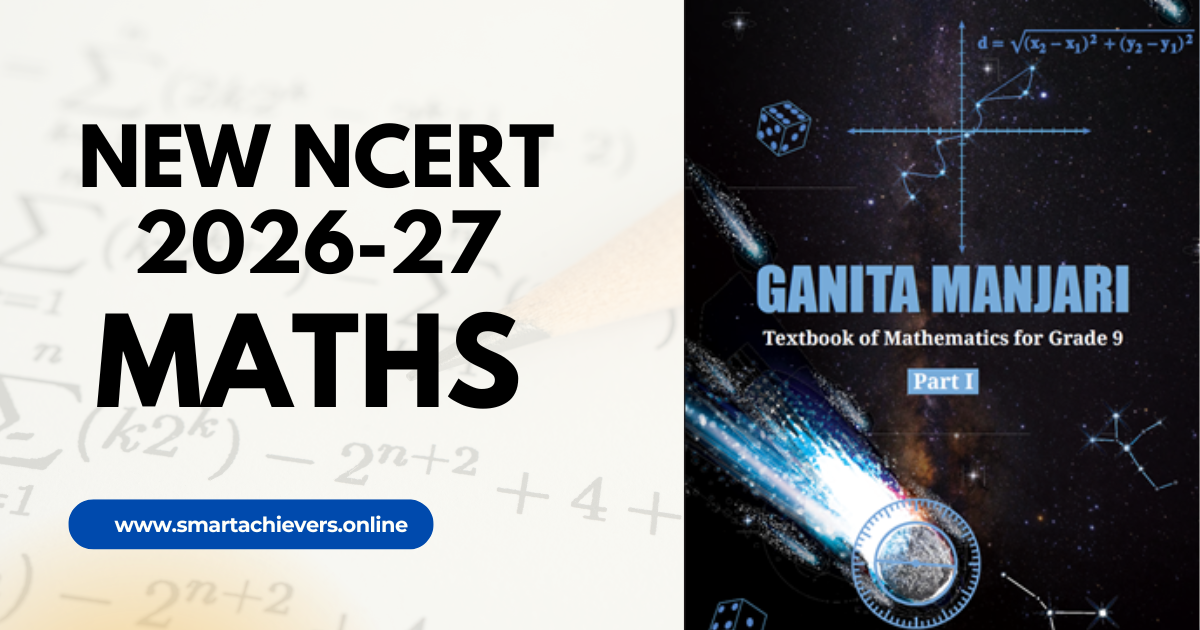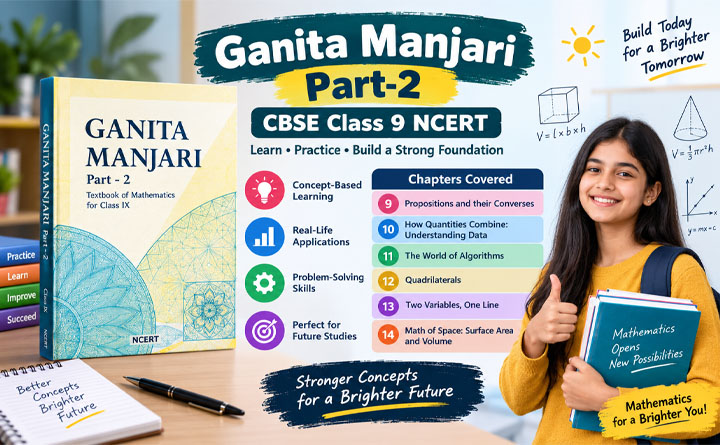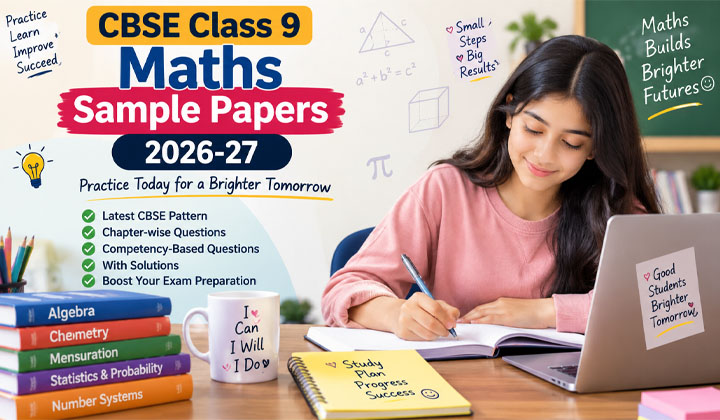


The National Council of Educational Research and Training (NCERT) has introduced a new Class 9 mathematics textbook titled Ganita Manjari, bringing a fresh approach to maths education for the 2026–27 academic session. The revised book not only teaches core mathematical concepts but also connects them with India’s rich historical and scientific traditions.
Unlike older textbooks that mainly focused on formulas and problem-solving methods, Ganita Manjari blends mathematics with historical context, logical thinking, and conceptual understanding. The book aims to make maths more relatable by showing students how mathematical ideas developed over time.
This modern teaching style encourages students to understand the “why” behind concepts instead of only memorising formulas.
One of the most discussed features of the new textbook is its emphasis on India’s early mathematical knowledge. The book references ancient texts, scholars, and civilisations that contributed to the growth of mathematics.
Examples highlighted in reports include:
This approach helps students understand that mathematics evolved across cultures and civilizations, including India.
The textbook includes engaging chapter names that sound more practical and student-friendly. Some chapters include:
These titles are designed to reduce fear of maths and make chapters more interesting.
The new textbook reflects the broader goals of India’s education reforms, which focus on:
Rather than rote learning, students are encouraged to explore patterns, ask questions, and reason logically.
The textbook has also generated public discussion. While many educators welcome the inclusion of India’s scientific heritage, some experts have raised concerns about historical interpretation and academic accuracy.
Such debates are common whenever school curricula are redesigned, especially when history and identity intersect with education.
NCERT’s Ganita Manjari marks a significant shift in how mathematics may be taught in Indian schools. By combining maths concepts with historical narratives and inquiry-based learning, the book aims to create stronger engagement among Class 9 students.
Whether praised or debated, the textbook has clearly started an important conversation: mathematics is not just about numbers—it is also part of human history, culture, and innovation.
Smartachivers
Apr 26,2026
Smartachivers
Apr 10,2026
Smartachivers
Apr 08,2026
Smartachivers
Apr 07,2026
Smartachivers
Apr 10,2026
Smartachivers
Mar 27,2026
Smartachivers
Mar 24,2026
Smartachivers
Mar 15,2026
Smartachivers
Mar 02,2026
Smartachivers
Mar 02,2026
Smartachivers
Mar 02,2026
Smartachivers
Mar 02,2026
Smartachivers
Mar 02,2026
Smartachivers
Mar 01,2026
Smartachivers
Feb 27,2026
Smartachivers
Feb 27,2026
Smartachivers
Feb 27,2026
Smartachivers
Feb 27,2026
Smartachivers
Feb 27,2026
Smartachivers
Feb 26,2026