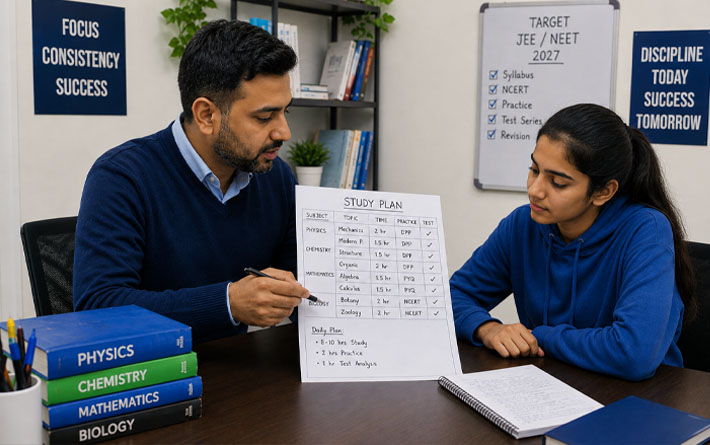


The JEE Main 2026 examination will be conducted in two sessions, with the first session scheduled from January 21 to January 30, 2026, and the second session likely to be held in April. The exam will be organised by the National Testing Agency (NTA) in Computer-Based Test (CBT) mode at multiple centres across the country.
JEE Main scores play a crucial role in engineering admissions, as they are used for entry into 31 National Institutes of Technology (NITs), several Indian Institutes of Information Technology (IIITs), and numerous state and private engineering colleges. Each year, more than 12 lakh students appear for the examination, making it one of India’s largest competitive tests.
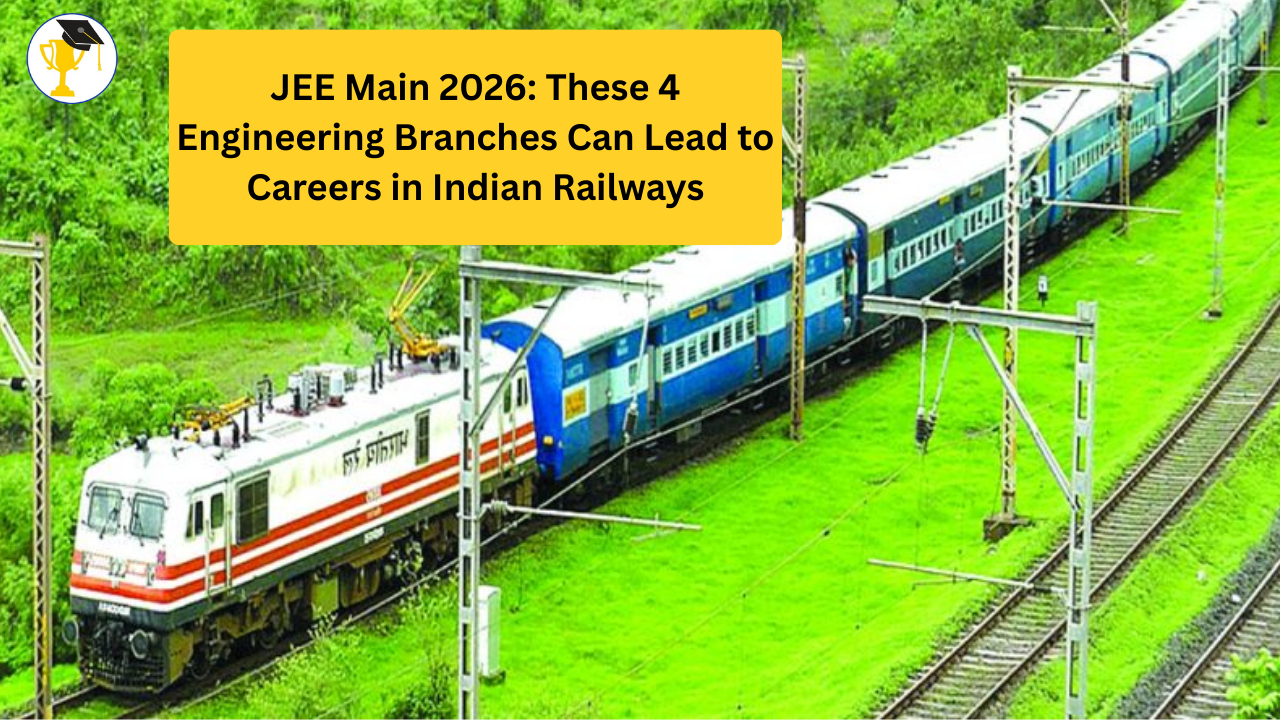
For engineering aspirants aiming for a career in Indian Railways, certain branches offer significantly better opportunities than others. Let’s take a look at the engineering streams that are most in demand.
Engineering Branches in High Demand in Indian Railways
The Indian Railways regularly recruits engineers from the following four branches due to its vast operational and infrastructure requirements:
Civil Engineering
Mechanical Engineering
Electrical Engineering
Electronics Engineering
These disciplines are essential for the planning, construction, maintenance, and modernisation of railway infrastructure and operations.
Career Opportunities for Civil and Mechanical Engineers
Civil engineers are primarily recruited under the Indian Railway Service of Engineers (IRSE). Their work involves the construction and maintenance of railway tracks, bridges, stations, tunnels, and other infrastructure projects across the country.
Mechanical engineers play a key role in the design, maintenance, and operation of locomotives, coaches, wagons, and rolling stock. They are recruited through the Indian Railway Mechanical Engineering Service (IRSME).
Roles for Electrical and Electronics Engineers
Electrical engineers are recruited under the Indian Railway Service of Electrical Engineers (IRSEE) and are responsible for traction systems, power supply, and electrical maintenance.
Electronics engineers are in demand in the Signalling and Telecommunication (S&T) department, which handles signalling systems, communication networks, control systems, and modern railway technologies critical for safe and efficient train operations.
Competitive Exams for Railway and Government Jobs
Engineering graduates from Civil, Mechanical, Electrical, and Electronics branches can appear for various government recruitment exams, including:
RRB Junior Engineer (JE)
Staff Selection Commission (SSC) technical exams
UPSC Engineering Services Examination (ESE)
With continued expansion and modernisation of railway infrastructure, these engineering branches continue to offer stable and rewarding career paths within the Indian Railways and other government sectors.
Smartachivers
Dec 29,2025
Smartachivers
Dec 29,2025
Smartachivers
Dec 29,2025
Smartachivers
Dec 29,2025
Smartachivers
Dec 29,2025
Smartachivers
Dec 29,2025
Smartachivers
Dec 24,2025
Smartachivers
Dec 24,2025
Smartachivers
Dec 24,2025
Smartachivers
Dec 24,2025
Smartachivers
Dec 23,2025
Smartachivers
Dec 23,2025
Smartachivers
Dec 23,2025
Smartachivers
Dec 23,2025
Smartachivers
Dec 23,2025
Smartachivers
Dec 23,2025
Smartachivers
Dec 23,2025
Smartachivers
Dec 21,2025
Smartachivers
Dec 20,2025
Smartachivers
Dec 20,2025