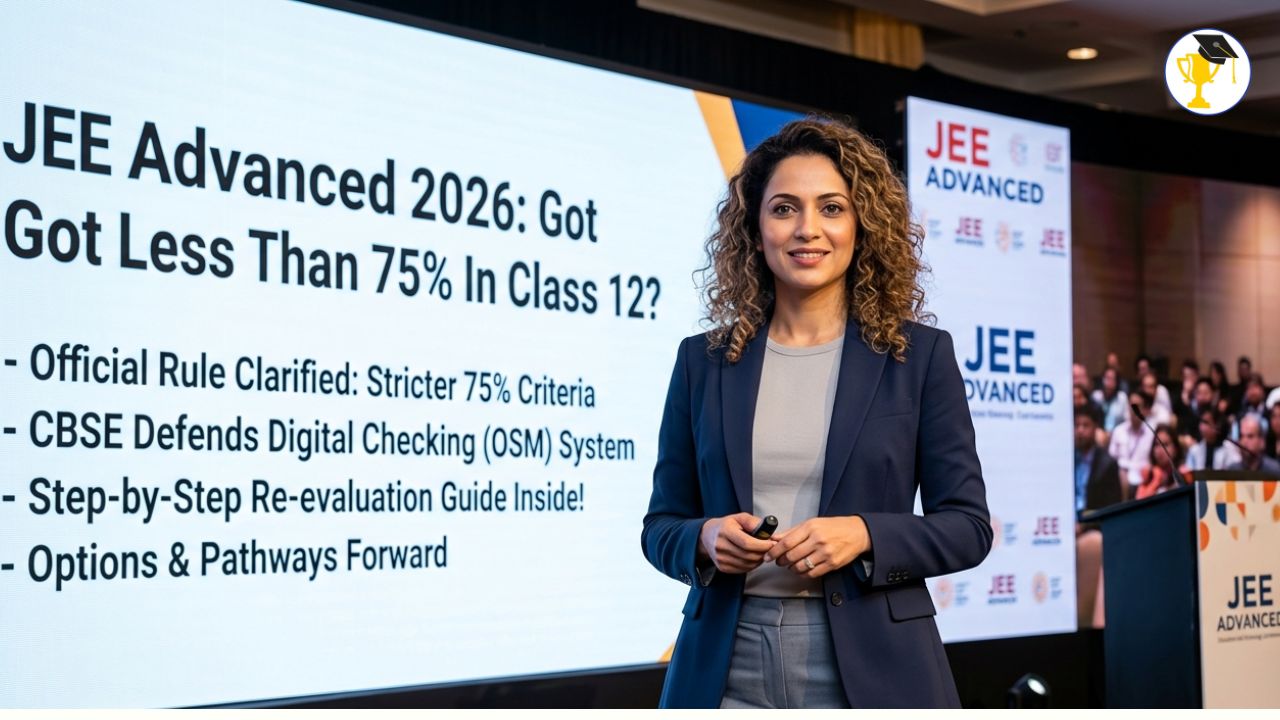


The Central Board of Secondary Education (CBSE) has officially stepped forward to defend its newly implemented On-Screen Marking (OSM) system. This response comes in the wake of intense social media criticism and widespread anxiety following the release of the Class 12 board results.
This year, the overall pass percentage plunged to 85.20%, marking a sharp 3.19 percentage point drop from last year and hitting a seven-year low. The dip has disproportionately impacted Science stream students, with platforms like X (formerly Twitter) flooded with complaints from aspirants who aced competitive exams like JEE Main but scored unexpectedly low in Physics, Chemistry, Biology, and Mathematics.
If you are one of the thousands of students shocked by your board marks, here is a breakdown of why this drop happened, how the new digital checking works, and the exact steps you can take right now to challenge your score.
Why Did Class 12 Scores Drop So Sharply This Year?
The absolute impact of this year's dip is massive. With 1.77 million students appearing for the exams (76,000 more than last year), hundreds of thousands of students have found themselves on the wrong side of the cutoff percentage.
According to educators and school principals, two main factors caused this decline:
1. Stricter Competency-Based Evaluation (NEP 2020)
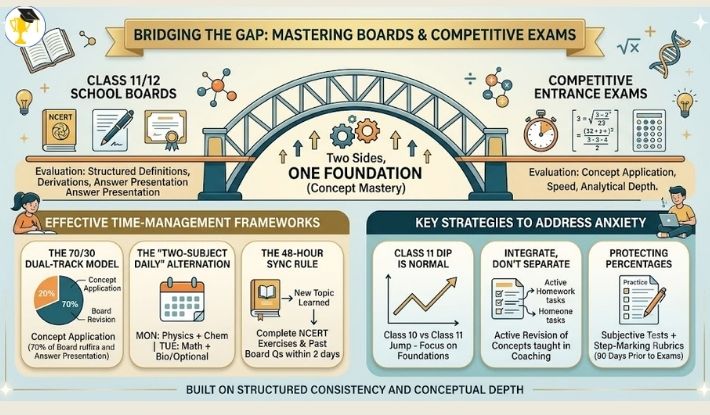
Jyoti Arora, Principal of Mount Abu School, Delhi, notes that the decline isn't solely due to the digital system. Instead, it reflects a shift toward stricter, competency-based testing mandated by the National Education Policy (NEP) 2020. The evaluation now heavily favors conceptual understanding over rote memorization, catching many traditional rote-learners off guard.
2. Teething Issues with the OSM Digital Rollout
This year marked the first full-scale deployment of OSM at the Class 12 level, with a staggering 9,866,622 answer books evaluated digitally. Under this system:
Physical answer scripts are scanned and uploaded to a secure digital portal.
Evaluators review the scripts on computer screens, annotating responses online.
Marks are entered digitally, and the software automatically calculates totals to eliminate manual counting errors.
While some Delhi government school teachers praised the system for eliminating tabulation errors, other school principals claimed the rollout was rushed. They pointed out that many evaluators lacked adequate technical training, leading to potential inconsistencies during the early phases of grading.
The CBSE Defense: "Transparency, Fairness, and Consistency"
Acknowledging the wave of anxious posts on social media, CBSE issued a statement via X to reassure students. The Board maintained that the OSM system was introduced to enhance evaluation integrity rather than damage scores.
Official CBSE Stance: The OSM framework guarantees step-wise marking based on a fixed electronic rubric while automatically compiling marks to eliminate human mathematical errors.
Crucially, CBSE reaffirmed that the digital shift does not change a student's right to seek redressal. The multi-tier re-evaluation and verification window remains fully operational.
Step-by-Step Guide: How to Apply for CBSE Class 12 Re-evaluation
If you believe your digital paper was evaluated unfairly or that scanning errors affected your score, you can challenge it. You must follow CBSE’s prescribed three-tier mechanism sequentially through the official portal (cbse.gov.in).
Stage 1: Verification of Marks
What happens: The board checks if any answer was left unrated and verifies that the digital addition is correct.
Timeline: May 19 to May 22, 2026
Fee: INR 500 per subject
Stage 2: Obtain a Scanned Photocopy of Your Answer Book
What happens: You will receive a digital link to download your evaluated answer script, showing exactly how the examiner marked and annotated your paper on their screen.
Timeline: May 26 to May 27, 2026 (Tentative - window opens shortly after Verification results)
Fee: INR 700 per answer book
Stage 3: Re-evaluation of Specific Questions
What happens: If you find a discrepancy where a correct answer was marked incorrectly based on the official CBSE marking scheme, you can challenge individual questions.
Timeline: June 1 to June 2, 2026 (Tentative)
Fee: INR 100 per question
Critical Warning for Engineering & Medical Aspirants: Marks can decrease as well as increase during re-evaluation. The revised marks will be treated as final. If your marks change, you must surrender your original physical marksheet to receive an updated one.
Missed the 75% IIT/NIT Cutoff? Don't Panic Yet
For JEE Advanced aspirants targeting IITs or NITs, missing the 75% aggregate barrier feels catastrophic. However, keep these active alternatives in mind:
Top 20 Percentile Rule: Because the national pass percentage dropped significantly, the top 20 percentile cutoff marks for your specific board might drop as well. You might still qualify even with less than 75%.
CBSE Supplementary Exams: CBSE will conduct supplementary exams on July 15, 2026. If you need to improve your score in one or two subjects to cross the 75% threshold, you can sit for this exam and present your updated scorecard during the final rounds of JoSAA counseling.
Non-JoSAA Institutes: Premier institutes like DTU, NSUT, and state-level top government colleges do not enforce a strict 75% board rule, making them excellent pivot options.
Next Steps: Keep your focus entirely on your upcoming entrance papers. Once the exam concludes, immediately log into the CBSE portal on May 19 to initiate the verification process.
Smartachivers
May 17,2026
Smartachivers
May 17,2026
Smartachivers
May 17,2026
Smartachivers
May 17,2026
Smartachivers
May 17,2026
Smartachivers
May 17,2026
Smartachivers
May 17,2026
Smartachivers
May 16,2026
Smartachivers
May 14,2026
Smartachivers
May 06,2026
Smartachivers
May 06,2026
Smartachivers
May 03,2026
Smartachivers
May 05,2026
Smartachivers
May 05,2026
Smartachivers
May 05,2026
Smartachivers
May 05,2026
Smartachivers
Apr 26,2026
Smartachivers
Apr 10,2026
Smartachivers
Apr 08,2026
Smartachivers
Apr 07,2026