CBSE New Syllabus 2026–27: Complete Guide to Curriculum Changes, Assessment Pattern & Student Benefits
The CBSE New Syllabus 2026–27 marks a revolutionary shift in India’s education system. Moving away from rote learning, the Central Board of Secondary Education (CBSE) has introduced a competency-based, flexible, and multidisciplinary curriculum aligned with the National Education Policy (NEP) 2020 and NCF-SE 2023.
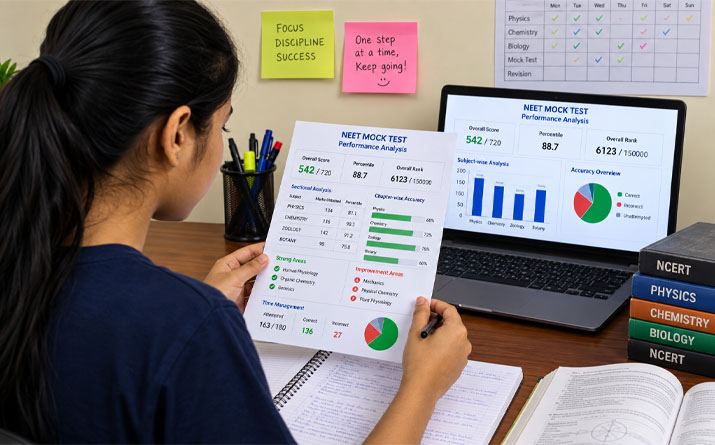
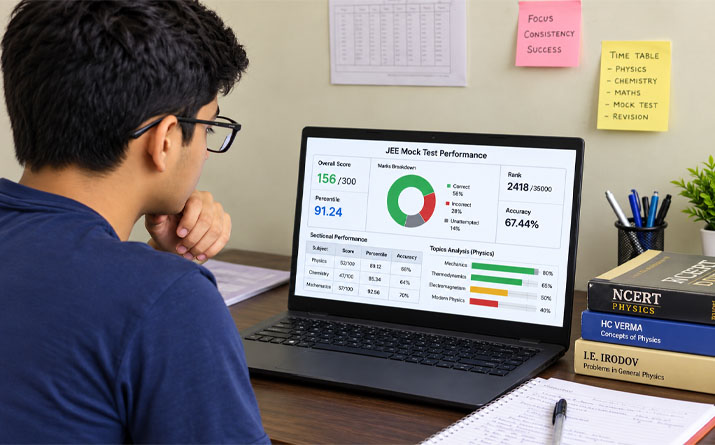
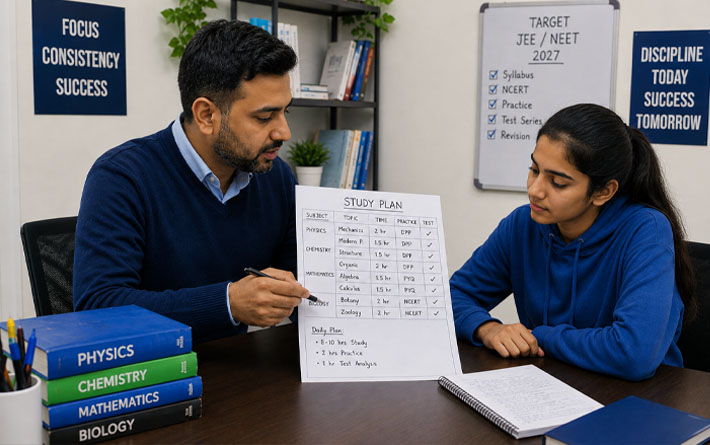
This transformation is designed to enhance conceptual understanding, reduce exam pressure, and prepare students for real-world challenges as well as competitive exams like JEE and NEET.
The new syllabus will primarily impact students entering Class 9 and Class 11 in the academic session 2026–27, bringing major changes in subject choices, learning methods, and evaluation patterns.
What is CBSE New Syllabus 2026–27?
The CBSE 2026–27 syllabus introduces a modern education framework that emphasizes:
- Conceptual clarity over memorization
- Skill-based and experiential learning
- Flexible subject selection across streams
- Continuous and internal assessment
- Holistic student development
Instead of focusing only on textbook knowledge, students will now learn how to apply concepts in real-life situations, making education more meaningful and practical.
Why CBSE Introduced the New Syllabus?
The previous system was often criticized for:
- Heavy syllabus load
- Overdependence on rote learning
- High exam stress
- Limited flexibility in subject choices
To address these issues, CBSE redesigned the curriculum to:
- Reduce academic pressure
- Promote critical thinking
- Encourage interdisciplinary learning
- Prepare students for future careers
This change is part of a larger effort to modernize India’s education system and align it with global standards.
Key Highlights of CBSE New Syllabus 2026–27
Here are the major features of the new syllabus:
1. Competency-Based Learning
The new system focuses on understanding and application rather than memorizing facts. Students will be tested on:
- Analytical skills
- Problem-solving ability
- Real-life application of concepts
2. Flexible Subject Choices
One of the biggest changes is the removal of rigid streams like Science, Commerce, and Arts.
Students can now choose combinations such as:
- Physics + Economics
- Mathematics + Political Science
- Biology + Psychology
This allows students to follow their interests and career goals.
3. Multidisciplinary Learning
Subjects are no longer isolated. Instead, they are connected to provide a broader understanding of concepts.
For example:
- Social Science integrates History, Geography, Economics, and Political Science
- Science subjects may include real-world case studies
4. Increased Internal Assessment
Internal assessments such as:
- Projects
- Practical work
- Class participation
will now carry more weight, reducing dependence on final board exams.
5. Optional Advanced-Level Exams
CBSE has introduced a two-level system in Mathematics and Science:
- Standard Level: Basic understanding (mandatory)
- Advanced Level: Optional exam for higher-order thinking (additional 25 marks)
This helps students choose difficulty levels based on their abilities and goals.
Structural Changes in CBSE Curriculum
The CBSE New Syllabus introduces a three-part integrated structure, especially for Class 9:
1. Language Core
Focuses on:
- Communication skills
- Reading and writing abilities
- Language proficiency
2. Academic Core
Includes:
- Mathematics
- Science
- Social Science
These subjects form the foundation of academic learning.
3. Cross-Curricular Areas
Includes:
- Vocational education
- Arts and music
- Physical education
- Interdisciplinary subjects
This structure ensures a balance between academics and overall development.
Major Changes in Assessment Pattern
The CBSE assessment system 2026–27 has undergone a major transformation.
1. Application-Based Questions
Instead of direct questions, exams will include:
- Case studies
- Source-based questions
- Data interpretation
2. Continuous Evaluation
Students will be evaluated throughout the year through:
- Assignments
- Projects
- Practical exams
3. Reduced Exam Pressure
Since internal assessments carry more weight, students will no longer depend solely on final exams.
4. Two-Level Examination System
Students can choose between:
- Standard level (basic difficulty)
- Advanced level (higher difficulty)
This reduces stress and allows personalized learning.
Subject-Wise Changes in CBSE Syllabus 2026–27
Mathematics
- Introduction of advanced topics earlier
- Focus on logical reasoning and problem-solving
- Spiral learning approach for better retention
Science
- Emphasis on experiments and practical understanding
- Real-life applications of concepts
- Option for advanced-level assessment
Social Science
- Integration of History, Geography, Economics, and Political Science
- Focus on Indian Knowledge System (IKS)
- More analytical and discussion-based learning
Languages
- Implementation of the three-language formula
- At least two languages must be Indian
- Focus on communication and comprehension
Impact on Students
The CBSE New Syllabus 2026–27 will have a significant impact on students.
1. Reduced Stress
- Less syllabus load
- Focus on understanding rather than memorization
- Balanced evaluation system
2. Better Conceptual Clarity
Students will develop:
- Strong fundamentals
- Analytical thinking skills
- Real-world problem-solving ability
3. Improved Career Readiness
The new syllabus prepares students for:
- Competitive exams like JEE and NEET
- Future careers in emerging fields
- Higher education in diverse domains
4. Holistic Development
Students will be evaluated not only on academics but also on:
- Sports
- Arts
- Vocational skills
This is made possible through the National Credit Framework (NCrF).
Integration of Technology in Education
The CBSE New Syllabus also focuses on digital learning and future skills.
Key Additions:
- Artificial Intelligence (AI)
- Computational Thinking (CT)
- Digital literacy
This ensures students are ready for a technology-driven world.
Benefits for Parents and Teachers
For Parents:
- Less academic pressure on children
- More focus on skills and creativity
- Better career guidance opportunities
For Teachers:
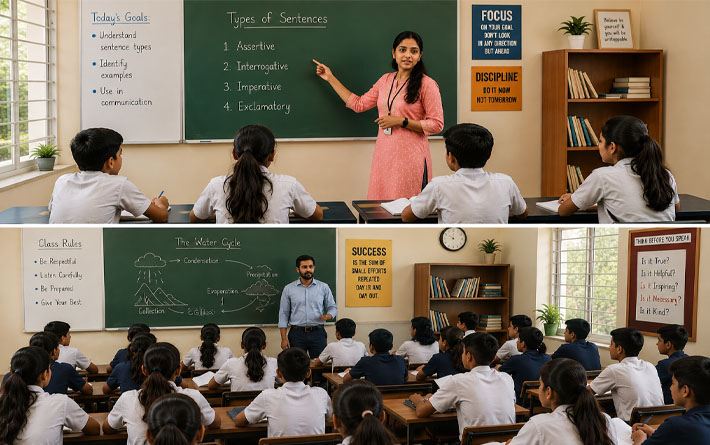
- Opportunity to adopt innovative teaching methods
- Focus on interactive and experiential learning
- Better student engagement
Preparation Strategy for Students
To succeed under the new CBSE syllabus, students should:
1. Focus on Conceptual Learning
- Understand “why” and “how”
- Avoid rote memorization
2. Use Updated NCERT Books
Old textbooks will be replaced with updated editions for 2026–27.
3. Take Internal Assessments Seriously
Projects and assignments now play a crucial role in final results.
4. Practice Application-Based Questions
Solve:
- Case studies
- Real-life problem questions
5. Stay Updated
Regularly check CBSE’s official website for:
- Sample papers
- Curriculum updates
Challenges of the New Syllabus
While the new system offers many benefits, it also presents some challenges:
- Adjustment to a new learning method
- Need for teacher training
- Increased responsibility for continuous assessment
- Initial confusion among students and parents
However, these challenges are temporary and will improve over time.
CBSE New Syllabus 2026–27 vs Old Syllabus
| Feature |
Old Syllabus |
New Syllabus |
| Learning Style |
Rote Learning |
Concept-Based Learning |
| Subject Choice |
Fixed Streams |
Flexible Combinations |
| Assessment |
Final Exam Focus |
Continuous Assessment |
| Question Pattern |
Direct Questions |
Application-Based |
| Student Focus |
Marks-Oriented |
Skill-Oriented |
Future Impact of CBSE Curriculum Changes
The CBSE New Syllabus is expected to:
- Improve India’s global education ranking
- Create skilled and job-ready students
- Encourage innovation and research
- Reduce exam-related stress
In the long run, this reform will shape a more capable, confident, and future-ready generation.
Conclusion
The CBSE New Syllabus 2026–27 is a landmark reform in India’s education system. By focusing on competency-based learning, flexibility, and holistic development, it aims to transform how students learn and grow.
This new approach not only reduces stress but also equips students with the skills needed for competitive exams, higher education, and future careers.
Students, parents, and educators must embrace this change and adapt to the new system to make the most of its benefits.


 STUDY MATERIALS
 COURSES
 MORE
MORE
 SUCCESS STORY
 ADMISSION
 STORE
STORE