Q 1 :

The electric current through a wire varies with time as I=I0+βt where I0=20A and β=3A/s. The amount of electric charge crossed through a section of the wire in 20 sec is                           [2024]

  • 80 C


  • 1000 C


  • 800 C


  • 1600 C


(2)       

           Given that, current I=I0+βt

            Also, I0=20A and β=3A/s

            Hence, dq/dt=20+3tdq=(20+3t)dt

            0qdq=020(20+3t)dt

            q=[20t+3t22]020=1000C


Q 2 :

The current in a conductor is expressed as I=3t2+4t3, where I is in Ampere and t is in second. The amount of electric charge that flows through a section of the conductor during t=1s to t=2s is _________ C.               [2024]


(22)       I=3t2+4t3

              dQ=Idt

              Q=12(3t2+4t3)dt

                   =[t3+t4]12

                    =(8+16)-(2)=22C


Q 3 :

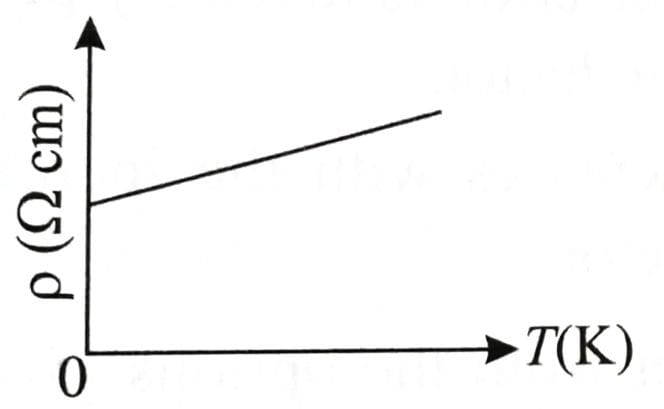
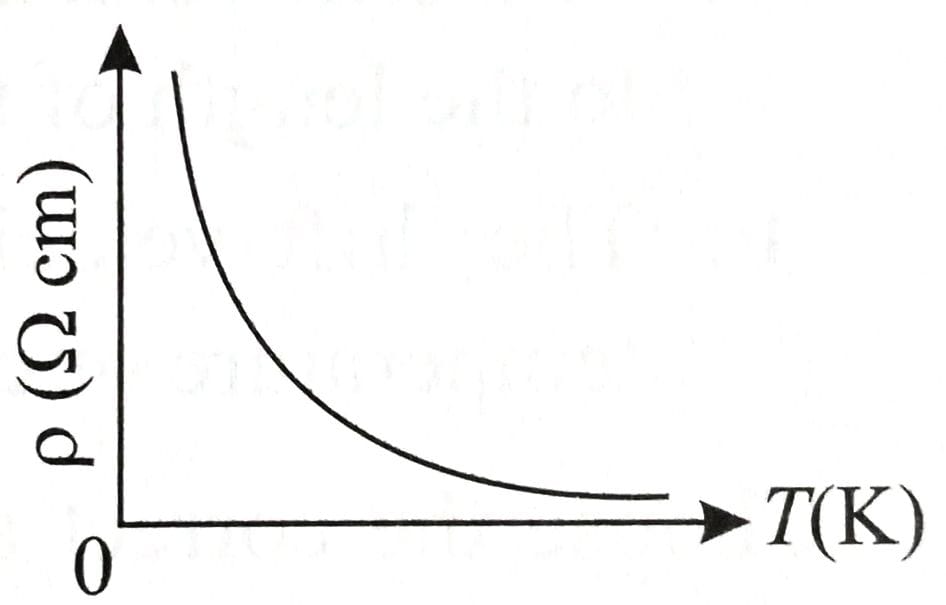
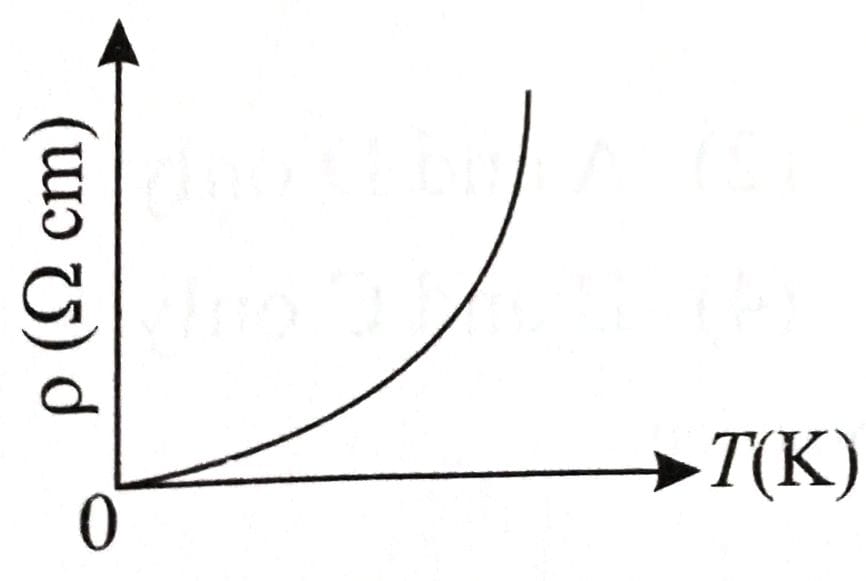
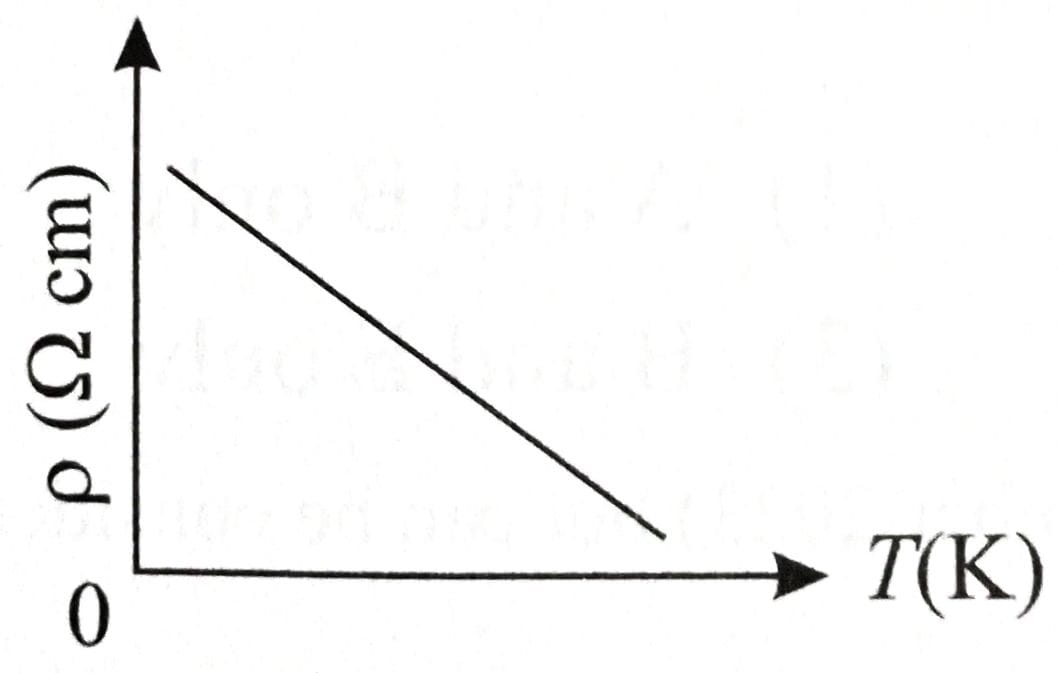
Which of the following resistivity (ρ) v/s temperature (T) curve is most suitable to be used in wire bound standard resistors?          [2025]

  •  

  •  

  •  

  •  

(1)

For bound standard resistors the resistivity is independent of temperature and remain nearly constant.


Q 4 :

The difference of temperature in a material can convert heat energy into electrical energy. To harvest the heat energy, the material should have          [2025]

  • low thermal conductivity and low electrical conductivity


  • high thermal conductivity and high electrical conductivity


  • low thermal conductivity and high electrical conductivity


  • high thermal conductivity and low electrical conductivity


(3)

Material should have low thermal conductivity and high electrical conductivity.


Q 5 :

Current passing through a wire as function of time is given as I(t) = 0.02 t + 0.01 A. The charge that will flow through the wire from t = 1s to t = 2s is:          [2025]

  • 0.06 C


  • 0.02 C


  • 0.07 C


  • 0.04 C


(4)

q=idt=12(0.02t+0.01)dt

q=[0.02t22+0.01t]12

     =0.022×(2212)+0.01×1=0.04 C


Q 6 :

A uniform metallic wire carries a current of 2 A, when a 3.4 V battery is connected across it. The mass of the uniform metallic wire is 8.92×10⁻³ kg, density is 8.92×10³ kg/m3 and resistivity is 1.7×10⁻⁸Ω-m. The length of the wire is              [2023]

  • l=10 m


  • l=100 m


  • l=5 m


  • l=6.8 m


(1)

mass=8.92×10⁻³ kg

[IMAGE 174]--------------

Density, d=8.92×10³ kg/m3

ρ=1.7×10⁻⁸ Ω-m

R=Vi=3.42=1.7 Ω

R=ρlA=ρl2vol=ρl2dmass (d=massvol)

l=Rmρd=1.7×8.92×10-31.7×10-8×8.92×103=10 m


Q 7 :

The resistance of a wire is 5Ω. Its new resistance in ohm, if stretched to 5 times of its original length, will be              [2023]

  • 125


  • 5


  • 25


  • 625


(1)

[IMAGE 175]

 Volume of wire is constant in stretching

      Vi=Vf

Aili=Aflf

Al=A'(5l)

A'=A5

Rf=ρlfAf=ρ(5l)(A5)=25(ρlA)=25×5=125 Ω


Q 8 :

The charge flowing in a conductor changes with time as Q(t)=αt-βt2+γt3, where α, β and γ are constants. Minimum value of current is            [2023]

  • α-3β2γ


  • α-γ23β


  • β-α23γ


  • α-β23γ


(4)

Q=(αt-βt2+γt3)

i=dQdt=(α-2βt+3γt2)

didt=(3γt-2β)=0t=β3γ

i=(α-2βt+3γt2)=(α-β23γ)


Q 9 :

The drift velocity of electrons for a conductor connected in an electrical circuit is Vd. The conductor is now replaced by another conductor with the same material and the same length but double the area of cross-section. The applied voltage remains the same. The new drift velocity of electrons will be            [2023]

  • Vd


  • Vd2


  • Vd4


  • 2Vd


(1)

i=nAVde

i1=(VR) and i2=(2VR)

So,  i1i2=12=(AVd)1(AVd)2=Vd(Vd)2×(12)

12×Vd(Vd)2=12(Vd)2=Vd


Q 10 :

In a metallic conductor, under the effect of applied electric field, the free electrons of the conductor           [2023]

  • drift from higher potential to lower potential.


  • move in the curved paths from lower potential to higher potential.


  • move with the uniform velocity throughout from lower potential to higher potential.


  • move in the straight line paths in the same direction.


(2)

Move in curved path

I=neAVd