

Q 1 :

The difference in energy between the actual structure and the lowest energy resonance structure for the given compound is             [2024]

  • electromeric energy


  • ionization energy


  • hyperconjugation energy


  • resonance energy


(4) 

Resonance energy is defined as the difference in energy between the actual structure (real hybrid) and the lowest energy resonance structure for the given compound.


Q 2 :

Which among the following is incorrect statement?           [2024]

  • Electromeric effect dominates over inductive effect.


  • The electromeric effect is, temporary effect.


  • The organic compound shows electromeric effect in the presence of the reagent only.


  • Hydrogen ion (H+) shows negative electromeric effect.


(4)

Electromeric effect (E) is a temporary effect that involves the complete transfer of a shared pair of electrons to one or the other atom joined by a multiple bond (double or triple).

It occurs only in the presence of an attacking reagent and direction of π electron shift always facilitates the reaction.

Electromeric effect is said to be +E when the displacement of π electrons is towards the attacking reagent and -E when the displacement of π electrons is away from the attacking reagent. H+ shows positive electromeric effect.


Q 3 :

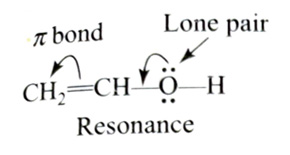
The interaction between π bond and lone pair of electrons present on an adjacent atom is responsible for                          [2024]

  • Resonance effect


  • Electromeric effect


  • Inductive effect


  • Hyperconjugation


(1)


Q 4 :

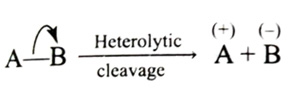
Ionic reactions with organic compounds proceed through:                                 [2024]
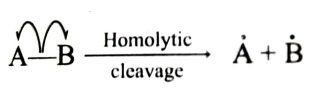
(A) homolytic bond cleavage
(B) heterolytic bond cleavage
(C) free radical formation
(D) primary free radical
(E) secondary free radical
Choose the correct answer from the options given below:

  • (A) only


  • (C) only


  • (B) only


  • (D) and (E) only


(3)

Ions in organic reaction are generated by heterolytic cleavage of bond. So ionic reactions with organic compounds proceed through heterolytic bond cleavage.

Homolytic bond cleavage results in formation of free radicals.


Q 5 :

The functional group that shows negative resonance effect is:                          [2024]

  • —OH


  • —OR


  • —COOH


  • NH2


(3)

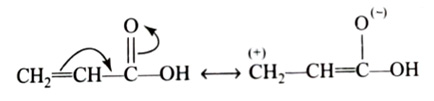
Groups of the type X=Y and XY act as –M groups. –COOH is –M group.

Groups which have lone pair containing first atom act as +M groups. –OH, –OR and NH2 are +M groups.


Q 6 :

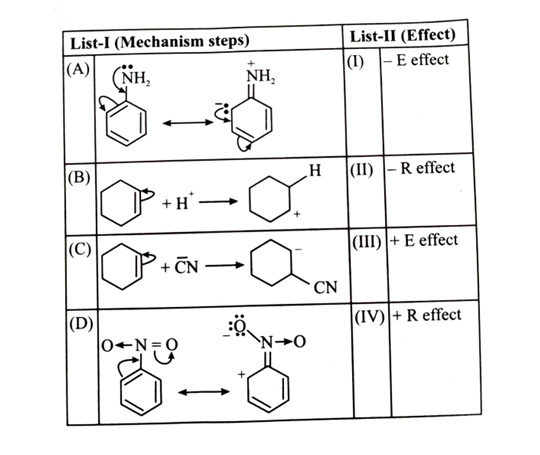
Match List-I with List-II:                                          [2024]

Choose the correct answer from the options given below 


  • (A) – (II), (B) – (IV), (C) – (III), (D) – (I)


  • (A) – (IV), (B) – (III), (C) – (I), (D) – (II)


  • (A) – (III), (B) – (I), (C) – (II), (D) – (IV)


  • (A) – (I), (B) – (II), (C) – (IV), (D) – (III)


(2)

A group is said to be +M group, when it supplies π electrons to the system through resonance. A group is said to be –M group, when it supplies π electrons to the system through resonance. Electromeric effect is said to be +E when the displacement of π electrons is towards the attacking reagent and –E when the displacement of π electrons is away from the attacking reagent.


Q 7 :

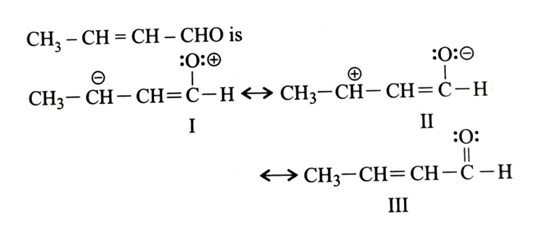
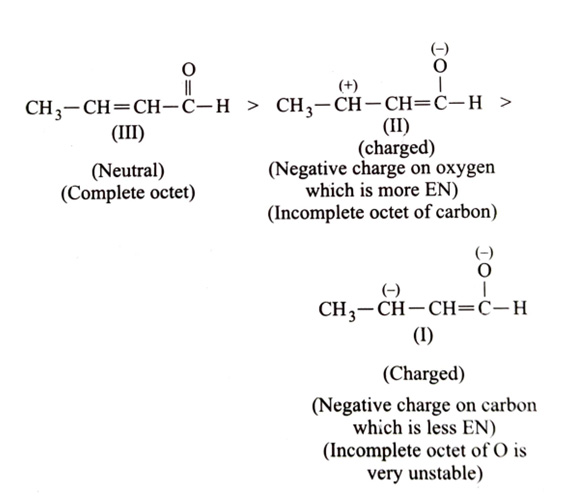
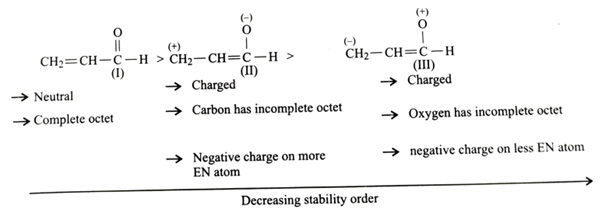
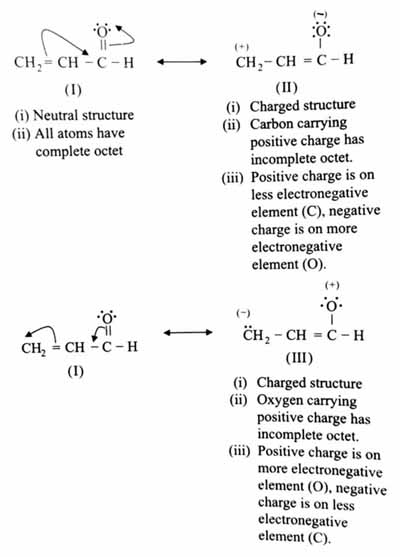
The correct stability order of the following resonance structures of                      [2024]

  • II > I > III


  • III > II > I


  • II > III > I


  • I > II > III


(2)

Neutral resonating structures are more stable than charged resonating structure. Amongst charged resonating structures, those structures which have negative charge on more electronegative atom and positive charge on less electronegative atom are more stable.


Q 8 :

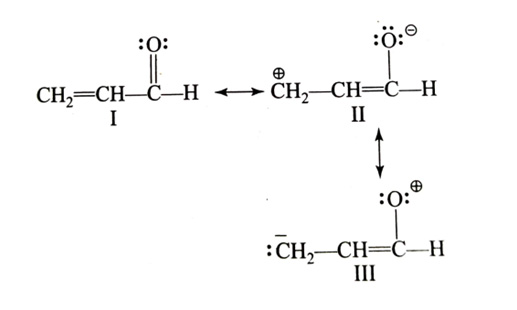
Relative stability of the contributing structures is:                       [2024]

  • (I) > (III) > (II)


  • (III) > (II) > (I)


  • (I) > (II) > (III)


  • (II) > (I) > (III)


(3)

Neutral resonating structures are more stable than charged resonating structures. Amongst charged resonating structures, those carrying negative charge on more electronegative atom and positive charge on less electronegative atom are more stable.


Q 9 :

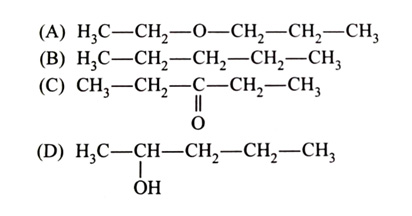
For the compounds:                          [2024]

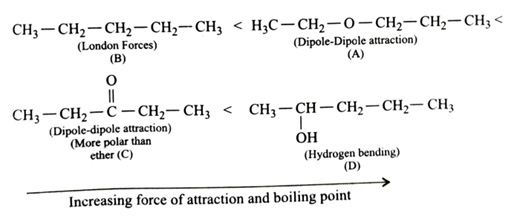
The increasing order of boiling point is: 
Choose the correct answer from the option given below:

  • (B) < (A) < (C) < (D)


  • (B) < (A) < (D) < (C)


  • (D) < (C) < (A) < (B)


  • (A) < (B) < (C) < (D)


(1)


Q 10 :

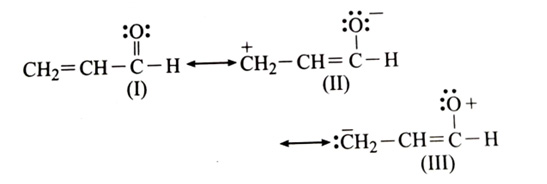
The order of relative stability of the contributing structure is:                   [2024]

Choose the correct answer from the options given below:

  • I > II > III


  • II > I > III


  • I = II = III


  • III > II > I


(1)


Q 11 :

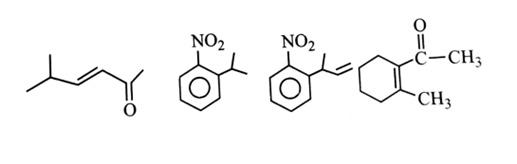
How many compounds among the following compounds show inductive, mesomeric as well as hyperconjugation effects?               [2024]


(4)


Q 12 :

Given below are two statements :                                        [2025]

Statement I : Hyperconjugation is not a permanent effect.

Statement II : In general, greater the number of alkyl groups attached to a positively charged C-atom, greater is the hyperconjugation interaction and stabilization of the cation.

In the light of the above statements, choose the correct answer from the options given below:

  • Statement I is true but Statement II is false.


  • Both Statement I and Statement II are false.


  • Statement I is false but Statement II is true.


  • Both Statement I and Statement II are true.


(3)

Hyperconjugation is a permanent effect.


Q 13 :

Given below are two statements.                                [2025]

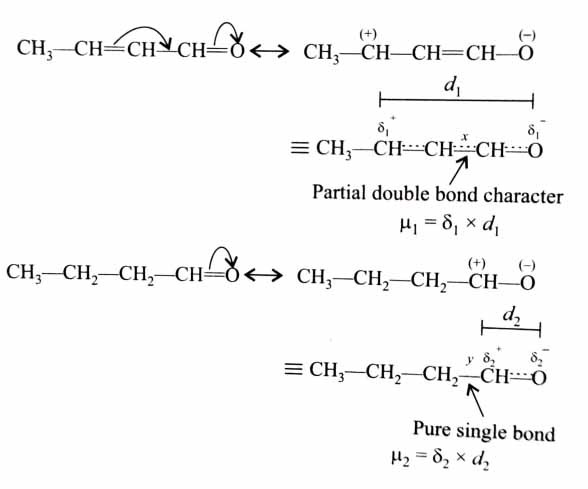
Statement I : The dipole moment of C4H3-C3H=C2H-C1H=O is greater than C4H3-C3H2-C2H2-C1H=O

Statement II : C1C2 bond length of CH34-CH3=CH2-CH1=O is greater than C1C2 bond length of CH34-CH23-CH22-CH1=O

In the light of the above statements, choose the correct answer from the options given below:

  • Statement I is false but Statement II is true.


  • Both Statement I and Statement II are false.


  • Statement I is true but Statement II is false.


  • Both Statement I and Statement II are true.


(3)

δ1>δ2 as electron withdrawal by -M effect is more. Also d1>d2, thus μ1>μ2. Due to partial double bond character x<y.


Q 14 :

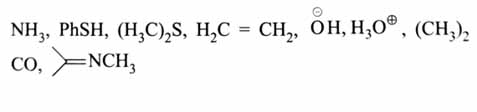
Total number of nucleophiles from the following is :                        [2025]

  • 6


  • 4


  • 5


  • 7


(3)

NH3,PhSH,(CH3)2S,CH2=CH2 and OH- are nucleophiles. (CH3)2C=O is generally considered as electrophilic. The carbonyl carbon carries partial positive charge and is susceptible to attack by nucleophiles. Same is the case with (CH3)2C=NCH3.


Q 15 :

What is the correct order of acidity of the protons marked A–D in the given compounds?             [2023]

  • HC>HD>HA>HB


  • HC>HD>HB>HA


  • HC>HA>HD>HB


  • HD>HC>HB>HA


(1)

(-COOH) carboxylic acid is more acidic than alcohol or terminal alkyne. Ka=HC>HD>HA>HB


Q 16 :

The number of hyperconjugation structures involved to stabilize carbocation formed in the above reaction is ________.        [2023]


(7)


Q 17 :

Arrange the following alkenes in decreasing order of stability.                [2026]

Choose the correct answer from the options given below:

  • III > II > I > IV


  • I > III > IV > II


  • I > III > II > IV


  • III > I > II > IV


(3)


Q 18 :

The cyclic cations having the same number of hyperconjugation are:

(A)   (B) 

(C)  (D) 

Choose the correct answer from the options given below: [2026]

  • A and B Only


  • B and C Only


  • A, C and D Only


  • A and C Only


(4)

Ans. – (4) A & C


Q 19 :

Given below are two statements:

Statement I: (CH3)3C is more stable than CH3 as nine hyperconjugation interactions are possible in (CH3)3C

Statement II: CH3 is less stable than (CH3)3C as only three hyperconjugation interactions are possible in CH3

In the light of the above statements, choose the correct answer from the options given below:   [2026]

  • Both Statement I and Statement II are true


  • Both Statement I and Statement II are false


  • Statement I is false but Statement II is true


  • Statement I is true but Statement II is false


(4)

S-1:(CH3)3C+>C+H3 ; due to hyperconjugation interaction 

S-2 : False


Q 20 :

The correct order of the rate of the reaction for the following reaction with respect to nucleophiles is:     [2026]

CH3Br+NuCH3Nu+Br

  • ClO4->CH3COO-> -OH>PhO-


  • PhO-> -OH>CH3COO->ClO4-


  • CH3COO->PhO->-OH>ClO4-


  • -OH>PhO->CH3COO->ClO4-


(4)


Q 21 :

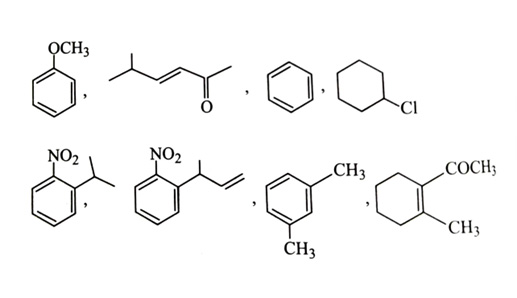
Among the following, the number of aromatic compound(s) is.....


(6)

CONCEPTUAL


Q 22 :

Number of ambidentate nucleophiles among the following

CN-, SCN-, OH-, CNO-, SO42-, HCO2-, NO2-, NO3-


(4)

CN-, SCN-, NO2-, CNO-