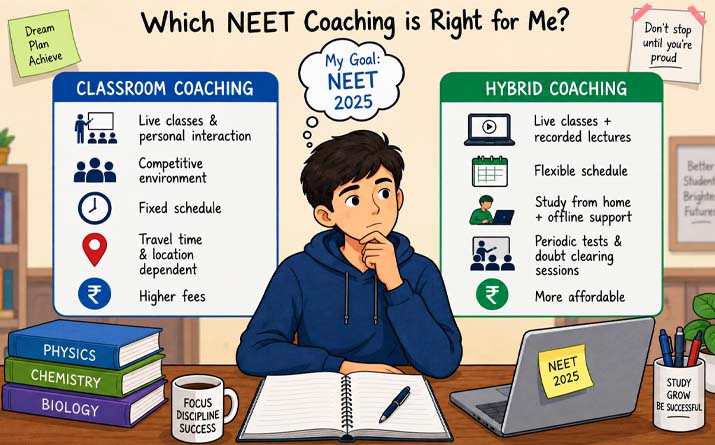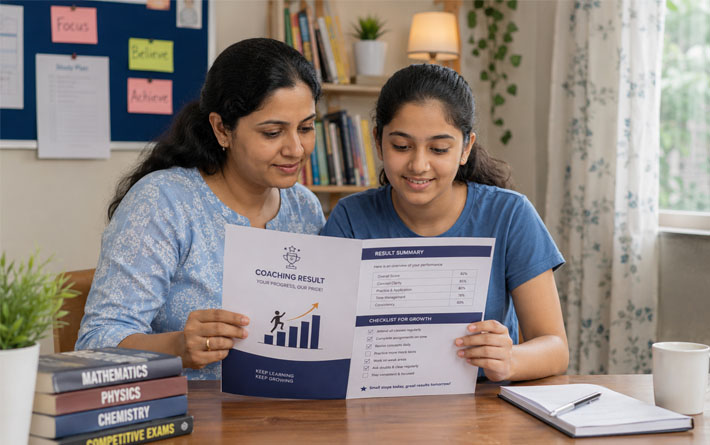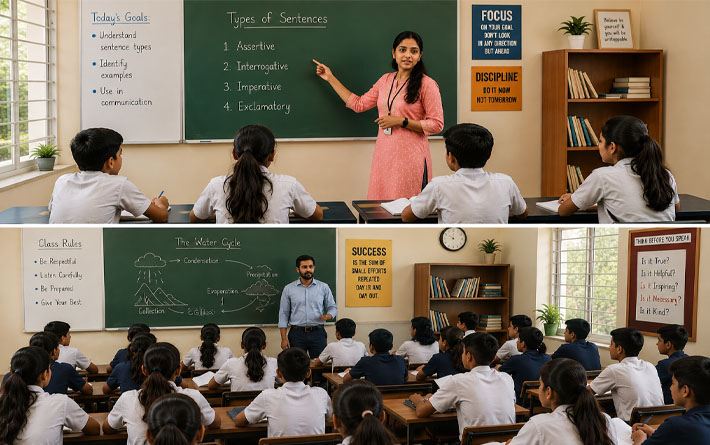


The debate between small batch classes and big batch coaching has existed for decades in India’s competitive exam ecosystem, particularly for JEE and NEET preparation. While both models aim to help students succeed, their academic effectiveness varies depending on student needs, learning styles, and institutional philosophy.
At Smart Achievers, the preference for small batch teaching is not driven by branding or scale, but by long-term academic observations of how students actually learn, retain concepts, and improve performance. This perspective is based on classroom outcomes rather than assumptions.
Small Batch Teaching vs Big Batch Coaching: Academic Comparison
|
Aspect |
Big Batch Coaching Model |
Small Batch Teaching Model (Smart Achievers) |
|---|---|---|
|
Batch Size |
80 to 300+ students in one classroom |
30 to 40 students per batch |
|
Teaching Approach |
One-directional, lecture-driven |
Two-way, interactive teaching |
|
Teaching Pace |
Fixed pace designed for the “average topper” |
Adaptive pace based on student understanding |
|
Teacher–Student Interaction |
Limited interaction due to large numbers |
Regular and meaningful interaction |
|
Concept Absorption |
Assumes baseline understanding |
Concepts built step by step with checks |
|
Handling of Missed Concepts |
Students expected to catch up on their own |
Misconceptions corrected immediately |
|
Doubt Resolution |
Restricted, often delayed |
Immediate and integrated into class |
|
Student Comfort Level |
Students hesitate to ask basic doubts |
Students feel comfortable asking questions |
|
Focus on Students |
Primarily top-performing students |
Balanced focus on toppers, average, and weak students |
|
Support for Average & Weak Students |
Extra effort expected from students |
Structured academic support provided |
|
Academic Monitoring |
Test scores and ranks only |
Classroom observation + written work analysis |
|
Feedback Quality |
Generic feedback |
Personalized improvement guidance |
|
Teacher Accountability |
Content delivery focused |
Student understanding focused |
|
Flexibility in Teaching |
Low flexibility once syllabus plan is set |
High flexibility based on classroom response |
|
Psychological Environment |
Competitive and often intimidating |
Supportive and confidence-building |
|
Student Engagement |
Many passive listeners |
Active participation encouraged |
|
Performance Outcomes |
Few high ranks |
Consistent improvement across batches |
|
Error Reduction |
Conceptual errors persist |
Early correction of conceptual mistakes |
|
Learning Impact |
Short-term exam-oriented |
Long-term conceptual and academic growth |
|
Overall Goal |
Scalability and rank production |
Reliable academic growth and strong foundations |
This comparison highlights why Smart Achievers adopts a small batch teaching model for JEE, NEET, and Foundation courses. From an academic perspective, small batches enable deeper learning, stronger teacher accountability, and consistent student progress, making them more effective for the majority of competitive exam aspirants.
Is Big Batch Coaching Always Ineffective?
No. Big batch coaching can be effective for:
Exceptionally self-motivated students
Those with strong prior conceptual clarity
Students who use coaching mainly for structure and tests
However, for the majority of students, especially those preparing seriously for JEE or NEET while managing school academics, small batch learning provides a more balanced and supportive framework.
Smart Achievers’ Concluding View
From an academic standpoint, small batch classes are generally more effective than big batch coaching for most JEE and NEET aspirants. The reasons are rooted in:
Better concept clarity
Stronger teacher-student interaction
Early correction of mistakes
Continuous academic monitoring
Support for diverse learning levels
At Smart Achievers, the small batch model is not positioned as superior by claim, but validated through years of classroom outcomes and student progression. It reflects a belief that quality of learning matters more than quantity of students, especially in concept-intensive subjects like Physics and Chemistry.
Ultimately, the effectiveness of any coaching model depends on how well it aligns teaching with student learning—and small batch classes provide a structure where that alignment is more consistently achievable.
Smartachivers
Jan 19,2026
Smartachivers
Jan 19,2026
Smartachivers
Jan 19,2026
Smartachivers
Jan 19,2026
Smartachivers
Jan 19,2026
Smartachivers
Jan 17,2026
Smartachivers
Jan 17,2026
Smartachivers
Jan 17,2026
Smartachivers
Jan 16,2026
Smartachivers
Jan 16,2026
Smartachivers
Jan 16,2026
Smartachivers
Jan 15,2026
Smartachivers
Jan 13,2026
Smartachivers
Jan 13,2026
Smartachivers
Jan 13,2026
Smartachivers
Jan 12,2026
Smartachivers
Jan 12,2026
Smartachivers
Jan 09,2026