CBSE 2026 board Class 10th Math exam on Feb 17: Know high weightage chapters, last-minute prep tips & more

CBSE 2026 board Class 10th Math exam on Feb 17: Know high weightage chapters, last-minute prep tips & more

CBSE Class 10 Maths Board Exam 2026: What to Focus on Before February 17
 

After every Maths exam, most students say the same thing: “It wasn’t hard, just tricky.” And that’s exactly where marks are lost.

In CBSE Maths, students rarely lose marks because they don’t know the syllabus. They lose them due to twisted question framing, small calculation errors, or incomplete method steps. With the Class 10 Maths board exam scheduled for February 17, smart preparation now means clarity of concepts and careful application — not just endless revision.

Remember: Quality matters more than quantity.

High-Weightage Chapters to Prioritise

Some chapters consistently carry significant weight in the board exam:

  • Polynomials

  • Quadratic Equations

  • Arithmetic Progressions

  • Triangles

  • Circles

  • Trigonometry

  • Coordinate Geometry

  • Statistics

These units test logical clarity and step-wise accuracy. Common mistakes include:

  • Rushed substitutions in Polynomials

  • Confusing nth term and sum formulas in AP

  • Ignoring the discriminant in Quadratics

  • Starting trigonometric proofs from both sides

  • Sign errors in Coordinate Geometry

  • Applying the wrong central tendency measure in Statistics

Most errors are not conceptual — they are due to pressure and misapplication.

What CBSE Repeats

CBSE doesn’t repeat exact questions — it repeats patterns:

  • Word problems in Algebra

  • Proof-based questions in Triangles

  • Tangent properties in Circles

  • Case-study tables in Statistics

  • Application-based problems in Heights and Distances

Students who recognise these frameworks manage time better and stay composed.


Final Stretch Strategy

In the last phase:

  • Solve 8–10 full-length sample papers under timed conditions.

  • Focus on speed, presentation, and method clarity.

  • Revise formulas, identities, theorems, constructions, and diagrams.

  • Review your personal error patterns.

Avoid new shortcuts or unfamiliar question banks at this stage — they increase anxiety.


NCERT: The Core Resource

CBSE continues to rely heavily on:

  • NCERT textbook

  • NCERT Exemplar

  • Official CBSE Sample Papers & Question Bank

Board questions are often adapted from these in structure and thinking pattern. Mastering these ensures alignment with the marking scheme.


During the Examination

Do not leave questions midway. CBSE awards marks for method:

  • Write given data clearly

  • Draw labelled figures

  • State formulas before substitution

  • Show logical steps

Most marks are lost due to skipped steps, sign errors, incomplete reasoning, or unclear final answers — not lack of knowledge.


Final Advice

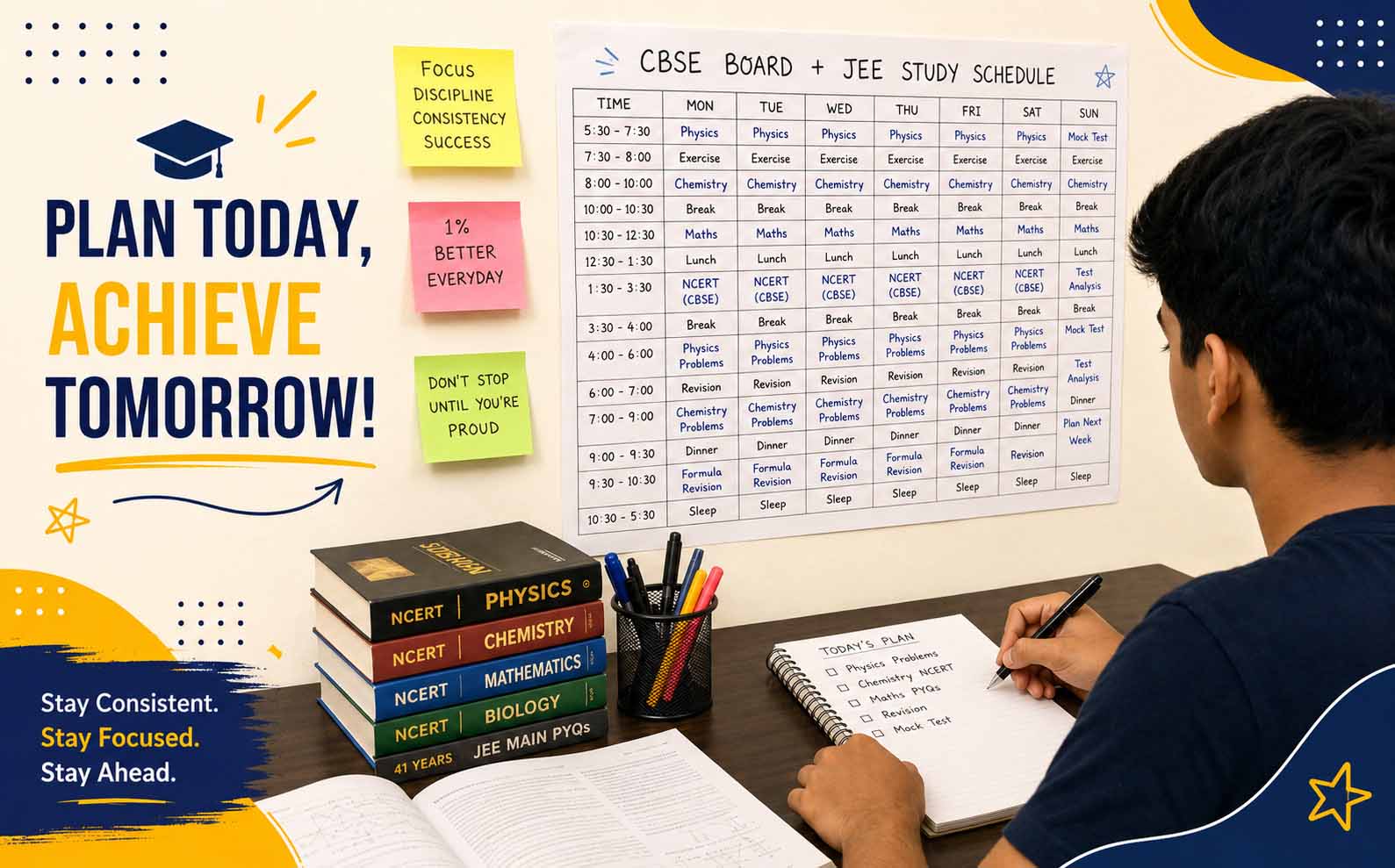
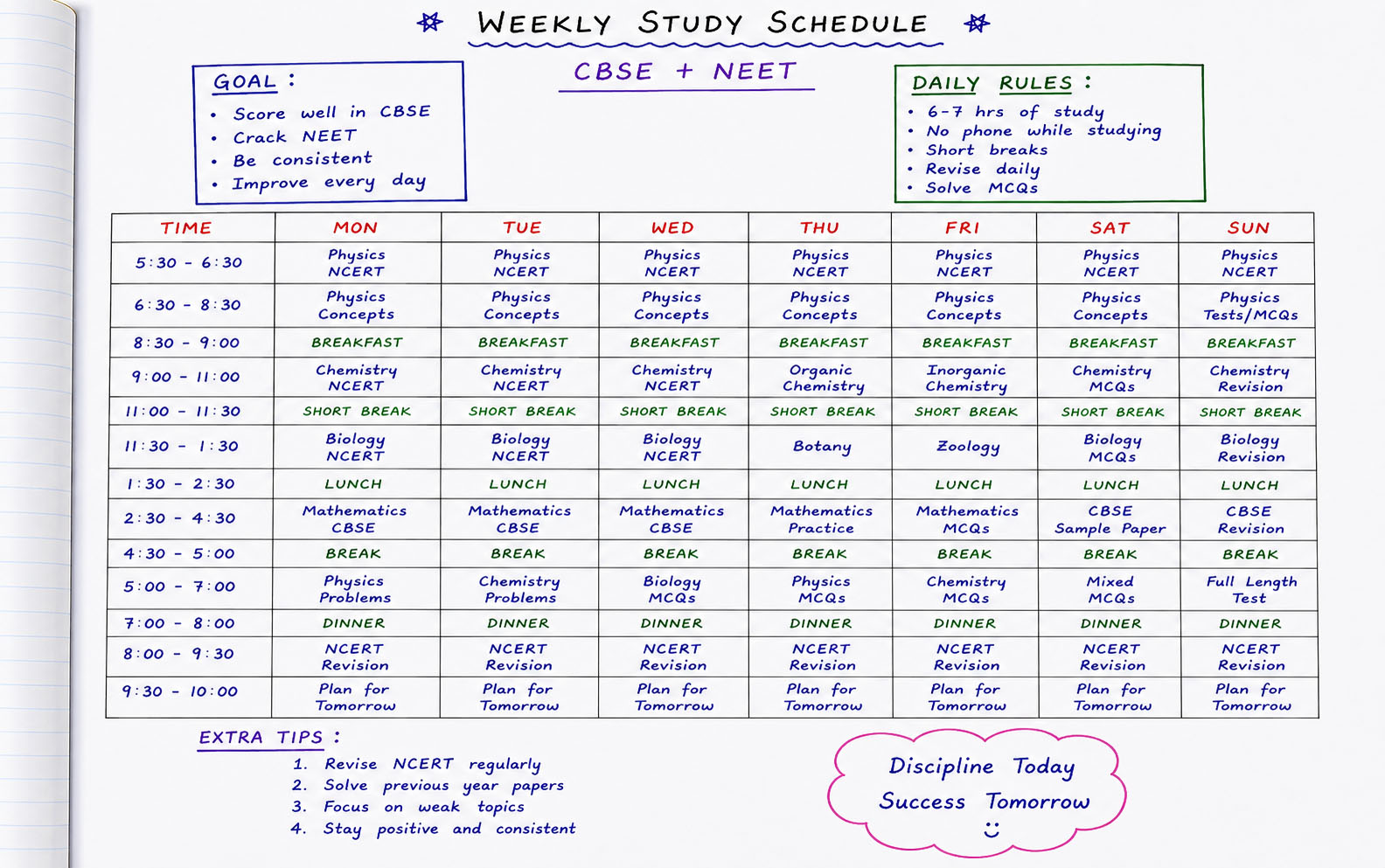
Follow a realistic timetable. Revise consistently. Practise previous years’ papers (including compartment papers). Focus on clarity, accuracy, and presentation.

Stay calm, think step-by-step, and trust your preparation.

All the best!

Recent Posts

How Students Learn Faster

Smartachivers

Feb 13,2026

How to Score 150+ in NEET Physics

Smartachivers

Feb 03,2026

Is Smart Achievers Worth the Fees?

Smartachivers

Jan 28,2026