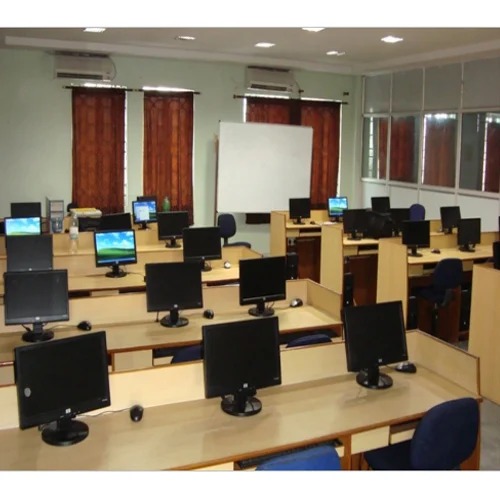


Computer-based learning (CBL) refers to any teaching methodology that makes use of computers for information transmission. At an elementary school level, computer applications can be used to display multimedia lesson plans. A survey was done on 1000 elementary and secondary schools of Assam and they were classified by the number of computers they had.

|
Number of Computers |
1–10 |
11–20 |
21–50 |
51–100 |
101 and more |
|
Number of Schools |
250 |
200 |
290 |
180 |
80 |
Based on the above information, answer the following questions:
One school is chosen at random. Then:
(i) Find the probability that the school chosen at random has more than 100 computers.
2/25
2/30
2/15
1/20
(1)
Let E be the event that the school chosen at random has more than 100 computers i.e., n(E) = 80.
Computer-based learning (CBL) refers to any teaching methodology that makes use of computers for information transmission. At an elementary school level, computer applications can be used to display multimedia lesson plans. A survey was done on 1000 elementary and secondary schools of Assam and they were classified by the number of computers they had.

|
Number of Computers |
1–10 |
11–20 |
21–50 |
51–100 |
101 and more |
|
Number of Schools |
250 |
200 |
290 |
180 |
80 |
Based on the above information, answer the following questions:
One school is chosen at random. Then:
(ii) (a) Find the probability that the school chosen at random has 50 or fewer computers.
36/50
33/50
32/50
37/50
(4)
Let F be the event that the school chosen at random has 50 or fewer computers i.e.,
Computer-based learning (CBL) refers to any teaching methodology that makes use of computers for information transmission. At an elementary school level, computer applications can be used to display multimedia lesson plans. A survey was done on 1000 elementary and secondary schools of Assam and they were classified by the number of computers they had.

|
Number of Computers |
1–10 |
11–20 |
21–50 |
51–100 |
101 and more |
|
Number of Schools |
250 |
200 |
290 |
180 |
80 |
Based on the above information, answer the following questions:
One school is chosen at random. Then:
(ii) (b) Find the probability that the school chosen at random has no more than 20 computers.
8/20
8/15
9/20
9/30
(3)
Let G be the event that the school chosen at random has no more than 20 computers i.e.,
n(G) = 250 + 200 = 450.
Computer-based learning (CBL) refers to any teaching methodology that makes use of computers for information transmission. At an elementary school level, computer applications can be used to display multimedia lesson plans. A survey was done on 1000 elementary and secondary schools of Assam and they were classified by the number of computers they had.

|
Number of Computers |
1–10 |
11–20 |
21–50 |
51–100 |
101 and more |
|
Number of Schools |
250 |
200 |
290 |
180 |
80 |
Based on the above information, answer the following questions:
One school is chosen at random. Then:
(iii) Find the probability that the school chosen at random has 10 or less than 10 computers.
1/4
1/2
1/3
1/5
(1)
Let H be the event that the school chosen at random has 10 or less than 10 computers i.e.,
n(H)=250
.
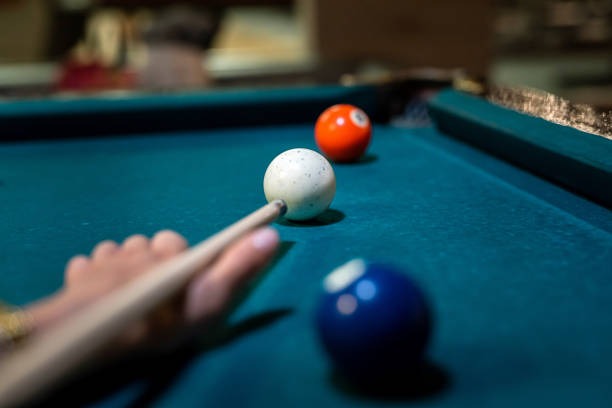
“Eight Ball” is a game played on a pool table with 15 balls numbered 1 to 15 and a “cue ball” that is solid and white. Of the 15 numbered balls, eight are solid (non-white) coloured and numbered 1 to 8 and seven are striped balls numbered 9 to 15.
The 15 numbered pool balls (no cue ball) are placed in a large bowl and mixed, then one ball is drawn out at random.

Based on the above information, answer the following questions:
(i) What is the probability that the drawn ball bears number 8?
1/15
2/20
1/30
1/25
(1)
Total number of numbered ball =n(S)=15
Let event E be ‘drawn ball bears number 8’ i.e., n(E)=1
“Eight Ball” is a game played on a pool table with 15 balls numbered 1 to 15 and a “cue ball” that is solid and white. Of the 15 numbered balls, eight are solid (non-white) coloured and numbered 1 to 8 and seven are striped balls numbered 9 to 15.
The 15 numbered pool balls (no cue ball) are placed in a large bowl and mixed, then one ball is drawn out at random.

Based on the above information, answer the following questions:
(ii) (a) What is the probability that the drawn ball bears an even number?
7/15
7/30
7/35
6/50
(1)
Let event F be ‘drawn ball bears an even number’.
Outcomes favourable to event F are 2, 4, 6, 8, 10, 12, 14 i.e., n(F)=7
“Eight Ball” is a game played on a pool table with 15 balls numbered 1 to 15 and a “cue ball” that is solid and white. Of the 15 numbered balls, eight are solid (non-white) coloured and numbered 1 to 8 and seven are striped balls numbered 9 to 15.
The 15 numbered pool balls (no cue ball) are placed in a large bowl and mixed, then one ball is drawn out at random.

Based on the above information, answer the following questions:
(ii) (b) What is the probability that the drawn ball bears a number, which is a multiple of 3?
1/2
1/3
1/5
1/4
(2)
Let G be the event ‘drawn ball bears a multiple of 3’.
Outcomes favourable to event G are 3, 6, 9, 12, 15 i.e., n(G)=5
“Eight Ball” is a game played on a pool table with 15 balls numbered 1 to 15 and a “cue ball” that is solid and white. Of the 15 numbered balls, eight are solid (non-white) coloured and numbered 1 to 8 and seven are striped balls numbered 9 to 15.
The 15 numbered pool balls (no cue ball) are placed in a large bowl and mixed, then one ball is drawn out at random.

Based on the above information, answer the following questions:
(iii) What is the probability that the drawn ball is a solid coloured and bears an even number?
3/15
4/15
2/15
1/15
(2)
Let H be the event ‘drawn ball is a solid coloured and bears an even number’.
Outcomes favourable to event H are 2, 4, 6, 8 i.e., n(H) = 4
A survey was conducted at a high school, and the results were displayed in a circle graph. The students were asked to list their favourite colours. The measurement of each central angle is shown. If a person is chosen at random from the school, find the probability of each response.
Based on the above information, answer the following questions:
(i) What is the probability of favourite colour being red?
0.1
0.2
0.4
0.3
(1)
We know that the area of the sector of a circle is where r is the radius and is the angle (central angle) of sector. Let the radius of circular graph be r units.
(i) Central angle for favourite colour being red
Probability of favourite colour being red
A survey was conducted at a high school, and the results were displayed in a circle graph. The students were asked to list their favourite colours. The measurement of each central angle is shown. If a person is chosen at random from the school, find the probability of each response.
Based on the above information, answer the following questions:
(ii) What is the probability of favourite colour being blue or green?
0.1
0.3
0.4
0.5
(2)
Central angle for favourite colour being blue or green = central angle for favourite colour being blue + central angle for favourite colour being green
Probability of favourite colour being blue or green