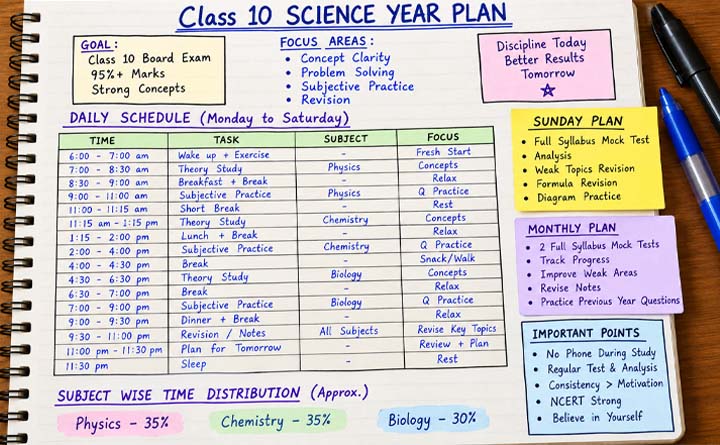


A Smart & Practical Approach for JEE and NEET Aspirants
Physics is often considered one of the most challenging subjects for JEE and NEET students—not because the concepts are impossible, but because students struggle to use formulas correctly under exam pressure. Memorising hundreds of formulas without understanding when and how to apply them leads to confusion, mistakes, and low confidence.
At Smart Achievers, Dheerendra Sir’s Physics Formula Strategy focuses on clarity, application, and retention. This method helps students move from rote learning to concept-based formula usage, making Physics simpler, faster, and more scoring.
Why Formulas Alone Are Not Enough in Physics
Many students believe that memorising formulas is the key to scoring in Physics. However, in competitive exams like JEE Main, JEE Advanced, and NEET, questions are designed to test:
Conceptual understanding
Logical application of formulas
Unit analysis and dimensional consistency
Multi-concept problem-solving
Without a clear strategy, formulas become confusing rather than helpful.
Dheerendra Sir’s approach solves this problem systematically.
Step 1: Understand the Origin of Every Formula
Instead of directly giving formulas, Dheerendra Sir explains:
How the formula is derived
What physical situation it represents
Which assumptions are involved
For example, in Mechanics:
Equations of motion are explained through displacement–time graphs
Force formulas are linked directly to Newton’s laws
Energy relations are connected to real-life motion examples
This ensures students don’t blindly memorise but logically recall formulas during exams.
Step 2: Formula Categorisation for Faster Recall
One of the most effective parts of Dheerendra Sir’s strategy is formula grouping.
Formulas are classified into:
Core formulas (used frequently)
Derived formulas (used in specific cases)
Advanced formulas (exam-specific variations)
This helps students:
Focus on high-utility formulas
Avoid overload
Recall the right formula at the right time
Students learn when not to use a formula, which is just as important.
Step 3: Unit & Dimension-Based Formula Validation
A common reason for losing marks in Physics is calculation errors or incorrect substitutions.
Dheerendra Sir trains students to:
Check units before using any formula
Verify dimensions to eliminate wrong options
Use dimensional analysis for MCQ elimination
This technique is especially powerful in NEET and JEE Main, where options are often close.
Step 4: One Formula, Multiple Applications
Instead of teaching separate formulas for every situation, students are shown:
How one core formula can solve multiple problem types
How to modify conditions logically
How to apply formulas in rotated, inclined, or combined systems
For example:
One equation of motion applied to horizontal, vertical, and inclined motion
One power formula used across Mechanics, Electricity, and Thermodynamics
This reduces memory load and increases confidence.
Step 5: Visual Learning & Formula Mapping
Dheerendra Sir uses:
Diagrams
Flowcharts
Concept maps
Graphical interpretation
Each formula is connected to:
A diagram
A physical meaning
A standard exam situation
Visual association helps students remember formulas faster and longer, especially during revision.
Step 6: Daily Formula Revision Method
To prevent forgetting, a simple but effective revision plan is followed:
Short formula sheets for each chapter
5–10 minute daily revision
Weekly cumulative revision
Formula-based MCQ practice
This method ensures formulas stay exam-ready, not just memorised once.
Step 7: Application Through Graded Practice
Formula learning is always followed by:
Basic application questions
Moderate numericals
Mixed-concept problems
Previous year questions
Students learn:
Which formula to apply first
How to combine two or more formulas
How to avoid common traps in MCQs
Practice converts formulas into automatic responses.
Step 8: Chapter-Wise Formula Focus Strategy
Different chapters require different approaches:
Mechanics: Concept + vector understanding
Electrodynamics: Formula interconnection
Thermodynamics: Sign conventions & conditions
Modern Physics: Direct formula application
Optics: Diagram-based formula use
Dheerendra Sir tailors the formula strategy chapter-wise instead of using a single method everywhere.
Step 9: Exam-Day Formula Usage Strategy
Students are trained to:
Identify formula-based questions quickly
Avoid overthinking simple questions
Skip time-consuming derivation-based traps
Use approximation and elimination techniques
This improves speed and accuracy, crucial in competitive exams.
How This Strategy Helps Students
Students following this approach experience:
Reduced fear of Physics
Faster problem-solving
Better formula retention
Fewer silly mistakes
Improved scores in mock tests
Most importantly, Physics becomes logical and manageable, not stressful.
Key Takeaways:
Physics is not about memorising formulas—it is about understanding, applying, and recalling them under pressure.
Dheerendra Sir’s Physics Formula Strategy provides a structured, student-friendly way to master formulas with confidence.
With consistent practice, proper revision, and concept-based learning, students can turn Physics into a scoring subject for JEE and NEET.
Smartachivers
Jan 19,2026
Smartachivers
Jan 19,2026
Smartachivers
Jan 19,2026
Smartachivers
Jan 19,2026
Smartachivers
Jan 19,2026
Smartachivers
Jan 17,2026
Smartachivers
Jan 17,2026
Smartachivers
Jan 17,2026
Smartachivers
Jan 16,2026
Smartachivers
Jan 16,2026
Smartachivers
Jan 16,2026
Smartachivers
Jan 15,2026
Smartachivers
Jan 13,2026
Smartachivers
Jan 13,2026
Smartachivers
Jan 13,2026
Smartachivers
Jan 12,2026
Smartachivers
Jan 12,2026
Smartachivers
Jan 09,2026