

NEET Chemistry Strategy by Shailendra Sir

NEET Chemistry Strategy by Shailendra Sir

NEET Chemistry Strategy by Shailendra Sir (Smart Achievers): A Smart & Scoring Approach

Chemistry is often the deciding subject in NEET. While Physics can be time-consuming and Biology demands heavy memorisation, Chemistry offers the best balance of accuracy, speed, and scoring potential—if prepared the right way.

At Smart Achievers, Shailendra Sir has designed a proven NEET Chemistry strategy that helps students strengthen concepts, reduce silly mistakes, and maximise marks consistently.

Here’s a clear, practical, and result-oriented Chemistry roadmap based on Shailendra Sir’s teaching approach.


Why Chemistry Matters So Much in NEET

  • 45 questions = 180 marks

  • Direct and NCERT-based questions dominate

  • High accuracy is achievable compared to Physics

  • Strong Chemistry can compensate for weaker sections

Shailendra Sir emphasises that Chemistry is not difficult—it is systematic.


Subject-Wise NEET Chemistry Strategy

1. Physical Chemistry: Formula + Application Mastery

Physical Chemistry becomes easy once concepts are clear and formulas are well-practised.

Shailendra Sir’s Strategy:

  • Focus on core concepts, not blind formula memorisation

  • Daily numerical practice after concept completion

  • Short formula sheets revised every week

  • Emphasis on:

    • Mole Concept

    • Thermodynamics

    • Electrochemistry

    • Chemical Kinetics

    • Solutions

Key Tip: Never skip derivation logic—it helps solve twisted numericals.


2. Organic Chemistry: Concept Over Cramming

Organic Chemistry scares many students, but Shailendra Sir turns it into a logical flow of reactions.

Winning Approach:

  • Build strong basics of:

    • GOC (General Organic Chemistry)

    • Reaction mechanisms

  • Understand why reactions happen, not just what happens

  • Reaction charts + regular revision

  • Practice assertion–reason and statement-based questions

Key Tip: If GOC is strong, 70% of Organic Chemistry becomes easy.


3. Inorganic Chemistry: NCERT Is the Bible

Inorganic Chemistry is purely NCERT-driven, and Shailendra Sir strictly follows this rule.

Smart Method:

  • Line-by-line NCERT reading

  • Highlight keywords and exceptions

  • Regular short tests to retain facts

  • Special focus on:

    • Chemical Bonding

    • Coordination Compounds

    • p-Block & d-Block elements

Key Tip: Revise NCERT multiple times instead of using extra books.


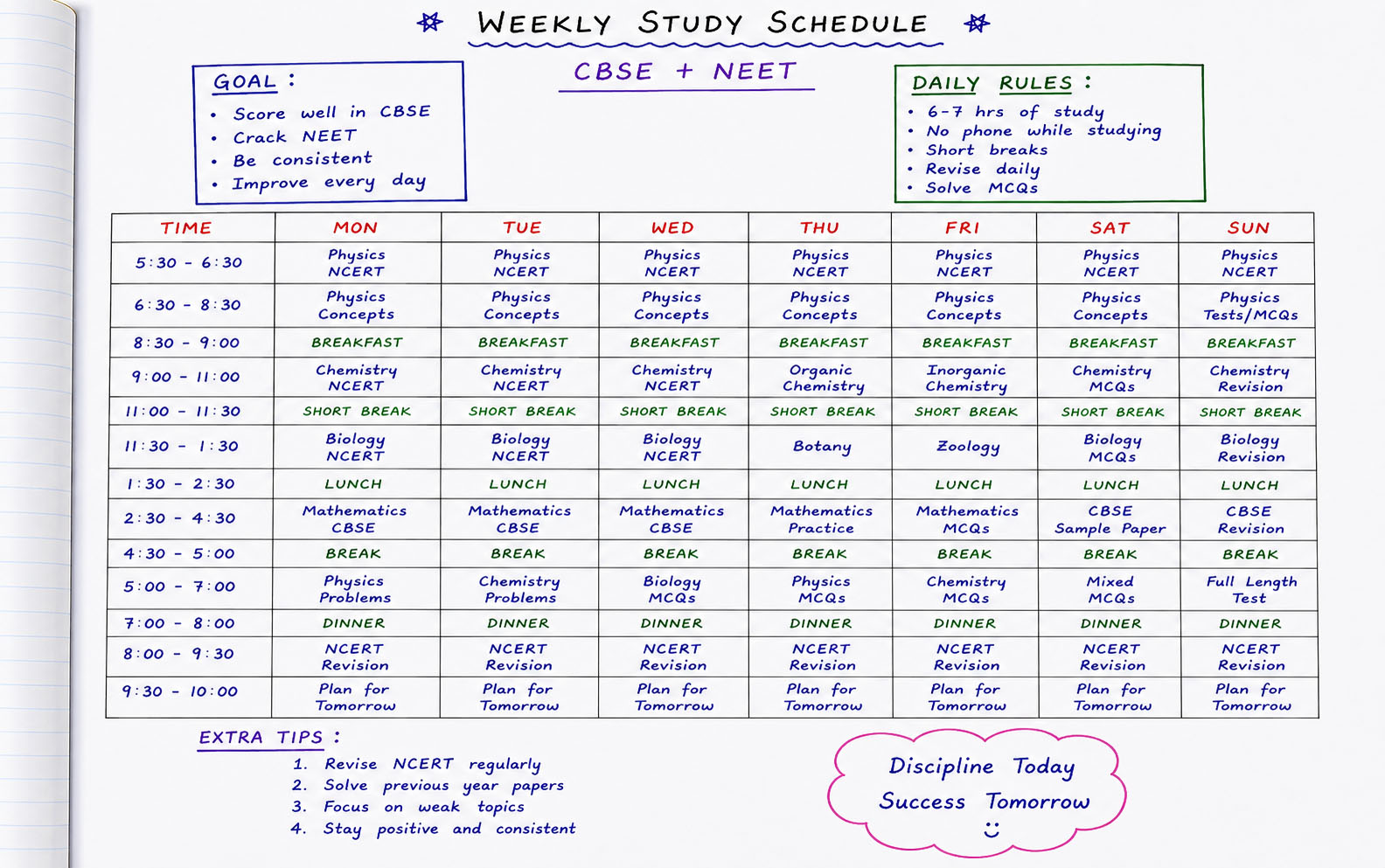
♦ Daily Study Routine Recommended by Shailendra Sir ♦

  • 2–3 hours Chemistry daily
  • One concept + practice questions
  • NCERT reading every alternate day
  • Weekly cumulative revision
  • Error notebook for mistakes

Consistency matters more than long study hours.


Test & Revision Strategy

  • Topic-wise tests after completion

  • Full syllabus Chemistry mock tests

  • Analyse:

    • Conceptual errors

    • Calculation mistakes

    • NCERT-based factual misses

  • Revise weak chapters first, not favourite ones

Golden Rule: Tests are learning tools, not judgement tools.


Common Mistakes Students Must Avoid

  • Ignoring NCERT for Inorganic
  • Memorising reactions without understanding
  • Avoiding Physical Chemistry numericals
  • Studying Chemistry only before tests
  • Not revising regularly

Shailendra Sir repeatedly reminds students:

“Revision converts knowledge into marks.”


Why Students Trust Shailendra Sir at Smart Achievers

  • Concept-first teaching style

  • NEET-focused question selection

  • Clear doubt-solving sessions

  • Continuous motivation & discipline

  • Result-oriented planning, not shortcuts

Many students who once feared Chemistry now consider it their strongest scoring subject.


Final Thoughts: 

NEET Chemistry does not require extraordinary intelligence—it requires:

  • Right strategy

  • Right guidance

  • Regular revision

With Shailendra Sir’s structured approach at Smart Achievers, students learn to study smart, revise effectively, and score confidently in NEET Chemistry.

Master Chemistry, boost your rank, and move one step closer to your medical dream.

Frequently Asked Questions (FAQs)

Yes. NCERT is sufficient for Inorganic Chemistry and very important for Organic Chemistry. Physical Chemistry requires NCERT concepts along with regular numerical practice.
Inorganic Chemistry is considered the most scoring due to direct NCERT-based questions, followed closely by Physical Chemistry.
Shailendra Sir recommends studying Chemistry for 2–3 hours daily with proper concept learning, practice, and revision.
Focus on strengthening GOC and reaction mechanisms. Understanding concepts is more effective than rote memorisation.
Because it is NCERT-focused, concept-driven, and test-oriented, helping students reduce errors and maximise NEET Chemistry scores.

Recent Posts