NEET 2028 Complete Preparation Strategy for Class 11 Students
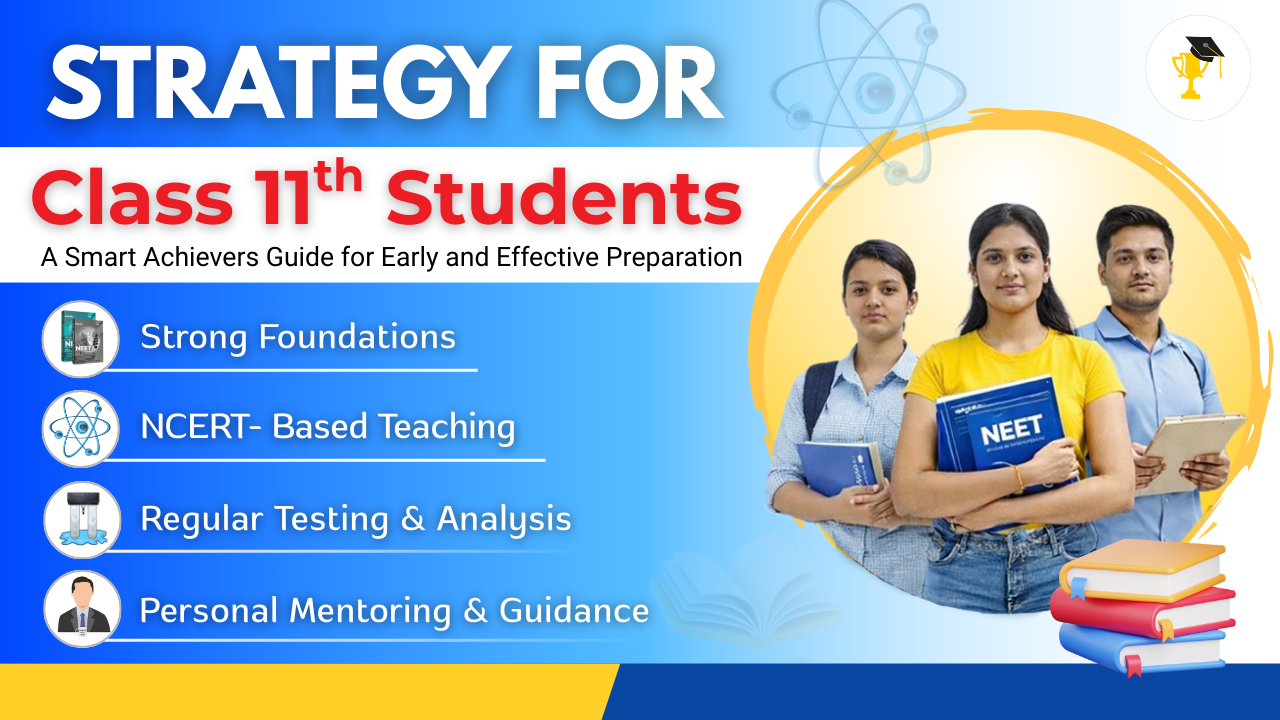
A Smart Achievers Guide for Early and Effective Preparation
Preparing for NEET 2028 is a long-term academic journey, especially for students entering Class 11. This phase lays the foundation for one of the most competitive medical entrance examinations in India. At Smart Achievers, Ghaziabad, years of academic mentoring have shown that students who start with the right strategy in Class 11 are significantly better positioned to succeed in NEET.
This blog outlines a complete, practical, and realistic NEET 2028 preparation strategy for Class 11 students, based on classroom experience, student performance trends, and exam analysis.
Why Class 11 Is the Most Crucial Year for NEET Aspirants
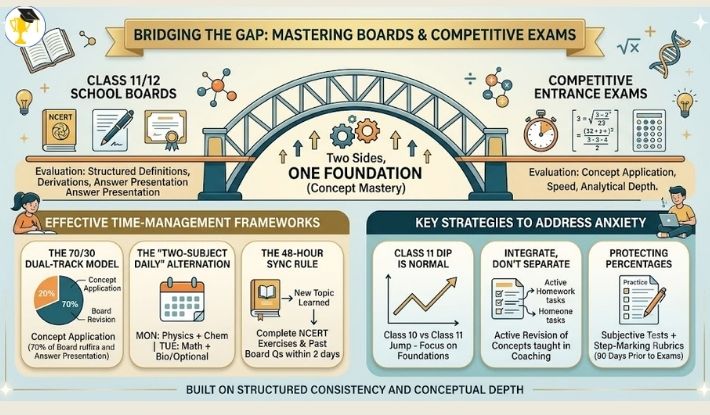
Nearly 50% of the NEET syllabus comes from Class 11. Subjects like Physics mechanics, Organic Chemistry basics, and Biology (Cell, Plant Physiology) require deep conceptual understanding.
At Smart Achievers, it is commonly observed that:
-
Weak Class 11 fundamentals lead to major struggles in Class 12
-
Many repeaters fail due to gaps left in Class 11
-
Early clarity reduces stress in the final year
Hence, Class 11 should be treated as a foundation year, not a trial year.
Understanding the NEET 2028 Exam Structure (Early Awareness)
Before starting preparation, students must understand what they are preparing for.
NEET Exam Overview:
|
Component
|
Details
|
|
Mode
|
Offline (OMR-based)
|
|
Subjects
|
Physics, Chemistry, Biology
|
|
Total Questions
|
180
|
|
Total Marks
|
720
|
|
Negative Marking
|
-1 for each wrong answer
|
Subject Weightage:
|
Subject
|
Marks
|
|
Biology
|
360
|
|
Chemistry
|
180
|
|
Physics
|
180
|
This distribution clearly shows why Biology accuracy and balanced subject preparation are critical.
Subject-Wise NEET 2028 Strategy for Class 11th
Biology Strategy (Highest Scoring Subject):
Biology contributes 50% of NEET marks. At Smart Achievers, the Biology preparation approach for Class 11 focuses on:
-
Line-by-line NCERT reading
-
Concept clarity over memorisation
-
Repeated revision cycles
-
Diagram-based understanding
NEET Class 11 Biology: High-Scoring Topics & Preparation Strategy
For NEET Class 11 Biology, students should prioritise chapters that consistently carry high weightage and form the backbone of advanced concepts tested in Class 12. A strong foundation in Class 11 significantly improves performance in Genetics, Biotechnology, and Ecology in later stages of preparation.
High-Weightage Chapters (Must-Focus Areas):
1. Human Physiology
One of the most important sections for NEET, contributing a large number of questions every year:
-
Digestion and Absorption
-
Breathing and Exchange of Gases
-
Body Fluids and Circulation
-
Excretory Products and Elimination
-
Locomotion and Movement
-
Neural Control and Coordination
-
Chemical Coordination and Integration
2. Cell Structure & Function
These chapters build the conceptual base for molecular biology and genetics:
3. Diversity in Living World
Frequently tested and concept-oriented:
4. Plant Physiology
High conceptual clarity leads to easy scoring:
Medium-Weightage Chapters (Important for Score Boost)
1. Structural Biology
These chapters are fact-based and score well with regular revision.
2. Ecology
Conceptual yet highly rewarding:
Ecology questions are often direct and help maximise marks.
Key Chapters for Conceptual Foundation
Smart NEET Preparation Strategy (Class 11 Biology)
-
Avoid skipping chapters that appear low-weightage, such as Biodiversity and Conservation and Microbes in Human Welfare—they often provide easy and direct questions.
-
Focus on NCERT line-by-line reading, especially for Human Physiology and Cell Biology.
-
Strong Class 11 concepts ensure better understanding of Class 12 high-yield topics like Molecular Genetics and Biotechnology.
 Students are encouraged to revise NCERT multiple times rather than using excessive reference books.
Physics Strategy (Concept + Application)
Physics is often the most challenging subject for NEET aspirants.
Smart Achievers’ Physics strategy emphasises:
-
Strong conceptual derivation
-
Step-by-step numerical solving
-
Application-based MCQs
-
Regular practice with increasing difficulty
For NEET Class 11 Physics, students should concentrate primarily on Mechanics, as it carries the highest weightage and forms the conceptual backbone for advanced Class 12 topics such as Electrodynamics and Optics. Along with Mechanics, chapters like Thermodynamics, Oscillations & Waves, and Properties of Matter are essential for building strong problem-solving ability and numerical accuracy.
Mastering these areas early enables students to handle a wide range of NEET numerical questions with confidence.
High-Weightage & Foundational Chapters (Must-Focus Areas):
1. Units and Measurements
2. Mechanics (Highest Priority Section)
♦ Kinematics
♦ Laws of Motion
♦ Work, Energy, and Power (WEP)
-
Strong conceptual importance
-
Directly linked with Mechanics, Rotational Motion, and Gravitation
♦ System of Particles & Rotational Motion
♦ Gravitation
3. Properties of Bulk Matter
-
Mechanical Properties of Solids
-
Mechanical Properties of Fluids
-
Thermal Properties of Matter
These chapters provide the conceptual base for Heat and Thermodynamics.
4. Thermodynamics & Kinetic Theory
5. Oscillations and Waves
-
Simple Harmonic Motion
-
Wave Motion and Sound
These topics are regularly asked in NEET and connect well with Class 12 Optics.
NEET Class 11 Physics Preparation Strategy:
-
Start with Mechanics: Since it contributes a large portion of Class 11 questions, securing Mechanics ensures a strong scoring base.
-
Focus on Conceptual Clarity: Chapters like Thermodynamics, Oscillations, and Waves act as stepping stones for advanced topics in Class 12.
-
Practice Numericals Regularly: NEET Physics is largely numerical-based; consistent problem-solving improves speed and accuracy.
-
NCERT + Practice Questions: Combine NCERT theory with NEET-level MCQs for effective preparation.
Key Tip:
A strong command over Class 11 Physics fundamentals significantly reduces difficulty in Class 12 chapters and improves overall NEET performance. Early mastery of Mechanics and Thermodynamics is key to cracking Physics numericals confidently. Students are guided to avoid formula memorisation without understanding.
Chemistry Strategy (Three-Part Balance)
Chemistry requires balanced attention to:
-
Physical Chemistry – numericals & concepts
-
Organic Chemistry – reaction mechanisms
-
Inorganic Chemistry – NCERT-based learning
For NEET Class 11 Chemistry, students must build a strong foundation across Physical, Inorganic, and Organic Chemistry, as these sections contribute significantly to NEET questions and directly support advanced Class 12 topics. Certain chapters—such as Chemical Bonding, Thermodynamics, Equilibrium, General Organic Chemistry (GOC), and Hydrocarbons—are widely regarded as high-priority or “do-or-die” chapters due to their recurring weightage and conceptual importance.
A structured approach to these topics greatly improves accuracy in numericals, reaction-based questions, and conceptual MCQs.
⇔ Physical Chemistry (Concept & Calculation-Heavy)
1. Some Basic Concepts of Chemistry (Mole Concept)
2. Atomic Structure
3. Thermodynamics
-
First Law of Thermodynamics
-
Enthalpy, entropy, and Gibbs free energy
-
Key for understanding reaction feasibility and spontaneity
4. Chemical Kinetics
5. Equilibrium
-
Chemical and Ionic Equilibrium
-
Acid-base concepts and buffer systems
-
One of the highest-weightage chapters in NEET
⇔ Inorganic Chemistry (NCERT-Driven Section)
1. Classification of Elements & Periodicity
2. Chemical Bonding & Molecular Structure
3. s-Block Elements
4. p-Block Elements
5. d & f Block Elements
⇔ Organic Chemistry (Conceptual & Reaction-Based)
1. General Organic Chemistry (GOC)
2. Hydrocarbons
-
Alkanes, Alkenes, Alkynes
-
Aromatic hydrocarbons
High-weightage and frequently repeated concepts.
3. Environmental Chemistry
NEET Class 11 Chemistry Preparation Strategy:
-
Prioritise Core Chapters First: Chemical Bonding, GOC, Hydrocarbons, Thermodynamics, and Equilibrium should be mastered early due to high conceptual overlap and repeated NEET questions.
-
NCERT Is Mandatory: Inorganic Chemistry questions are directly framed from NCERT text.
-
Balance Concept + Practice: Physical Chemistry requires regular numerical practice, while Organic Chemistry demands mechanism-based understanding.
-
Link Class 11 to Class 12: Strong Class 11 fundamentals make advanced topics like Electrochemistry, Coordination Compounds, and Biomolecules much easier.
Key Tip:
A disciplined focus on high-weightage Class 11 Chemistry chapters ensures long-term success in NEET. Early mastery reduces pressure in Class 12 and significantly improves overall rank potential.
At Smart Achievers, students are trained to align Chemistry preparation closely with NCERT, as NEET is heavily NCERT-oriented.
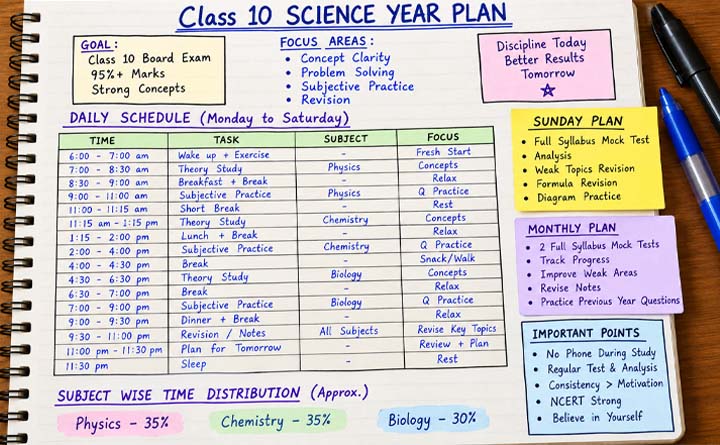
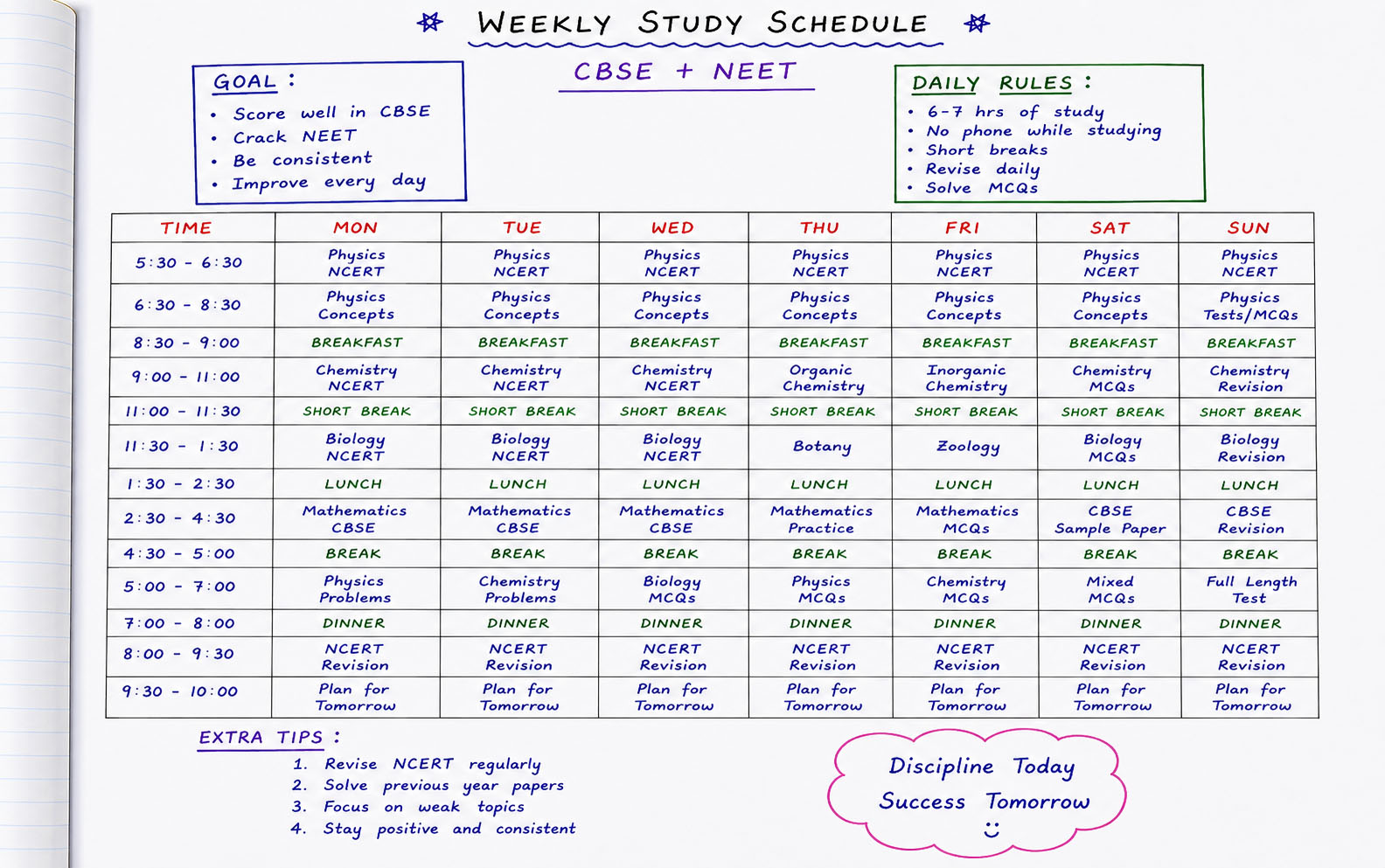
Daily Study Routine for Class 11 NEET Aspirants
A realistic daily routine recommended to Class 11 students:
|
Activity
|
Time
|
|
School / Coaching Classes
|
6–7 hrs
|
|
Self-Study
|
3–4 hrs
|
|
Revision & MCQs
|
1–2 hrs
|
|
Total
|
8–10 hrs
|
Consistency matters more than long study hours.
Importance of Tests and Analysis from Class 11
One of the most common mistakes students make is delaying testing.
At Smart Achievers:
-
Topic-wise tests are conducted regularly
-
Mistake analysis is emphasised
-
Students maintain error notebooks
-
Performance trends are tracked
Testing from Class 11 helps students:
Common Mistakes Class 11 Students Must Avoid
Based on student experience, Smart Achievers highlights these frequent errors:
Avoiding these mistakes significantly improves long-term outcomes.
Role of Mentorship and Guidance in Class 11
Class 11 students often struggle with:
-
Time management
-
Subject imbalance
-
Self-doubt
At Smart Achievers, personalised mentoring helps students:
-
Stay academically disciplined
-
Identify weak areas early
-
Maintain motivation over two years
Mentorship is especially important during the transition from Class 10 to Class 11.
How Class 11 Preparation Impacts NEET 2028 Results?
Students who:
Find Class 12 preparation significantly smoother and less stressful.
In contrast, backlog in Class 11 often leads to panic during the final year.


 STUDY MATERIALS
 COURSES
 MORE
MORE
 SUCCESS STORY
 ADMISSION
 STORE
STORE