JEE Main 2026 Preparation: Top 5 Physics Chapters for High Scores

JEE Main 2026 Preparation: Top 5 Physics Chapters for High Scores

Physics preparation for competitive exams like JEE Main 2026 should prioritise high-weightage and quick-scoring chapters to maximise marks efficiently. Given Physics’ numerical and concept-driven nature, a smart topic-selection strategy can significantly boost both accuracy and speed.

By focusing on key chapters such as Thermodynamics, Optics, Modern Physics, Electrostatics, and Current Electricity, along with smaller but impactful topics like Units and Dimensions and Semiconductors, students can efficiently cover 60–70% of the Physics syllabus with a strong scoring advantage.


Why a Strategic Approach Is Essential for JEE Main Physics

Success in the Physics section of JEE Main depends not just on hard work, but on intelligent prioritisation. Physics questions demand a clear understanding of fundamental concepts combined with quick numerical execution. Therefore, aspirants must focus on chapters that offer the highest return on investment (ROI) in terms of marks.

A well-balanced strategy involves:

  • Deep conceptual clarity in core chapters

  • Speed-oriented preparation for smaller, formula-based topics

  • Avoiding time-consuming areas with low scoring potential

This guide divides the Physics syllabus into:

  1. High-Weightage Chapters – Core topics that dominate the paper

  2. Quick-Scoring Topics – Smaller chapters that consistently deliver easy marks

Following this approach allows students to confidently target 60–70% of the Physics section, even with limited preparation time.


High-Weightage Chapters for JEE Main Physics

Based on previous year trends and exam analysis, the following chapters consistently carry the highest weightage in JEE Main and must be mastered thoroughly.


1. Thermodynamics

Thermodynamics is a consistent high-scoring chapter that includes kinetic theory, calorimetry, heat transfer, and thermal expansion. Questions from this unit frequently appear and test both conceptual understanding and numerical ability.

Preparation Tips:
Build strong conceptual clarity around heat engines, thermodynamic cycles, and energy transfer mechanisms. Practice numericals regularly to handle both direct and application-based questions efficiently.


2. Optics

Though extensive, Optics is one of the most rewarding chapters in Physics. Questions from reflection, refraction, and lens formulae are common and scoring.

Preparation Tips:
Focus on ray diagrams, sign conventions, and formula application. Once fundamentals are clear, most problems become repetitive and easy to solve.


3. Modern Physics

Modern Physics is a must-do section, covering photoelectric effect, atomic models, nuclear physics, and radioactivity. It appears consistently in JEE Main and is generally less calculation-intensive.

Preparation Tips:
Memorise formulas and understand core concepts clearly. Questions are often direct and theory-based, making this chapter a reliable score booster.


4. Electrostatics

Electrostatics is a foundational topic and cannot be skipped. It tests electric fields, potential, capacitance, and charge distribution, often through numerically intensive problems.

Preparation Tips:
Balance conceptual depth with extensive numerical practice. Focus on field–potential relationships and graphical interpretations.


5. Current Electricity & Magnetic Effects of Current

This chapter is heavily numerical and highly scoring. Topics like Ohm’s law, Kirchhoff’s laws, and magnetic field interactions are frequently tested.

Preparation Tips:
Practice circuit simplification thoroughly and understand vector-based magnetic field concepts for faster problem-solving.


Quick-Scoring Topics: Small Syllabus, Big Impact

These chapters are compact but extremely effective for boosting scores quickly. Ignoring them is a common mistake among aspirants.

1. Units and Dimensions

One of the easiest scoring chapters in Physics, requiring minimal effort for guaranteed marks.

Preparation Tips:
Master dimensional analysis and formula verification. These questions are quick and highly accurate if concepts are clear.


2. Wave Optics & Electromagnetic Waves

These topics are lighter than geometric optics and often feature straightforward theoretical questions.

Preparation Tips:
Focus on basic principles and formula applications to secure quick marks.


3. Semiconductors

A compact modern physics topic covering p–n junctions, diodes, and basic electronics.

Preparation Tips:
Understand logic gates and transistor basics. Questions are usually direct and require little calculation.


4. Work, Power, and Energy

A foundational mechanics chapter that supports many other topics in Physics.

Preparation Tips:
Master energy conservation principles and work-energy theorems. This helps in solving problems across multiple chapters efficiently.


Final Strategy to Cover 60–70% of JEE Main Physics

By prioritising:

  • High-Weightage Chapters:
    Thermodynamics, Optics, Modern Physics, Electrostatics, Current Electricity

  • Quick-Scoring Topics:
    Units and Dimensions, Wave Optics, Semiconductors, Work–Power–Energy


JEE Main 2026 aspirants can efficiently cover the core scoring areas of the Physics syllabus.

This balanced strategy—combining conceptual depth in core chapters with easy marks from smaller topics—is the most effective way to maximise preparation efficiency, build confidence, and secure a high score in the Physics section.


Pro Tip:

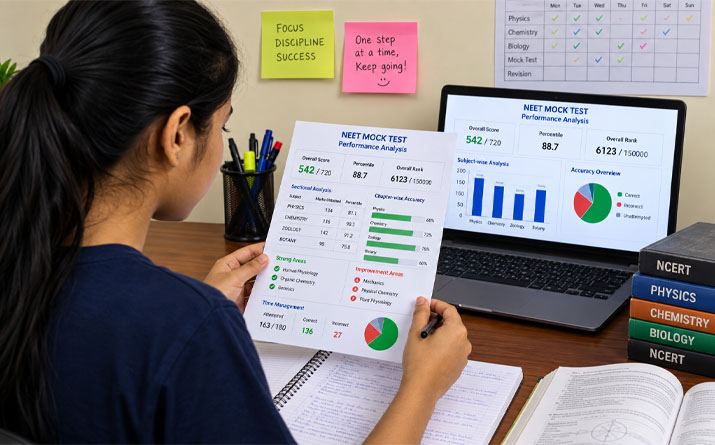
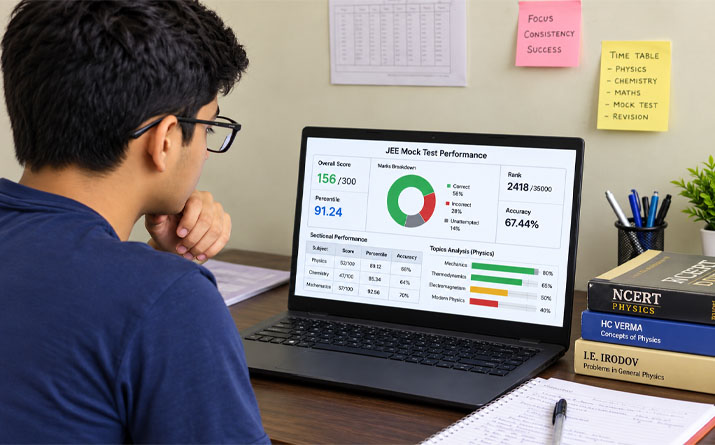
Always validate your preparation using mock tests and revise formulas daily. Physics rewards consistency, clarity, and calm execution more than brute-force problem-solving.

Recent Posts