

CBSE Year Ender 2025: 15+ Major Exam, Curriculum and Policy Changes Students Must Know

CBSE Year Ender 2025: 15+ Major Exam, Curriculum and Policy Changes Students Must Know

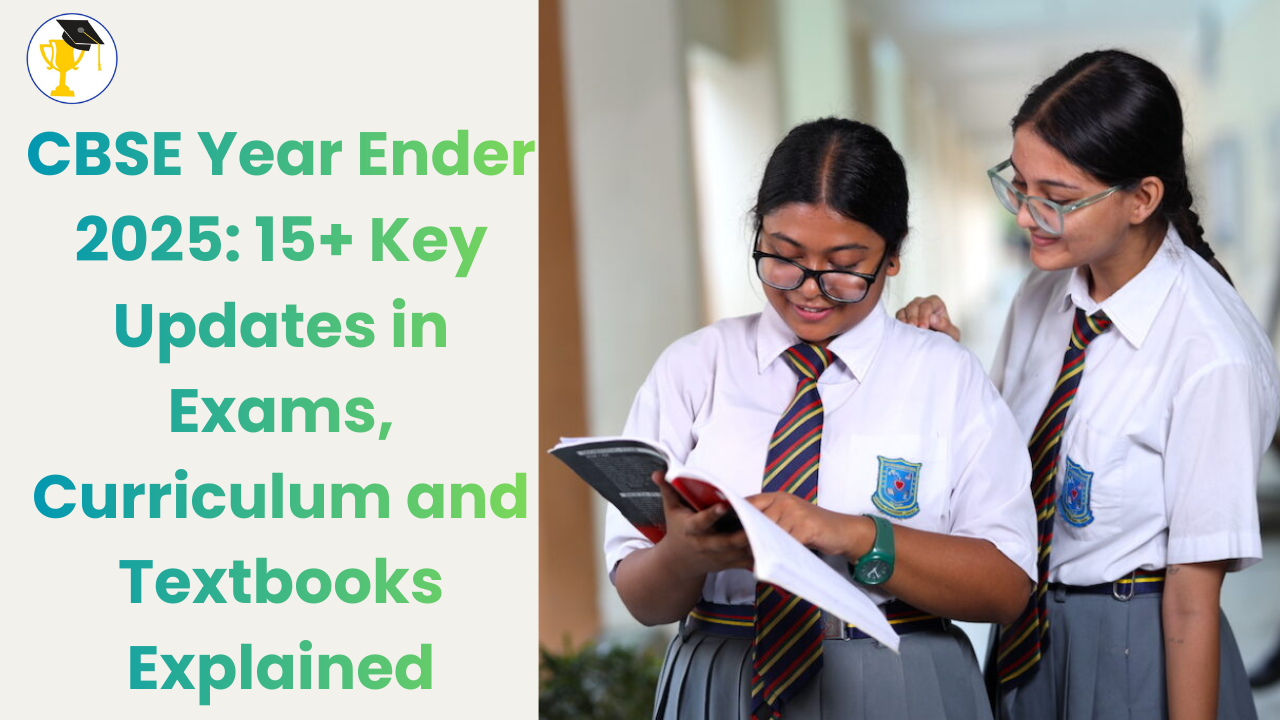
As 2025 comes to an end, the Central Board of Secondary Education (CBSE) stands out as one of the most reform-driven education boards in India. Over the past year, CBSE rolled out a series of far-reaching changes impacting examinations, curriculum design, textbooks, assessment methods, fees, and administrative systems across schools nationwide.

Closely aligned with the National Education Policy (NEP) 2020, these reforms mark a decisive shift away from rote memorisation towards competency-based, application-oriented, and student-centric learning. From revamped board exam patterns and new-age textbooks to digital evaluation and skill-focused curricula, CBSE’s 2025 initiatives are set to reshape how students learn and are assessed in the coming years.


CBSE Key Changes in 2025: Highlights at a Glance

  • Strong emphasis on competency-based and application-driven assessments

  • Section-wise question paper format introduced for Class 10 Science and Social Science

  • Launch of new competency-based textbooks for Classes 4, 5, 7 and 8

  • Increased focus on skill-based learning in middle school (Classes 6–8)

  • Nationwide rollout of digital evaluation and enhanced exam security measures

  • Introduction of APAAR ID framework for long-term academic record management

  • Expansion of vocational and future-ready subjects like AI and design thinking

  • Clearer marks distribution and improved assessment transparency

  • Announcement of a two-term board exam system from 2026

  • Revision of examination and registration fees after five years


Major CBSE Reforms Introduced in 2025

1. Shift Towards Competency-Based Assessment

CBSE significantly increased the weightage of competency-based questions—including case-based, source-based, MCQs, and real-life problem-solving questions—in Classes 10 and 12 board exams. This change prioritises conceptual understanding and practical application over rote learning.

2. Section-Wise Question Paper Pattern for Class 10

To improve clarity and exam strategy, CBSE introduced a subject-wise section format for key Class 10 subjects:

Science Paper:

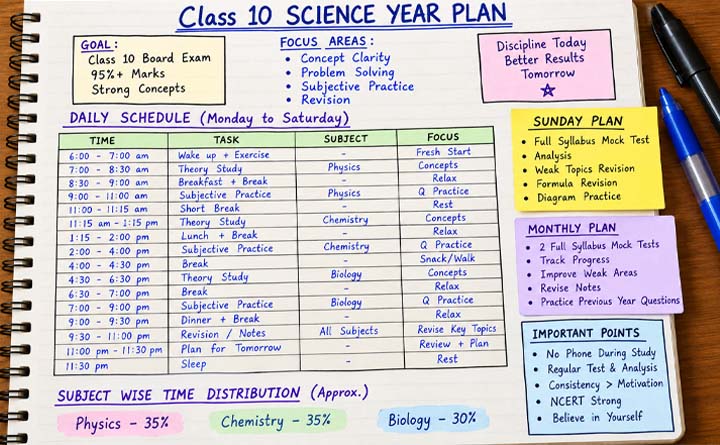
  • Section A – Biology

  • Section B – Chemistry

  • Section C – Physics

Social Science Paper:

  • Section A – History

  • Section B – Geography

  • Section C – Political Science

  • Section D – Economics

Earlier, mixed-question formats often confused students. The new structure allows focused, subject-by-subject attempts, improving time management and confidence.

3. Reduction in Long and Short Answer Questions

The number of traditional constructed-response questions was reduced to create room for analytical and competency-based questions that test deeper understanding.

4. Enhanced Examination Security Nationwide

CBSE mandated biometric authentication and CCTV surveillance at examination centres across India to strengthen exam integrity and transparency.

5. Two-Term Board Exam System Announced (From 2026)

One of the most significant announcements of 2025 was the two-board-exam model for Class 10 (and likely Class 12), offering students two exam attempts in an academic year with the best score considered.

6. Skill-Based Curriculum for Classes 6–8

CBSE formally integrated skill-based and experiential learning frameworks into middle school education, encouraging hands-on learning from an early stage.

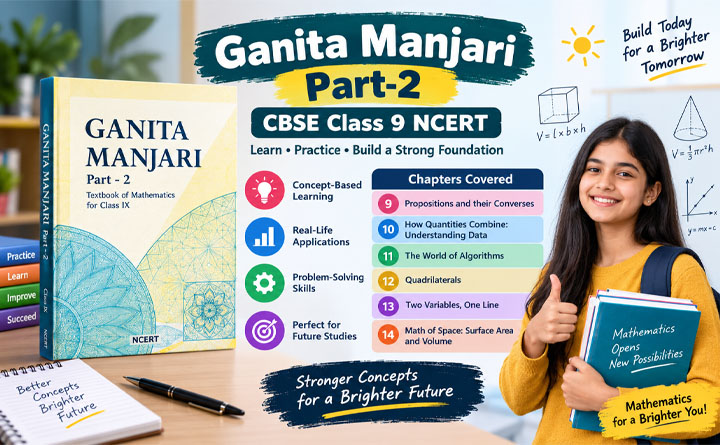
7. New Competency-Based Textbooks for Classes 4, 5, 7 and 8

For the 2025–26 academic session, CBSE introduced redesigned textbooks that emphasise:

  • Activity-based and experiential learning

  • Real-world examples and case studies

  • Application-focused exercises

  • Reduced content load and simplified explanations

8. Expansion of Digital Evaluation

Digital evaluation of answer sheets was expanded nationwide to ensure faster results, improved accuracy, and reduced human error.

9. Integration of APAAR ID

CBSE began integrating APAAR (Academic Performance Assessment & Analytics Report) IDs to maintain lifelong digital academic records and enable smoother admissions and mobility.

10. Mandatory Candidate Data Verification

To minimise post-result errors, CBSE introduced candidate data verification slips, making schools and parents jointly responsible for accuracy in student records.

11. Strengthening Vocational and Skill-Oriented Subjects

Curricula were upgraded to include future-ready subjects such as:

  • Artificial Intelligence

  • Design Thinking

  • Electronics

  • Physical Activity and Sports Training

12. State-Level Adoption of CBSE Curriculum

Several states, including Maharashtra, moved to adopt or pilot CBSE’s curriculum framework under NEP 2020, helping standardise education quality across regions.

13. Greater Focus on 21st-Century Skills

CBSE reinforced classroom emphasis on critical thinking, problem-solving, communication, and collaboration, moving beyond textbook-driven instruction.

14. Increased Weightage for Projects and Practicals

Internal assessments, projects, and practical exams gained greater importance, promoting continuous and holistic evaluation of student learning.

15. Examination and Registration Fee Revision

For the first time since 2020, CBSE revised examination and registration fees. Board exam fees for Classes 10 and 12 were increased by INR 20 per theory subject, with corresponding hikes in practical fees, citing rising operational and administrative costs.


Conclusion:

From exam reforms and curriculum redesign to digital integration and policy-driven changes, 2025 emerged as a milestone year for CBSE. These reforms reflect a clear commitment to building a competency-based, inclusive, and future-ready education system aligned with national priorities.

Students preparing for 2026 board exams and beyond would benefit greatly from understanding these changes early, as they redefine how learning, assessment, and academic success are measured in CBSE schools across India and abroad.

Recent Posts